E-Paper



Stray menace dogs Lucknow roads
There are around 60,000 stray dogs in the state capital where hospitals report some 100 dog bite cases every day.

 Prefer HTon Google


Stray dogs are on the prowl on the roads of the state capital these days. According to the Lucknow Municipal Corporation (LMC) sources, there are about 60,000 such dogs in the state capital—home to 30 lakh people. Locals demanded massive stray dog catching drive after incidents of dog bite saw a rapid increase.
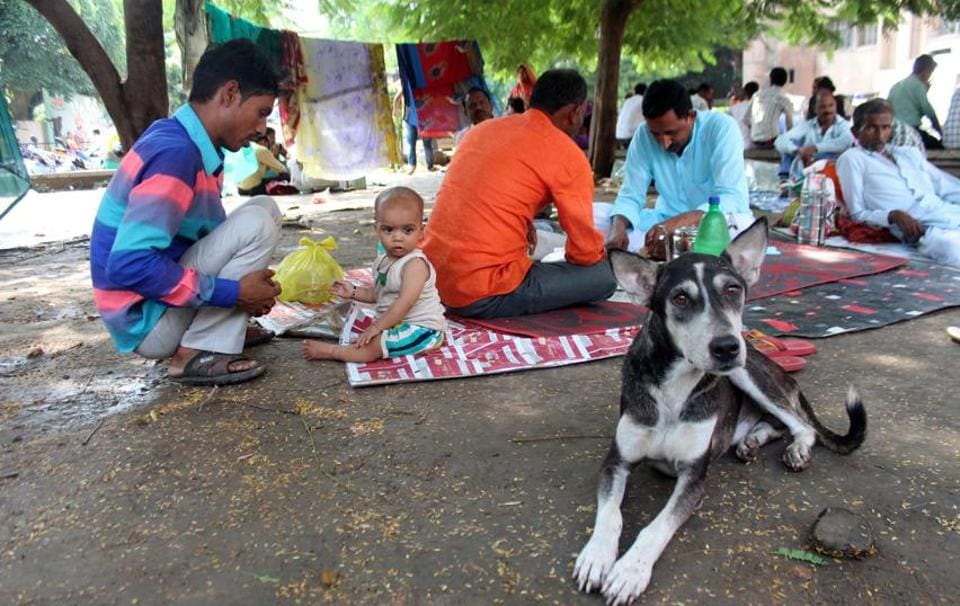
Dogs can be seen chasing kids going either to schools in the morning or parks in the evening. On resisting, they even bite them. Lucknow hospitals provide injections for dog bite to about 100 individuals per day on an average.
According to the Animal Birth Control Rules, 2001, sterilisation is the sole way to control the population of stray animals. However, resentment is brewing among residents as the rate of sterilisation in Lucknow is just 3 or 4 dogs per day.
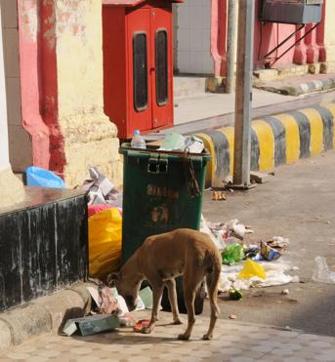
“When our kids go out to play, the first thing we need to watch is if there are dogs on the street,” shares Rakesh Kumar Sharma of Hussaidia. Dogs roaming inside parks, entering houses, sleeping underneath parking lots and in garbage dumps is a common sight. The complaint cell of the LMC receives around 75 complaints regarding stray dogs per week from different areas including Indira Nagar and Gomti Nagar.
“I fell down from my two-wheeler when dogs chased me one day,” says Rashmi of Vinay Khand. “When I return late in the evening, dogs are the ones I fear the most,” she adds.
“Their number is such that despite dog catching squad taking away a few of them, many more turn up the very next day,” claims a staff at Lohia Hospital where dogs reportedly entered the morgue last month. At the Balrampur Hospital also, the dogs find place in corridor near the post office on the campus.
“About 1500 stray dogs are sterilised every year but due to pressure from NGOs, it is difficult to perform duties,” claims chief veterinary officer, LMC, AK Rao.
Meanwhile, animal right activists say it is wrong to blame dogs for incidents where there is a human fault. They stray dogs are blamed to hide the crime done by men. They also gave example.
“In 2013, a girl was stated to be dragged and killed by dogs but when body was examined properly, marks of violence were clear and even rape was proved,” claims Kamna Pandey, the former Co-op member at the Animal Welfare Board of India. She alleges that often crime is committed and then dogs are blamed to avoid punishment.
“Even in the case reported on Sunday, the crime was committed by the couple who left the body outside Queen Mary’s Hospital but dogs were blamed. The big question is what was done to find who left the body there and what action was taken against them?” she asks.