
 E-Paper



UP: Two hog deer rescued and released
In back to back rescue operations, two endangered Indian hog deer were rescued from Nandgaon and Tumaula village in Chhata block of Mathura district. After urgent medical treatment, both animals were safely released back to their natural habitat.


In back to back rescue operations, two endangered Indian hog deer were rescued from Nandgaon and Tumaula village in Chhata block of Mathura district. After urgent medical treatment, both animals were safely released back to their natural habitat.
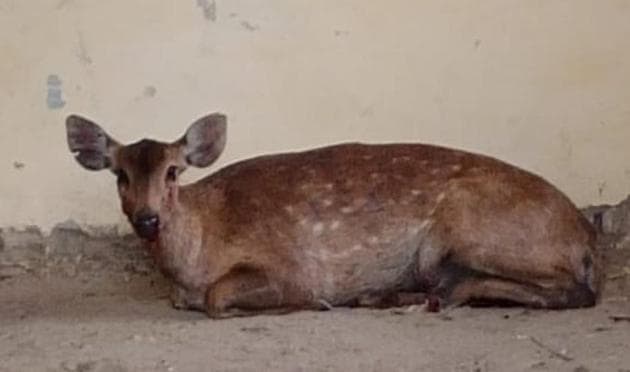
The wildlife SOS responded to a call from the Kosi Kalan range forest office in Mathura district regarding an endangered hog deer that had been injured by a pack of feral dogs. A team from the NGO rushed to the range forest office to rescue the animal. It was later transferred to the wildlife SOS hospital for further treatment.
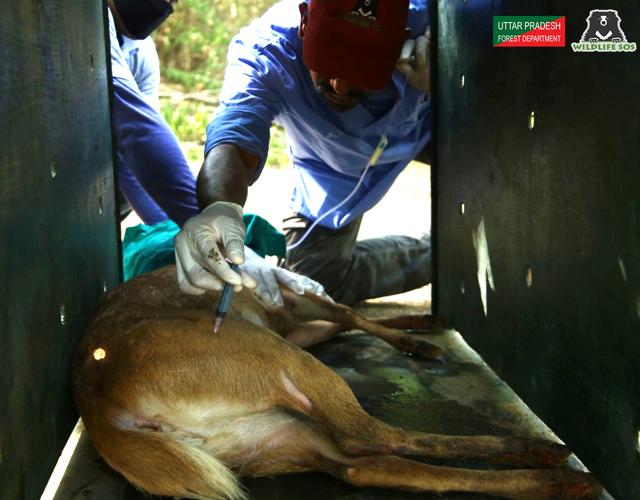
In another incident, another injured hog deer was found in Tumaula village, Mathura. Wildlife SOS assisted the forest department in the rescue and release operation after these deer were left injured by feral dogs.
Dr Ilayaraja, deputy director, veterinary services, wildlife SOS said, “Both animals were identified as adult females, who had sustained superficial injuries on their hind limbs and back region. After necessary treatment, they were released back into the wild.”
The Indian hog deer (Axis porcinus) is listed as an ‘endangered’ species in the IUCN red list. They are found in South Asia and Southeast Asia, and their habitat varies from wet and tall grasslands to swamp riverine areas.


