
 E-Paper



UP: Winter sets in, Lucknow has coldest November in three years as mercury drops to 9.5°C
Snowfall in the Himalayas was an annual phenomenon, which impacts the temperature in all of northwest India, but local factors such as the absence of a cloud cover play an important role


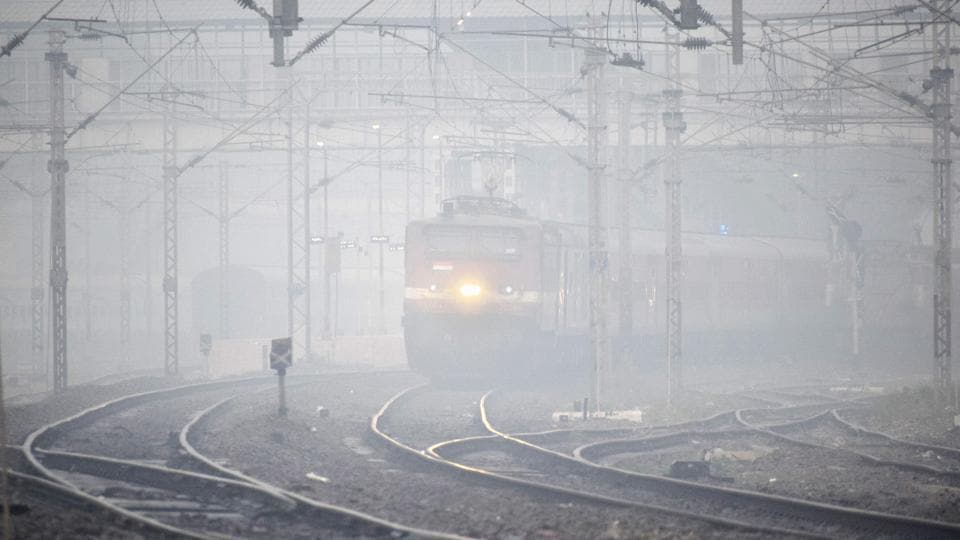
November this year is turning out to be the coldest since 2017 with the early morning temperature in Lucknow dipping to 9.5 degrees Celsius on Sunday, which is two degrees Celsius below normal.
Last year this month, the lowest temperature was 12.6 degrees Celsius on November 20 and in 2018, it was 10.2 degrees Celsius on November 8.
In 2017, the lowest temperature was 8 degrees Celsius on November 24. The lowest-ever temperature for the month was 3.9 degrees Celsius on November 29, 1952, according to the Indian Meteorology Department (IMD) website.
Also this year on November 16, Lucknow experienced a record highest single day rainfall measuring 26 mm in more than a decade for this month.
Also read | More girls being adopted by foreign couples, UP gives credit to Mission Shakti programme
The minimum temperature has dropped in several other cities of Uttar Pradesh as well. The night temperature in Varanasi dropped to 9.4 degrees Celsius which was 4 degrees below normal. The city of ghats witnessed its coldest November in a decade. In the last decade, the lowest temperature in Varanasi was 10 degrees Celsius recorded in 2017 and 2013.
With 10 degree Celsius, Kanpur recorded lowest temperature in November this decade. The minimum temperature in Agra was 9.4 degrees Celsius.
Experts say the nip in the early morning air is due to snowfall in hills including Himachal Pradesh and Uttarakhand. “It’s unusual for the minimum temperature to drop to single digits in November. Winter is setting in early this year,” said professor Dhruv Sen Singh of Lucknow University.
“The drop in the minimum temperature is mainly because of a combination of cold winds blowing from the snow-clad Western Himalayan region as well as largely clear skies in Lucknow. When there is no cloud cover, the heat trapped in the ground dissipates fast, resulting in lower temperatures,” said JP Gupta, IMD director in Lucknow.
He said snowfall in the Himalayas was an annual phenomenon, which impacts the temperature in all of northwest India, but local factors such as the absence of a cloud cover play an important role.
The maximum temperature in Lucknow, however, was 24.4 degrees Celsius, which was 3.2 degrees below normal.
The forecast for the next 24 hours is mist in the morning and clear sky thereafter. The maximum and minimum temperatures will be around 26 and 9 degrees Celsius respectively.


