
 E-Paper



AAIB grounded by doubts over its July 2025 crash probe
Steeped in legalese, AAIB’s defence of its handling of the crash probe fails to allay growing apprehensions

 Prefer HTon Google


Public faith in India’s institutions is at an all-time low at the moment; it is perhaps especially so with the Aircraft Accident Investigation Board (AAIB), in the context of its investigation of the AI171 crash in July last year. Indeed, questions about the timeline for publishing the final report and the outcome of specific tests related to aircraft parts at the manufacturer’s facility overseas came up in Parliament on Monday.
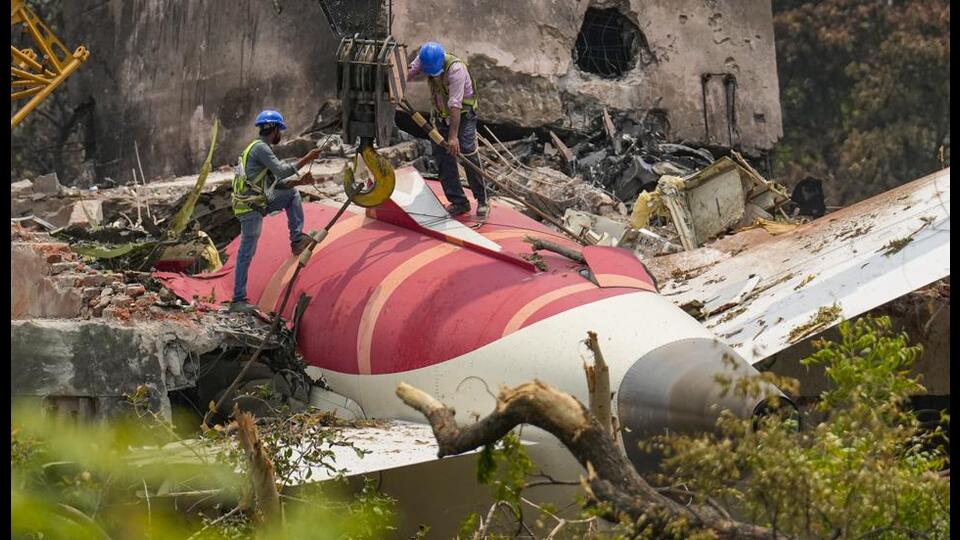
Over the past year, three separate petitions have been filed before Indian courts by those convinced that the probe lacked professionalism, transparency, and investigative rigour and focused excessively on pinning blame rather than finding the root cause of the tragedy.
AAIB has met the avalanche of criticism with a stoic silence. Only in June 2026 did it issue a short statement reaffirming its commitment to conducting a thorough, independent, objective, and evidence-based investigation. It added that the final report will be released upon completion of all investigative activities and the requisite international review and consultation processes prescribed under International Civil Aviation Organization (ICAO) Annex 13. Further, it said that the sole purpose of an accident investigation is to enhance aviation safety through the identification of potential learnings and safety recommendations, not to apportion blame or liability.
Earlier this month, facing three different court petitions, AAIB filed a response before the Supreme Court to defend its position and sought the dismissal of a writ petition arguing for a parallel probe. The agency said that a draft report on the accident will be released this October.
AAIB submitted that accident investigation is an intensely technical, scientific, and specialised discipline requiring expertise across aeronautical engineering, power plant technology, avionics, flight data/cockpit voice recorder analysis, air traffic control, metallurgy, aviation medicine, and psychology — disciplines that take years to master.
It argued that it has taken 44 of the 69 mandatory steps as prescribed by the ICAO, which sets global standards for aviation safety, air navigation, and security. AAIB informed the court that it is currently in the analysis phase, with six specialist groups working on operations, medical and human factors, flight recorders, maintenance and records, systems, structures and power plants and organisational factors related to the accident.
In a plea to dismiss the petitioner’s demands for a parallel (judicial) probe, AAIB also highlighted its track record, arguing that since its inception in 2012, it has carried out a total of 218 investigations (97 accidents, 120 serious incidents, and one incident) and that its timelines compare favourably with other major global investigations. To buttress its point, it mentioned two instances from other jurisdictions where final reports haven’t been published yet: Japan Airlines Flight 516 (runway collision in January 2024) and Jeju Air Flight 2216 (crash, December 2024). It also cited the Ethiopian Air crash (March 2019), in which the final investigation report was issued only in 2022, three years after the accident. The government, too, said on Monday that “ The timeline for a major accident investigation cannot be predicted”, and that the probe is “under progress”.
AAIB also defended itself against the allegation that ascribing blame seems to have become the purpose of the investigation, instead of identifying the accident’s cause(s). It stated that, under ICAO Rule 3, “investigations aim only at accident prevention, not compensation, regulatory reform, or criminal liability,” arguing that this defeats several of the petitioners’ prayers.
India ratified the Convention on International Civil Aviation in 1947 which specifically entrusted AAIB with processing the Union government’s obligations. AAIB posited that it followed the required statutory process to the letter and even listed the 10 steps it has taken since the tragedy, all of which, it maintained, are required for India to meet its obligations under the convention.
It, however, rejected demands to make the transcripts of the recordings made by the cockpit voice recorder and other related material, citing Rule 17, which “bars disclosure of statements, CVR/cockpit image recordings, and related material outside the investigation. It said that such material can only be released if the Union government determines that the benefits of doing this outweighs the adverse domestic/international impact on the ongoing or future investigations.
AAIB’s submissions in court — all of which will be scrutinised and, possibly, countered by those seeking a judicial probe — have attracted scepticism from the aviation sector at large. Almost nobody I spoke to was convinced by the reply, maintaining instead that AAIB has adopted a “diversionary” approach, steeped in “legalese”.
The petitioners have their own set of arguments (from which they refuse to budge) and argue that the board — which has already failed the public earlier by producing and presenting a sub standard preliminary report — is hiding behind “an artfully created legal web”. They believe it is stubbornly refusing to address fundamental questions of competence, trust, and public faith.
Amidst a raft of arguments, this camp raises one fundamental question: If an investigation is being conducted through public funds, but the public has no faith in it, what is the purpose of such a probe? On what grounds are the grieving families of 260 hapless victims being denied a probe they can respect and consider worthy? AAIB has yet to answer this.
Anjuli Bhargava writes on governance, infrastructure, and the social sector. The views expressed are personal
(This is a Hindustan Times digital exclusive)


