
 E-Paper



How ‘Meatless Meat’ can help fight climate change
Every year, more than 9 billion animals in the US are raised and killed on factory farms, contributing to a range of problems, from increasing antibiotic resistance to the climate crisis.


In May of 2017, nearly 300 experts in global health, medicine, biology, policy and climate research signed a letter addressed to the World Health Organization, calling on it to take a more serious look at the impact of industrial livestock production, also known as ‘factory farming’, on human health and the climate. Factory farming is known to exacerbate climate change by releasing vast volumes of greenhouse gases into the atmosphere, particularly carbon dioxide and methane.
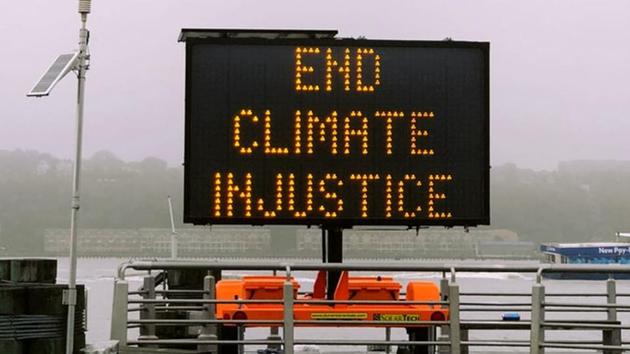
Every year, more than 9 billion animals in the US are raised and killed on factory farms, contributing to a range of problems, from increasing antibiotic resistance to the climate crisis. “As the global health community acknowledges the intertwined nature of planetary and human health, it must also confront the role that factory farming plays in climate change” the letter says, highlighting the interconnectedness of health, climate and meat consumption.
The data tells us that approximately 700,000 people die each year of diseases resistant to antibiotics. These are, of course, used widely in factory farms to keep animals alive in abominable conditions, while pushing for maximum productivity. Close to twenty percent of greenhouse gas emissions are generated from industrial scale meat farms, a bigger source of pollution than the transportation sector. Growing crops to feed and graze livestock also leads to extensive deforestation.
As developing economies grow and become wealthier, one of the first things to change is dietary choice. Which usually translates into more meat. While it isn’t surprising that the emerging middle classes would want the same luxuries that people in wealthy countries enjoy, the exponential rise in the demand for animal protein poses a lot of challenges. In an attempt to address this looming crisis, companies like Impossible Foods and Beyond Meat have jumped into the fray with their “meatless meat” products.
The products marketed as alternative meat today differ in one significant way from traditional meat alternatives like veggie burgers. ‘Beyond Meat burgers’ and ‘Impossible Burgers’, while made from plants, are designed to taste like meat, are meant for non-vegetarians – and some day hope to take the place of traditional meat products on supermarket shelves. Impossible Burgers are made using heme from soy plants, or soy leghemoglobin, which is identical to heme from animals and gives these burgers their distinctly meaty flavour. Plant-based meat is also much lower in fat and cholesterol and doesn’t contain antibiotics or animal hormones, which are often found in read meat.
A big part of the attraction for alternative meat products comes from public awareness about climate change. An analysis of the Impossible Burger found that its carbon footprint is 89 percent smaller than a burger made from a cow. It also uses 87 percent less water and 96 percent less land. Increasingly, both entrepreneurs and consumers are driven to “do the right thing” for the environment. That it is also a highly lucrative and fast growing industry is an added bonus. Impossible struck a deal with fast food giant Burger King to offer meatless Whoppers (now available at 10,000 outlets) while Carl’s Jr. and Del Taco announced they would offer Beyond Meat products. Both companies have also raised large sums from first round IPO funding and private equity.
There is another entrant in the alternative meat sector – lab grown or cell-based meat. While plant-based meat products try to simulate the experience of eating meat, cell-based meat uses actual animal cells, grown in a serum instead of as animal parts. These products don’t just taste like meat, they are actually meat on a molecular level. Lab grown meat, however is still a long way away from the dinner table, unlike plant-based meats, which are already available to consumers.
In addition to environmental benefits, meat alternatives could help put an end to the horrifyingly inhumane treatment of animals raised for food. We know beyond a reasonable doubt that farm animals are conscious beings, with complex social structures and intricate psychological patterns. Suffering and happiness are not uniquely human qualities. Like us, animals too feel pain, fear and loneliness. Yet, we seldom give a second thought to the senseless torture of these sentient beings, happening right before our eyes on an unimaginable scale.
Yes — meatless meat may be growing fast and making the headlines, but at this point it’s too small to matter, making up less than 1 percent of the product volume of traditional meat. Right now, nearly all meat sold in the US and worldwide come from giant animal torture factories. Be that as it may, what the global buzz around meatless meat indicates is that big business may finally be waking up to the reality of climate change and the abomination of factory farming. Technology and the obsession with endless growth may have brought us to this precipice but only time will tell if market-friendly innovations created by scientist-entrepreneurs with a social conscience can gain enough traction with consumers to help save the day.


