
 E-Paper



How to repurpose cooking waste?
As environmental concerns take the spotlight, many are attempting to move towards a sustainable lifestyle, starting with food consumption and reducing wastage. Zero waste practices at a household level can be difficult but not impossible.


If you think citrus peels, watermelon rinds and bread crumbs are meant to be thrown away, it’s time to reconsider your thoughts. As environmental concerns take the spotlight, many are attempting to move towards a sustainable lifestyle, starting with food consumption and reducing wastage. So, how important is it to focus on zero-waste cooking?
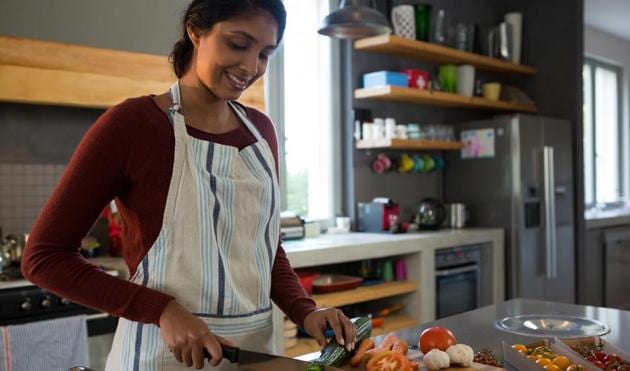
Chef Suvir Saran believes that living sustainably and with environmental consciousness requires an honest and mindful dialogue with oneself. “We must begin with a desire to live connected to the land. To make choices that are sustainable. Affordable to our budgets, friendly to the planet, tasty to the palate, and easy to make into habits we can repeat,” he says.
Saran also recalls that in old Mexican kitchens, the entire day’s vegetable scraps were collected in a pot, mixed with hot chilli peppers, soaked in water and cooked. Next morning the thick stock was strained and liquid was used to make sauces. “Some of it was used to make deeply delicious cocktails with a chilli base to them, and the scraps fed to farm animals. No waste here. All used for consumption,” he explains.
Zero waste practices at a household level can be difficult but not impossible, feels chef Radhika Khandelwal. She suggests, “If we look at Indian culinary practices, we’ll find plenty of food preservation practices like pickling, fermentation and dehydration. Stalks of leafy greens can be turned into a delicious pickle, skins of root vegetables can become a really great snack when fried or baked and even banana and citrus peels can be consumed.”
Adding that even vegetable scraps can be composted, Saran says, “They ought to be used for their entirety, if possible. And what is then left, the trimmings, if not composted, feed to animals.”
Interact with author at sanchita_kalra.


