
 E-Paper



Urbanising areas are likely to witness extreme rainfall: Study by IIT Bombay
Using a data-driven technique, a five-member team found a link between the extent of urbanisation and changing characteristics of rainfall extremes.


Areas in the country that are undergoing urbanisation, such as Nashik and Kanpur, are likely to witness extreme rainfall than their urbanised counterparts. A study by the Indian Institute of Technology Bombay (IITB) and US-based Purdue University has revealed that urbanisation is playing a major role in triggering extreme rainfall over India between June and September.
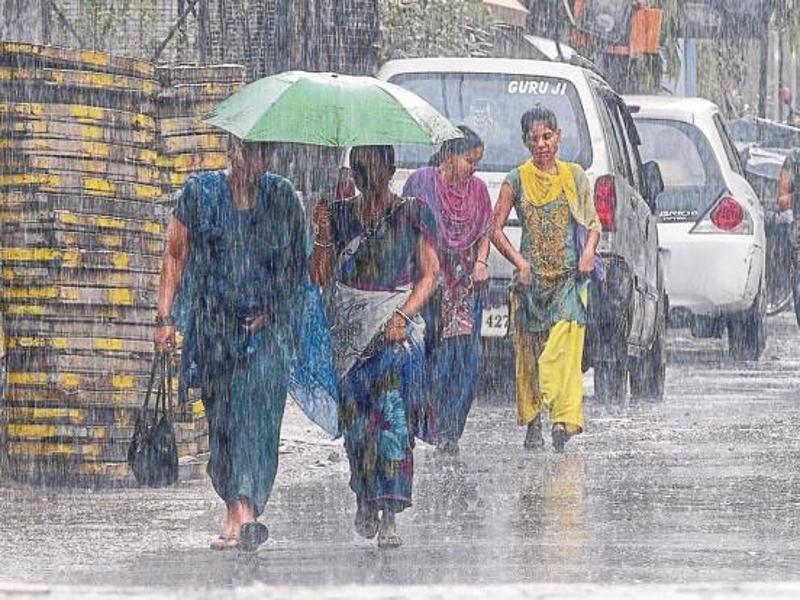
Using a data-driven technique, a five-member team found a link between the extent of urbanisation and changing characteristics of rainfall extremes. They found that it’s the areas that are developing – and not already developed – that is influencing the trend and characteristics of rainfall extremes during the Indian summer monsoon.
Read: Glass walls and parking spaces: Mumbaiites share life post-redevelopment
Researchers said the study is relevant in the context of climate change adaptation and policy formulation, particularly under the effect of rapid urban sprawling, deforestation and encroachment of land, and is significant for water resources policy and planning.
“The possible reasons might be that development activities in urbanised areas have already been stabilised, changes over landscape characteristics are bare minimum, and thus the local circulation pattern is not expected to alter significantly,” said Professor Subhankar Karmakar, lead investigator, Centre for Environmental Science and Engineering, IITB.
Added co-author Professor Subimal Ghosh, “However, in case of urbanising/developing urban areas (transitioning from rural to urban), a nonstationarity (changing trend statistically) in rainfall extremes is more prominent due to the ongoing process of urbanisation, which has stronger influence on local circulation pattern.”
Read: Day temperatures rise 3 degrees C above normal, air quality improves
The study, also co-authored by Professor Dev Niyogi, used daily rainfall data between 1901 and 2004 from the India Meteorological Department from a fixed network of 1800 stations. With a population of more than 1000/sqkm, Mumbai, New Delhi, Kolkata and Chennai were considered urbanised grids, and newly-developing cities such as Nashik, Kanpur, Durgapur and Mangalore with population between 200 and 1000/sqkm were taken as urbanising grids.
The study found that 61% non-stationary grids coincided with urbanising grids as compared to mature urbanised and rural areas. “This finding indicates that the non-stationarity in ISMR (Indian summer monsoon rainfall) extremes is more prominent in those grids in which the rural-to-urban land transition is occurring,” stated the study.
The Indian summer monsoon rainfall makes up 80% of the total annual rainfall in the country, and is important for agricultural productivity and the gross domestic product.
The findings are published recently in Geophysical Research Letters, which is a notable scientific journal of American Geophysical Union (AGU).

Stay updated with all the Breaking News and Latest News from Mumbai. Click here for comprehensive coverage of top Cities including Bengaluru, Delhi, Hyderabad, and more across India along with Stay informed on the latest happenings in World News.


