
 E-Paper



HT Road safety series: Mumbai traffic police show the way for a smooth ride
The Mumbai traffic police chief, Milind Bharambe, sits in his sixth-floor office overlooking the Arabian Sea in Worli, but his eyes are fixed on a six-panel monitor broadcasting CCTV feeds from across the city. Every minute, he refreshes the real-time traffic data option on the monitor.


The Mumbai traffic police chief, Milind Bharambe, sits in his sixth-floor office overlooking the Arabian Sea in Worli, but his eyes are fixed on a six-panel monitor broadcasting CCTV feeds from across the city. Every minute, he refreshes the real-time traffic data option on the monitor.
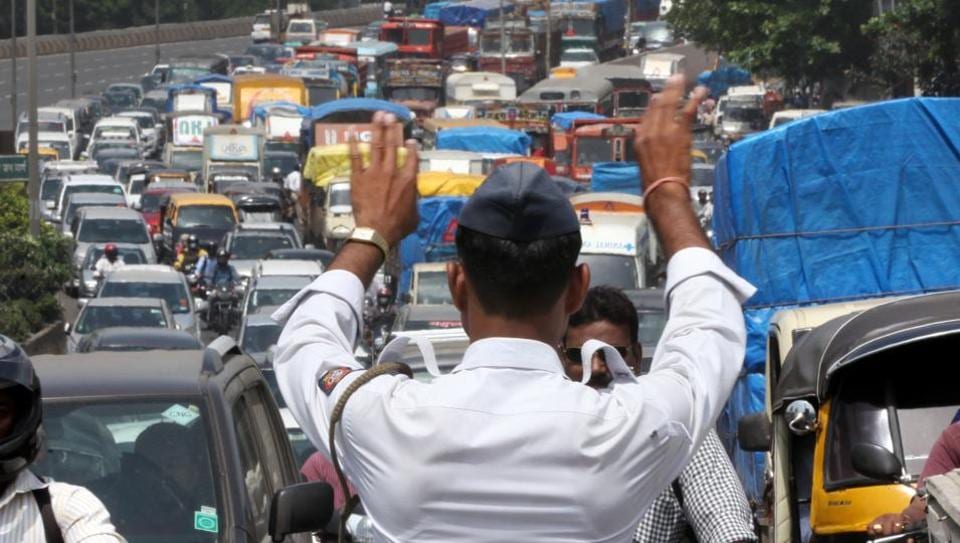
He notices a traffic congestion in Borivli along the Western Express Highway (WEH) and telephones his deputy , ordering him to ease the congestion Within a few minutes, the traffic is moving, but slowly. He then reprimands another officer for not starting counter lanes at another stretch of the highway.
The traffic police have been experimenting with counter lanes. By allowing one south-bound lane in the evening peak hours and vice-versa, it eases the congestion greatly, Bharambe added.
But the process of setting up the counter-lanes is not easy. Traffic police at the 12 divisions of the WEH start preparation at least an hour before the peak hours. Scores of policemen armed with LED batons take their positions, barricades are put up on the flyover so as to allot an additional lane. After the peak hours, they go back to removing the plastic barricades.
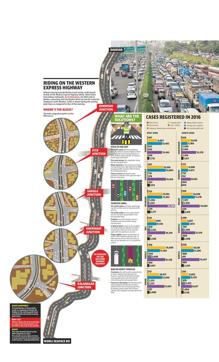
The practice takes up most of the time of these officers and the effort is not always appreciated. But for now, it is the only solution if motorists want a safe journey back home. Last month, the traffic police placed a ban on heavy vehicles from plying on city roads for eight hours in a day in an aim to ease congestion on the WEH. “To keep the traffic on the main roads moving, it is important that the arterial roads also remain unclogged,” said Sanjay Mohite, additional commissioner of police, traffic.
The traffic police are fighting a double battle on the WEH these days. As work on the Metro corridor between Dahisar and Andheri is underway, the work occupy one-and-a-half lane on the highway. The Mumbai Metropolitan Region Development Authority (MMRDA) aims at finishing construction by 2019.
The police have also been making use of the specialised cranes to crack down on vehicles parked in no-parking zones along the arterial roads leading up to the WEH. Last year, in the west and north traffic zones, which mainly cover the WEH, the traffic police registered 1,81,489 cases of no-parking out of a total number of 4,13, 631 cases across the city.
Read
HT Road safety series: Bikers, beware! Taking JJ flyover comes with a risk

Stay updated with all the Breaking News and Latest News from Mumbai. Click here for comprehensive coverage of top Cities including Bengaluru, Delhi, Hyderabad, and more across India along with Stay informed on the latest happenings in World News.


