
 E-Paper



International scientists can access Astrosat data after 6 months
Six months on, scientists and research organisations from around the world will be able to use data from Astrosat, the country’s first astronomy satellite, to aid


Six months on, scientists and research organisations from around the world will be able to use data from Astrosat, the country’s first astronomy satellite, to aid their astrophysics and astronomy-related research.
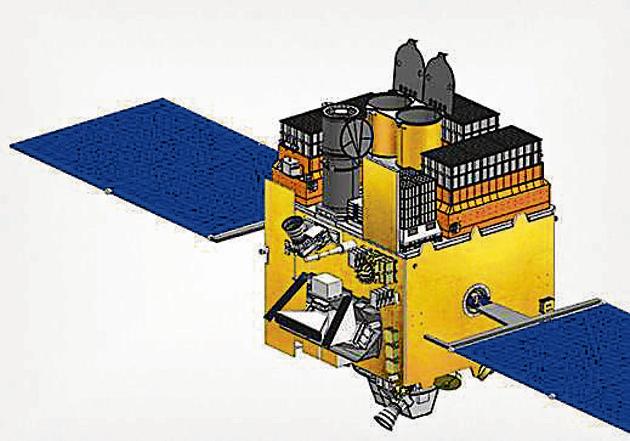
“The international scientific community will be able to observe the source of their choice. They will be able to analyse data that will make their studies more scientific,” said professor JS Yadav of the Tata Institute of Fundamental Research (TIFR), who was responsible for building the indigenous large area X-ray proportional counter (LAXPC), the most sensitive detector.
Users will have to submit proposals that will be reviewed by the Astrosat science committee. Only the scientifically competitive ones will be allotted time to use the instruments.
“Ten per cent of the slots every year will be given to the global scientific community. The instrument team has made the analysis software available for each instrument in the public domain. It can be downloaded,” said Yadav.
Currently, international researchers from United States, United Kingdom, European countries, and Africa are collaborating with Indian scientists, who are principal investigators, and are observing the same source at different wavelengths.
After a year, data collected by both Indian and international researchers will have to be shared in the public domain.
In September 2015, the Indian Space Research Organisation launched Astrosat, with five X-ray telescopes on board. Three instruments — a soft X-ray telescope (SXT), the CZT array detector, and the LAXPC — were built and assembled by the Tata Institute of Fundamental Research, Navy Nagar.
“The fact that the national and international community is interested shows that the instruments are efficient,” said Yadav.
Read
‘Vampire’ star: Astrosat catches ‘blue struggler’ sucking energy off bigger star
Astrosat captures its first image of Crab Nebula
Eye in the sky: India launches its first space observatory Astrosat

Stay updated with all the Breaking News and Latest News from Mumbai. Click here for comprehensive coverage of top Cities including Bengaluru, Delhi, Hyderabad, and more across India along with Stay informed on the latest happenings in World News.


