
 E-Paper



Mumbai’s Flora Fountain gets a makeover. Take a look
Flora Fountain, a monument that has stood testimony to the city’s history for 150 years, will get back its lost glory by the end of the year.

 Prefer HTon Google


Flora Fountain, a monument that has stood testimony to the city’s history for 150 years, will get back its lost glory by the end of the year.

The restoration of the fountain on Dr Dadabhai Naoroji Road, which started six months ago, is almost 65% complete. Speaking to HT, municipal commissioner Ajoy Mehta said, “Flora Fountain is one of the several heritage structures in Fort which are being restored. Our aim is to restore monuments using least invasive method, even if it means opting for a back-breaking, time-consuming, and expensive process.”
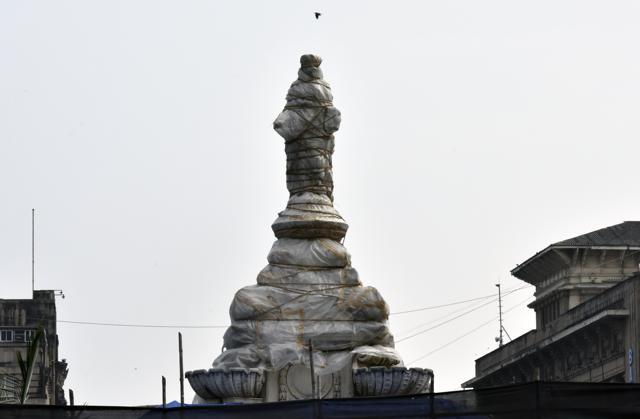
Currently, the team of conservationists has restored the hydraulic system of the fountain, which is on the road that connects Chhatrapati Shivaji Maharaj Terminus to Hutatma Chowk. This led to the discovery of a concealed water chamber with ancient valves. The basin of the fountain has been resurfaced using Italian marble.
Architect Vikas Dilawari, who is overseeing the project, said the fountain had endured climate change, pollution, and hasty patchwork carried out over more than 150 years. “The British built the monument in 1864 using Portland stone, a limestone imported from England. We had to carry out a detailed study to ensure the work doesn’t damage it.”
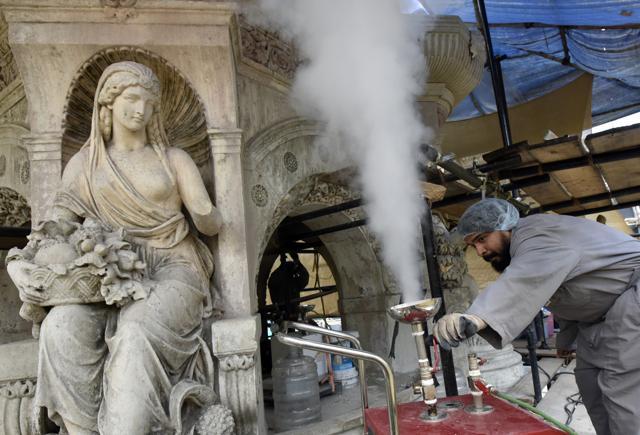
It is a three-tier monument depicting Roman Goddess Flora atop an intricately designed sculpture. The Goddess is surrounded by four celestial fish spouting water. The middle layer has four life-size female mythological figures carrying foliage to represent the four seasons, or the agricultural cycles. The sculpture has 64 spouts, with a basin at the bottom.
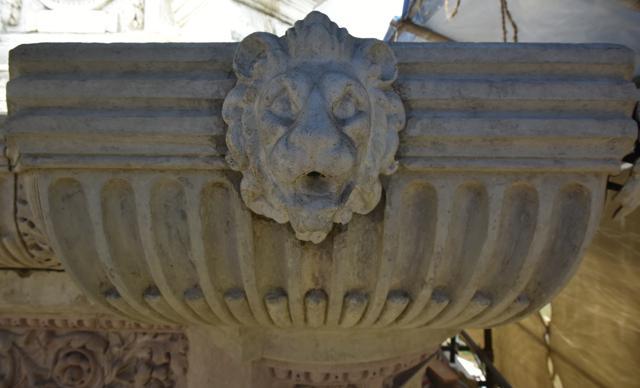
Dilawari, officials from the Brihanmumbai Municipal Corporation’s conservation cell and experts from NGO INTACH started the work late last year using a latest technique to remove the coat of dust and paint.
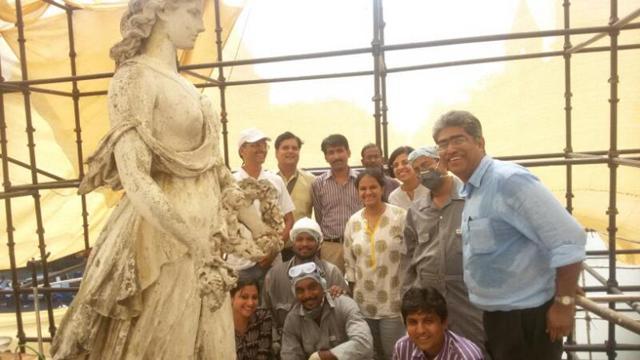
“We are using high-density steam to remove the coat of murk. This is the least invasive technique with long-term benefits, as there is no use of chemicals,” said an official from the BMC’s heritage conservation cell, adding they did not use sand-blasting – an alternative method which would have helped complete the project quicker – because it was invasive.


