
 E-Paper



Putting Mumbai’s 30 dangerous spots on the road to safety
501 deaths in 3 years; better infrastructure for pedestrians and streamlining traffic movement could help, say experts


The 30 most deadly junctions and roads in the city that have claimed 501 lives and caused serious injuries to 1,172 people in the past three years are now being studied in detail by the authorities, and efforts are being made to make commute at these spots safer.
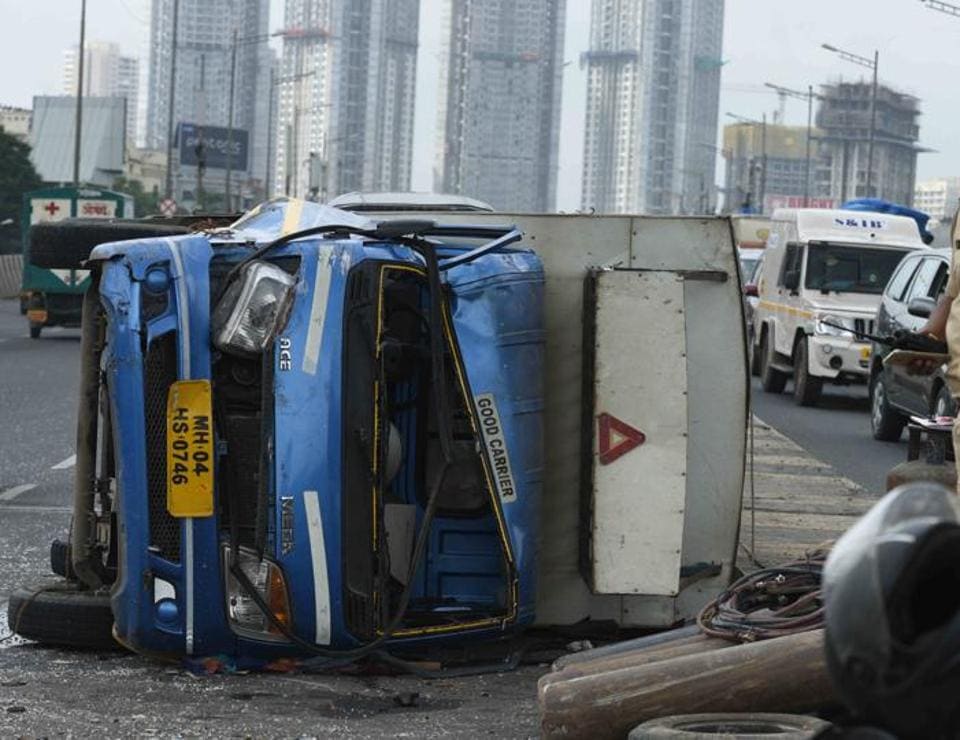
The Brihanmumbai Municipal Corporation (BMC), traffic police and Bloomberg Philanthropies Initiative for Global Road Safety (BIGRS) along with World Resources Institute (WRI) are preparing designs to change infrastructure of these junctions and roads and alter the black spots to reduce the fatal accidents and road mishaps to a great extent.
According to a report released by Bloomberg and the traffic police, between 2017 and 2019, pedestrians in the 30-59 age group were the most vulnerable accident victims, followed by motorcyclists. In 2019, pedestrians and motorcyclists accounted for 90% of the total deaths and 83% of the injuries owing to accidents at these 30 junctions, the report stated.
The traffic police also released a report on road crash deaths for for January-August 2020. During this period, the city recorded 172 fatalities, of which 47% victims were pedestrians.
Experts analysing the black spots said Amar Mahal junction in Ghatkopar was found to be the most dangerous intersection where had 25 people died and 40 others were seriously injured between 2017 and 2019. Majority of the victims were pedestrians. The second highest number of accidents took place at Godrej Junction in Vikhroli, which had claimed the lives of 18 people.
Minute study of the data revealed that of the 15 junctions and 15 road stretches spread over 184 kilometres, the maximum (210) deaths took place on roads and junctions in zone 4 (areas covering Sion, Matunga, Wadala TT, Antop Hill, Bhoiwada and Kalachowkie). Zone 10 (stretch from Kherwadi in Bandra East to Andheri East, mostly covering the Western Express Highway) witnessed the second highest number of deaths, as 18 pedestrians died in 2019. The accidents on these two stretches claimed the lives of 183 motorcyclists and 45 four-wheeler drivers and passengers.
“The efforts we’ve taken over the years have led to a decline in accidents and deaths by 27% in 2019 as compared to 2015. We’ll continue working to bringing down the loss of lives by studying the pattern of road crashes and suggesting ways to curb them,” said Yashasvi Yadav, joint commissioner of police (traffic).
Dr Sara Whitehead, public health and preventive medicine consultant of Vital Strategies, a partner of BIGRS, said, “The continuous decrease in road traffic deaths from 2015 to 2019 is an impressive testament to the hard work done by city officials and the police in Mumbai. But too many Mumbaiites are still at a risk of injury or death merely while walking on the streets. The data from reports point the way to where and how to prevent these needless mishaps.”
Experts said more number of deaths and injuries took place on weekdays during peak hours — between 7pm and 9pm. On weekends, the must number of accidents took place between 10pm and 11pm. “Due to high density of traffic in peak hours, the risk of accidents increases,” said Yadav.
After the data was released, WRI conducted a road safety inspection of these sites to understand the risks associated with every road. “Based on our assessment, we have suggested detailed design recommendations that can improve safety,” said Dhaval Ashar, senior manager of WRI. Some recommendations include improving pedestrian accessibility at the locations, streamlining traffic movement, traffic calming and improving pedestrian visibility.
Ashar said if the authorities design the streets and intersections it will not only improve safety, but also help vehicular efficiency as each pedestrian and motorist will have a well-defined space to traverse. Pointing out an example, he said in 2016, WRI in partnership with BMC and the traffic police had carried out safety improvement on the HP petrol pump intersection in Bandra. The trial was carried out using temporary installations such as traffic barricades, cones and paint. The objective was to monitor operations during the trial period to make the case for permanent implementation. The larger objective was to create a scale-up plan for all high-risk intersections by documenting typical challenges and developing a toolkit with a template of standard solutions.
Following the example set by HP junction, the experts are now working out plans to improve the deadly 30 spots.
Stay updated with all the Breaking News and Latest News from Mumbai. Click here for comprehensive coverage of top Cities including Bengaluru, Delhi, Hyderabad, and more across India along with Stay informed on the latest happenings in World News.


