
 E-Paper



Say no to all noise, not only to firecrackers
This year’s Diwali celebrations registered a good enough drop in average decibel levels and Mumbai had its quietest Diwali in a decade, by all accounts available so far


This year’s Diwali celebrations registered a good enough drop in average decibel levels and Mumbai had its quietest Diwali in a decade, by all accounts available so far. There were the high decibel hotspots, firecrackers were burst after the 10pm deadline at some places, and the highest decibel level recorded was 113.5dB at Marine Drive which was more than twice as loud as rules allow but, on the whole, the trend was towards fewer firecrackers and less noise.
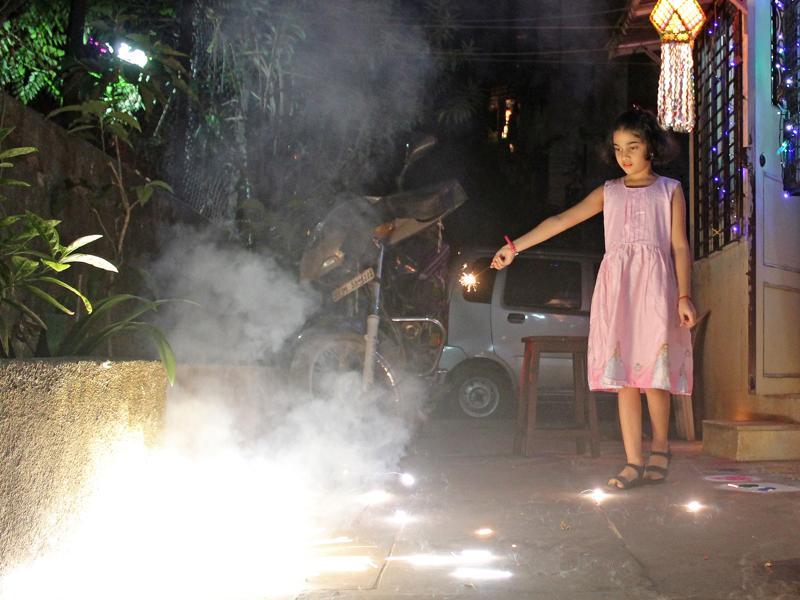
This is a positive trend and it must have been satisfying to the selfless activists who have campaigned against noise pollution for years. The anti-noise campaign was at multiple levels, from approaching the courts and government to mounting awareness initiatives for citizens and aggressively pursuing the anti-noise agenda during high-decibel festivals like Ganesh Chaturthi and Diwali. The genial Dr YT Oke, the indefatigable Sumaira Abdulali, the determined Dr Mahesh Bedekar, and the handful of other committed activists, who work independently or collectively, deserve all the gratitude we give them for doggedly pushing the campaign.
What this year’s relatively quiet Diwali shows is clear: despite the Noise Pollution (Regulation and Control) Rules formalised in 2000 and dozens of Bombay high court orders severely rapping noise polluters, any change on the ground requires consistent, gritty, aggressive advocacy campaigns in which activists and citizens are willing to take offenders head-on, record decibel levels, chase the police for action against the offenders, whether they are powerful politicians as in the Shivaji Park case or influential organisations which organise celebrations. The Noise Pollution Rules and court orders are not implemented without intervention and advocacy.
The occasional quiet Diwali celebration apart, Mumbai continues to be an extremely noisy city. In fact, it is the noisiest city in India, as the Central Pollution Control Board (CPCB) analysis of 35 locations across nine cities earlier this year showed. All the CPCB stations in Mumbai, Navi Mumbai and Thane recorded that Noise Pollution Rules’ limits and norms were exceeded and four of them registered 100% more than the prescribed limits, the analysis noted. Noise pollution emanates from motor vehicles, honking, aircraft, construction, sirens and unregulated use of the public address system.
For Mumbai to achieve a lower level of average ambient noise, the local police across the city have to be better educated and determined about implementing the Noise Pollution Rules against all offenders, and activists and alert citizens have to spread their campaigns wider beyond select festivals to include the persistent offenders. Motor vehicles and honking have to be tackled on a war footing. Multiple agencies need to be involved and the role of anti-noise activists cannot be over-emphasised here.
The thousands of construction sites where the Noise Pollution Rules are simply ignored and the rampant use of the public address system, especially in mosques which blare out azaans well over the prescribed decibel limits for residential areas five times a day including at 5am when no loudspeakers are allowed between 10pm and 6am, present the more difficult challenges. Action against these offenders is minimal, if at all. And campaigning against them is even quieter, if at all.
Indeed, the Diwali firecrackers across the road are deafening and the loudspeakers during the Ganesh Chaturthi are annoyingly loud but the noise from the construction site a few metres away is equally irritating and perhaps more hazardous because it continues for months on end; the blatant use of loudspeakers in mosques at nearly 90dB, especially at 5am, is just as harmful to health. These violate the Noise Pollution Rules as much as the firecrackers do. What would it take to mount aggressive campaigns against these offenders too, by both the police and anti-noise activists?

Stay updated with all the Breaking News and Latest News from Mumbai. Click here for comprehensive coverage of top Cities including Bengaluru, Delhi, Hyderabad, and more across India along with Stay informed on the latest happenings in World News.


