
 E-Paper



Soil around Mumbai’s garbage dumps contains hazardous levels of mercury: Study
High levels of mercury have been found in the soil and water around biomedical waste treatment facilities at Govandi near Deonar dumping ground, and Uran in Raigad district, a study by Amity School of Biotechnology, Amity University, and the Maharashtra Pollution Control Board has revealed

 Prefer HTon Google


High levels of mercury have been found in the soil and water around biomedical waste treatment facilities at Govandi near Deonar dumping ground, and Uran in Raigad district, a study by Amity School of Biotechnology, Amity University, and the Maharashtra Pollution Control Board has revealed.
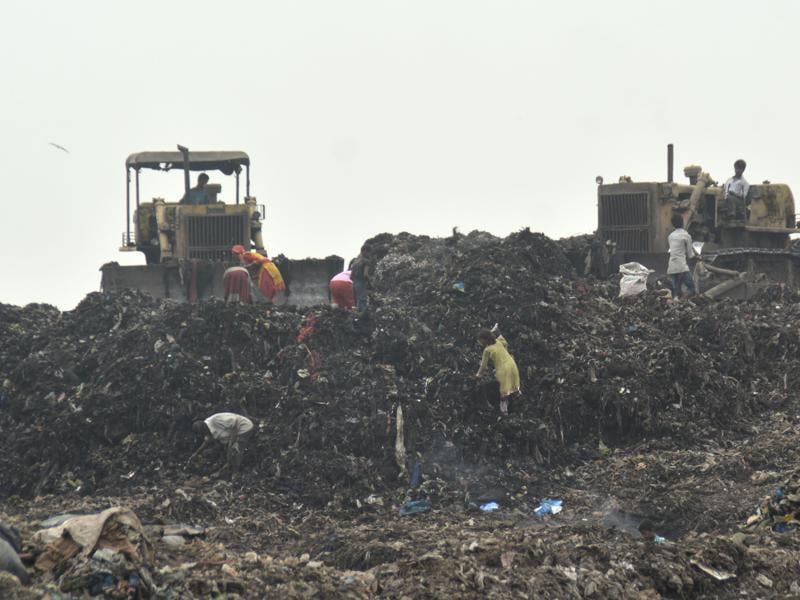
Mumbai generates approximately 4,762kg biomedical waste every day from health care facilities. Of the total waste, SMS Envoclean treatment facility-Deonar receives about 4,737kgs each day, and the remaining 25kg is treated at Evergreen Environmental, Uran.
The permissible limit for mercury content in soil is 0.01mg/kg to 0.3mg/kg. The analysis of soil samples found mercury content as high as 1.861mg/kg in February, 1.140mg/kg in March and 1.353mg/kg in April. For mercury content in water, the permissible limit set by law is 0.001mg/l. This was also breached as found after analysing water samples during all the three months – February (0.098mg/l), March (0.040mg/l) and April (0.115mg/l).
Mercury, a toxic heavy metal, is present in almost every medical device – from thermometers, sphygmomanometers that measure blood pressure, feeding tubes, gastrointestinal tubes, silver dental fillings (50% is liquid mercury), to x-ray machines, medical batteries, laboratory chemicals, vaccines and nasal drops.
Previous studies estimate that every year, two thermometers break per bed, resulting in accidental spillage of mercury.
The health impacts of mercury contamination first came to the fore in Japan in 1956, when locals from Minamata city became victims of methyl mercury poisoning after they consumed the contaminated fish from the water that had mercury discharged in it from a chemical plant. This is now called the Minamata disease.
“Developed countries have already moved towards mercury-free instruments. We are yet to get there,” said Neetin Desai, director, Amity School of Biotechnology, Amity University, Panvel. “Mercury does not degrade, and remains in the environment for a long time. It’s contamination in water bodies can lead to ingestion in fish, which in turn can get amplified in humans upon its consumption. Long term exposure affects the nervous system, brains, lungs and kidneys.”
The study has recommended that mercury waste from healthcare facilities should be categorized as electronic waste (e-waste), and treated by authorised e-waste treatment facilities. In addition, segregation of waste should be done at health care facilities as per guidelines issued by the Central Pollution Control Board (CPCB).
“Mercury pollution is a problem. Hospitals are supposed to contain spillages but that is not happening despite the stipulated guidelines. We need to ascertain what levels of mercury are present at the waste disposal facility,” said Amar Supate, principal scientific coordinator, Maharashtra Pollution Control Board. “We need to intensify monitoring in addition to educating hospitals.”
Biomedical wastes from health care establishments (HCEs) in Mumbai are treated at SMS Envoclean through methods such as incineration, autoclaving, shredding, and effluent treatment. BMW from HCEs in Uran are treated at Evergreen Environmental using methods that include deep burial, autoclaving, and shredding.


