
 E-Paper



Study spots six unique trees in Mumbai
This summer, Mumbaiites will be able to see six such rare trees at different points of the city. Watchdog Foundation, an NGO, carried out a month-long survey and identified six unique trees in different parts of the city. The idea is to educate citizens about the importance of the city’s green cover.

 Prefer HTon Google


Have you ever seen a baobab tree with a bloated root ball? You will find one near Byculla Zoo.
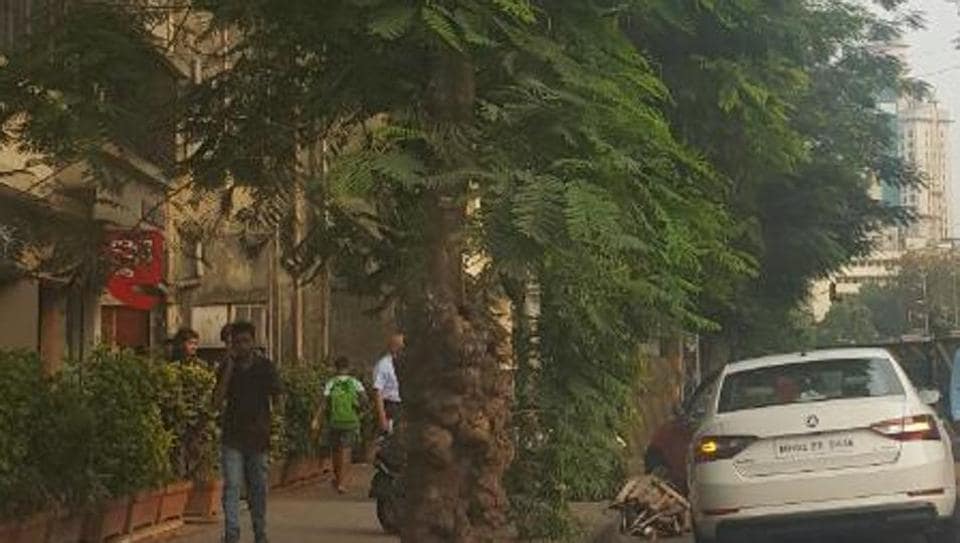
How about a 40-foot high coconut tree? Go to Sahar airport road.
This summer, Mumbaiites will be able to see six such rare trees at different points of the city. Watchdog Foundation, an NGO, carried out a month-long survey and identified six unique trees in different parts of the city. The idea is to educate citizens about the importance of the city’s green cover.
The six trees — a baobab with a bloated root ball and a kaim tree, both near Byculla zoo, a 40-feett-high coconut tree at Sahar airport road, a fish-tail palm in front of Mumbai Central railway station, a gulmohar with a distinct bark at Tardeo and a massive rain tree near Mahalaxmi that survived the mealy bug infestation.
Members of the NGO said that the study had been carried out to highlight the need to protect such trees. “Trees that are more than 100 years old are being chopped off mercilessly. No thought is spared on their beauty, heritage or even medicinal value,” said Godfrey Pimenta, trustee, Watchdog Foundation. “We are collating a database of such treasures that need to be protected for the coming generations to see.”
The study comes at a time when 5,012 trees across the city will be affected because of the construction of the Metro III project. Additionally, the Brihanmumbai Municipal Corporation’s (BMC) tree authority permitted the felling of 25,018 trees between 2010 and 2016, revealed a right-to-information (RTI) response by the department. However, it failed to provide any record for the trees replanted or transplanted in their stead, over seven years.
The study also identified 14 of 20 trees that did not survive transplantation by the civic body for road-widening in Mumbai. “We identified 20 trees at Mankhurd, close to a traffic island near Chedda Nagar in Chembur, that were transplanted six months back. While 14 have died, some even uprooted, the remaining trees are on the verge of dying,” said Pimenta. “We came to the conclusion that hardly any effort was in place to preserve trees, and tree transplantations were negligible.”
Experts said while the list was accurate, the number of unique trees was three times the amount two decades ago. “The city has only 50% indigenous trees left now. But rather than stressing on what trees to be planted, we need to ensure that plantations are done and checked for survival,” said Marselin Almeida, a botanist. “Hundreds of unique species across the seven islands have been lost in the past 20 years and only a handful survives now.”
Uncommon and how?
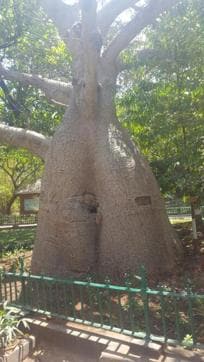
Common name: Baobab
Botanical name: Adasonia Digitata
Location: At Byculla zoo
Description: An exotic tree native to Africa, it is known for its property of holding much more water and nutrients when compared to other trees — that leads to a swollen base. The baobab tree is known to survive for a maximum of 2,000 years. The tree was brought to India by the British.
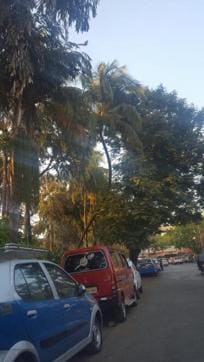
Common Name: Coconut tree
Botanical Name: Cocos Nucifera
Location: Next to Hotel Leela, Sahar Airport Road
Description: The root of this tree is higher than any other coconut tree in the area. They can grow up to a 100ft. The tree originated on the Singapore coastline and is native to the Indian coastline. The reason why some grow more than others is because of an injury that makes it start rooting at a higher point.
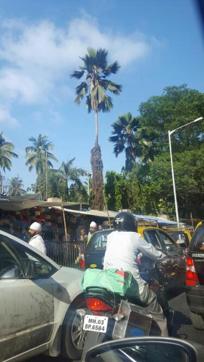
Common name: Fishtail palm
Botanical Name: Caryota urens
Location: In front of Bombay Central Railway Station
Description: The branch automatically tilts to one side and grows up to 50ft. This species is native to India, along with the beetle-nut tree and dome tree — all palms species. The Fishtailed palm automatically manoeuvres itself to find sunlight and water, and takes its desired shape.
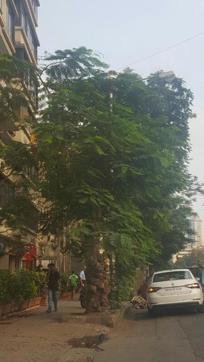
Common name: Gulmohar
Botanical name: Delonix Regia
Location: Near Hira Panna Shopping Centre, Tardeo
Description: Gulmohar originated in Africa and there are two separate species — one that has red flowers and the other with white ones. The tree identified at Tardeo has extensions at its base to harness more ground water. When the roots are blocked by the concrete around the base of the tree, it grows from the base to meet its water and nutrient requirements.
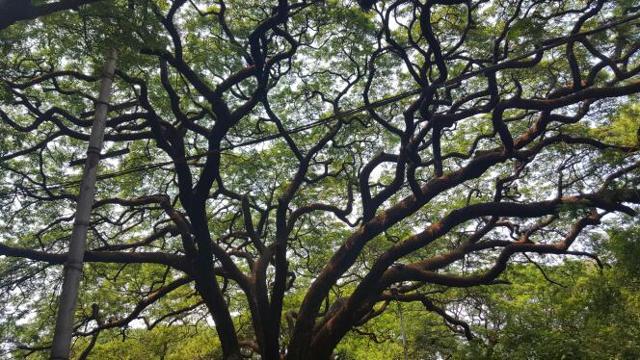
Common Name: Rain tree
Botanical Name: Samanea Saman
Location: Near Gate No.7, Race Course, Mahalaxmi
Description: Rain tree is common in Mumbai because of its fast growth and wide canopy. An exotic plant originally found in the southern hemisphere, it grows very broad and with a very balanced canopy that grows up to 80 to 100 feet. Over the past decade, a number of rain trees have died due to the mealy bug infestation. However, the one at Mahalaxmi has survived and is one of the largest rain trees in Mumbai.
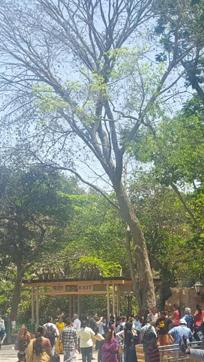
Common name: Kaim Tree
Botanical Name: Mitragyna parvifolia
Location: Entrance of Byculla Zoo
Description: The tree was first identified as a copper pod and grows to a maximum of 80feet. It is a native tree and is considered sacred under the Hindu mythology and is planted during marriages and some festivals. It is planted to signify a relative attending the wedding.
(Source: Survey by Watchdog Foundation and descriptions by botanist Marselin Almeida)
READ MORE
13 trees hacked, BMC did not fulfil its promise to transplant them: Mumbai residents


