
 E-Paper



Trump’s visa order: Indian families separated, suffer, seek to be reunited
On June 22, US President Donald Trump’s administration announced that it was suspending a range of visas — including the L-1A, L-1B, J-1, the popular H1-B issued to skilled workers and the H-4 issues to dependents, slamming the gates shut on many people who had legally been working, paying taxes and building their lives, for years, in the US.


A father separated from his wife and child. A mother whose children keep begging her to come home. A young man’s life altered, perhaps forever. All the result of an announcement that has slammed the gates shut on people who had legally been working, paying taxes and building their lives, for years, in the United States (US).
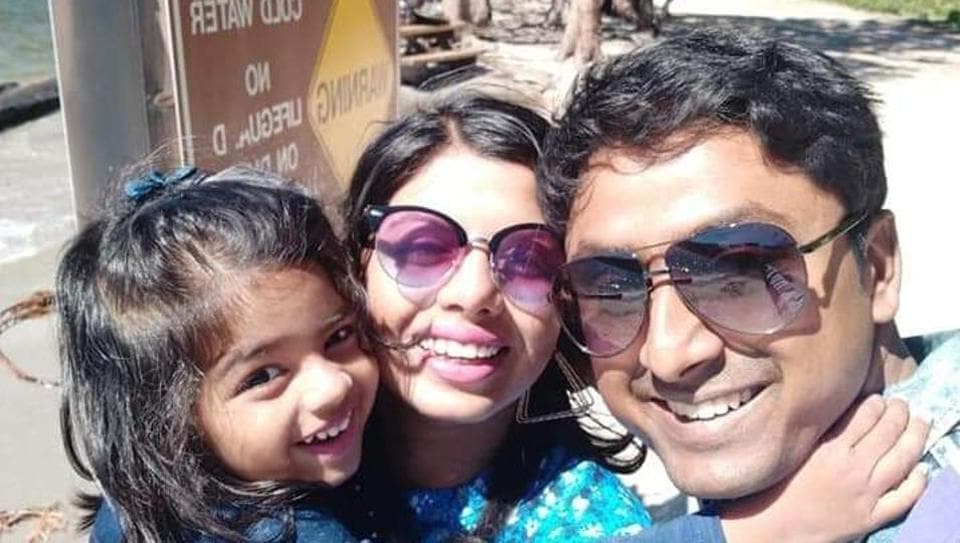
On June 22, US President Donald Trump’s administration announced that it was suspending a range of visas — including the L-1A, L-1B, J-1, the popular H1-B issued to skilled workers and the H-4 issues to dependents. Any individuals that didn’t already have a valid visa stamp by June 24 would not be allowed back into that country — except perhaps as tourists — until at least December 31.
Some of the people you’ll read about here have H-4 petitions approved till 2022. But every time you leave the US, you still have to refresh the stamp at a consulate. Without a fresh stamp, you cannot re-enter the United States. And as things currently stand, no fresh stamps will be issued this year.
What’s made this crisis even worse: US consulates in India have been shut since mid-March, because of coronavirus restrictions. So, people who had rushed here to be with a dying mother, to spend time with family, or precisely to refresh the stamp — have all got locked in to a norm that didn’t even exist when they left their lives in America. Here are some of their stories.
A TICKING CLOCK
Chanakya R is 13 weeks late to work, and it’s looking more and more like he may not make it there at all.
The sales consultant flew to Mumbai from San Francisco on February 29, to refresh his visa stamp because he was changing jobs in the US. “I thought I’d meet family and friends, get the visa stamp done by end-March and head back,” says the 30-year-old.
His timing couldn’t have been worse. “By mid-March, the embassies shut because of the coronavirus restrictions. With Indian borders also sealed, international flights suspended, and no H1-B stamp in my passport, I got in touch with my employer and asked for an extension on my joining date.” As soon as the embassies opened and flights were operational, he promised them, he would return. Now that seems impossible too.
June 24 has come and gone, and he still has no fresh H1-B stamp. Chanakya’s only hope of returning to what has been his life for seven years, is if the decision is reversed. “I am hopeful that the ban will be lifted soon,” he says, speaking from Bengaluru, where he is living with family. He is trying to stay calm and positive. He says he spends his time reading and connecting with family and friends. But it’s hard not to dwell on it, he admits, hard not to think of how the course of his life may be permanently altered.
‘SHE MISSES HER DAD’
“It breaks my heart to see her crying on video calls with her father, as he tries to explain to her why he didn’t take us with him,” says Sraboni Bose, 32.
Bose and her five-year-old daughter came to India from Plano, Texas, in mid-February, to visit family. Her husband, a software engineer and H1-B visa holder, joined them on March 10.
Soon after he arrived, on March 16, consulates shut due to coronavirus restrictions. While Bose and her husband had their renewed H1-B and H-4 stamps by then, their daughter’s passport was still with the consulate, pending an interview.
On May 12, Bose’s husband had to return to work or risk losing his job in the US, so he took a seat on a Vande Bharat flight headed to the US to bring Indians home. The consulates were still closed. As soon as things reopened, they figured, they would get the fresh H-4 stamp for their daughter, and be together again.
Then came the Trump order. For this family, it means that Bose’s daughter can’t return to her home of three years, can’t return to school. And she and her mother will be separated from her dad until at least the end of the year. “My family suffers due to this unfair proclamation,” says Bose, currently living with her parents in Kolkata. “I don’t have a work permit; my child is doing nothing to affect the US economy. So why this separation? It is taking a toll on our mental health. I quit a well-paid job as an IT engineer so that I could follow my husband to the US, and my child could grow up with both parents. All we want is to be reunited.”
LOSS AFTER LOSS
On March 12, Jyoti Patil rushed to Karnataka from the US to be with her mother, who was critically ill. She came alone from San Jose, California, her home of six years, leaving her 11-year-old son and six-year old daughter with her husband, Anand Patil, a software engineer.
On March 20, Patil’s mother died.
Amid the emotional upheaval of dealing with this loss, with neither husband nor children around to comfort her, Patil now had to worry about not being allowed back to the US to be with them. “I completely froze upon hearing the order on March 22,” says Patil, 40, now living with her in-laws. “Even if I had wanted to get the renewed stamp while my mother was critically ill, I couldn’t have. The consulates were already closed. We are legal, law-abiding aliens. I have an approved H-4 petition valid till 2022. We have set up lives there with a lot of effort and investment. I do not understand how a non-working H-4 dependent visa holder can impact the jobs of the American people.”
Anand, meanwhile, is struggling to juggle a full-time job and kids who are home all day because schools are shut.
“He’s working long hours at night to make up for the time lost during the day. I fear for his health. My daughter keeps asking me to come home, I look at them on my phone screen and I can see them suffering. This kind of forced separation from their mother… I hope the US government hears our pleas; our lives are at their mercy.”


