
 E-Paper



Urban green cover helps reduce heat, says IIT-B study
The five-member team said the study findings point to increasing public health facilities in non-urban regions to combat health hazards from heat waves

 Prefer HTon Google


The green cover in urban areas such as Nashik and Delhi reduces the urban heat island (UHI) effect as compared to neighbouring non-urban areas, says a study by the Indian Institute of Technology – Bombay (IIT-B) published in Scientific Reports (Nature Publishing Group) on Monday.
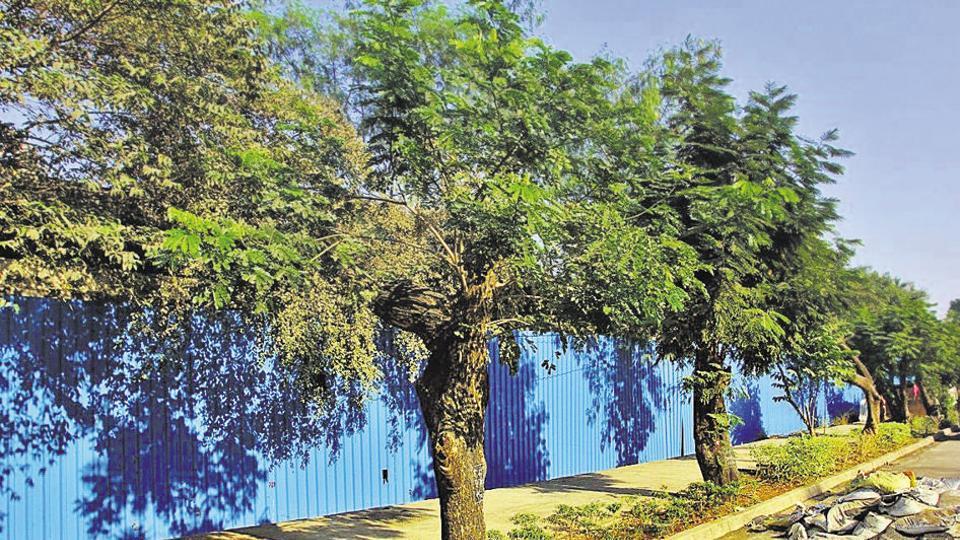
A first-of-its-kind study of daily and seasonal characteristics of surface urban heat island intensity (SUHII) in India has found that rural areas experience higher temperatures during the pre-monsoon summer days (March, April and May) resulting in intensified heat waves as compared to their urban counterparts. However, urban areas witness warmer temperatures during summer nights, compared to the interior parts of India.
An UHI occurs when a metro is significantly warmer than its surrounding rural areas owing to the impact of urbanisation - buildings and paved roads. SUHII is the difference between the land surface temperature (LST) of urban regions and neighbouring non-urban regions.
The five-member team said the study findings point to increasing public health facilities in non-urban regions to combat health hazards from heat waves, and consider them as part of disaster mitigation policy in India.
“During March, April and May, there is vegetation in urban areas in terms of tree cover, gardening. Water bodies are also maintained. As a result, evapotranspiration takes place, and temperatures are lower in urban regions during the day than rural areas,” said professor Subimal Ghosh, department of civil engineering, IITB, adding that nights are warmer in urban areas owing to the absence of evapotranspiration and thermal storage in concrete structures.
Evapotranspiration occurs when transpiration takes place from vegetation and evaporation takes places from water bodies, thereby reducing temperature.
Researchers said there is reduced evapotranspiration in rural areas during the pre-monsoon summer months since arid rural areas of India are dry. “There is no vegetation because crop land gets converted to barren land owing to hardly any agricultural activity,” added Ghosh.
However, the situation changes for rural areas between December and February (both day and night) with growth in vegetation, and agricultural activity owing to the rabi season. As a result, temperatures drop both during the day and night in the rural areas during winter.
“For urban areas, during winter, when the UHI effect changed from a cool urban region to a warm urban region, we found a greater incidence of this happening in regions where our inventory showed higher emissions of black carbon, which are pollution particles,” said professor Chandra Venkatraman, IITB.
Researchers said the findings — based on 13-year (2001 to 2013) land surface temperature records from satellite sensors — is not aligned with existing global and regional scientific studies that show urban areas —including those in US and Europe —experience warmer temperatures than their neighbouring non-urban areas
Read
Lack of green cover steps up the heat in Mumbai
Updates every 3 hours on how hot it is: India gets its first heat index


