
 E-Paper



Virus cases cross 5K, Maharashtra brings back curbs
CM Uddhav Thackeray reverses relaxation in Mumbai, Pune as many violate lockdown


In a repeat of Sunday’s grim record high, Maharashtra on Tuesday reported 552 new coronavirus disease (Covid-19) cases, taking the state’s tally past 5,000 to 5,218.
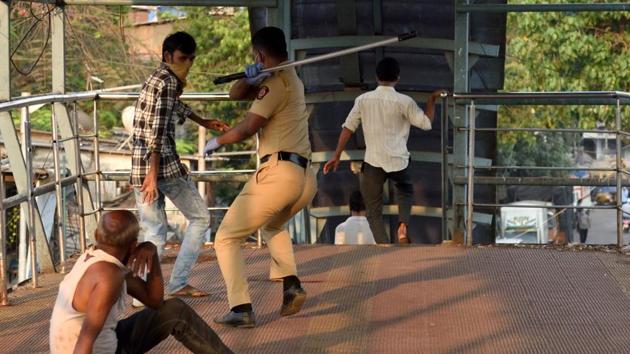
With the number of cases soaring in the Mumbai Metropolitan Region (MMR) and the Pune Metropolitan Region (PMR), the Maharashtra government on Tuesday issued an order reversing the relaxation provided in both areas. Of the new cases, 419 were recorded in Mumbai, taking the city’s tally to 3,451.
The state also recorded 19 deaths on Tuesday, of which, 12 were in Mumbai, three in Pune, two in Thane and one each in Sangli and Pimpri-Chinchawad. The state’s death toll is 251.
Meanwhile, even after receiving 75,000 rapid diagnostic kits to detect Covid-19 antibodies, Maharashtra may have to wait longer. The India Council of Medical Research (ICMR) has instructed states that are conducting the tests to wait for two days until the council issues its revised policy for running the tests.
According to senior Mantralaya bureaucrats, chief minister Uddhav Thackeray was upset over the reports of crowding and traffic jams after the lockdown was relaxed on Monday, which prompted the state to reverse its orders. Thackeray, during his address via Facebook Live on Sunday, had indicated that the relaxation could be rolled back if people do not adhere to social distancing norms.
The order issued by the state disallows private building construction activities, the opening of farsan, sweet and confectionery shops, and opening up of IT companies with 50% staff. The relaxation provided by the government will be implemented elsewhere in the state. With the new order, private building construction in MMR and PMR will be halted again. Courier services, cold storage and warehousing services at ports and airports have been disallowed, take-away and home delivery of food from restaurants will not be allowed.
Besides that, ongoing pre-monsoon work carried out by the civic bodies along with the construction work on infrastructure projects in the regions will also stop till further notice, state officials said. “The chief minister was upset after traffic jams were seen on Monday. Therefore, for now, all activities, including pre-monsoon work, construction of infrastructure projects have been stopped. We will take a review on it and decide in a day or two as we cannot delay pre-monsoon work,” a senior official said.
The two regions — MMR and PMR — have the maximum number of Covid-19 cases in the state.
MMR recording 4,077 cases and 169 deaths, and PMR recording 754 cases and 59 deaths.
The order issued by chief secretary Ajoy Mehta stated, “In view of large number of people commuting because of relaxation issued vide order dated 17 April, 2020 and also imminent threat of further pandemic it is hereby directed that in MMR and PMR area the previous orders will not apply.” It also clarified that e-commerce companies, the vehicles used by e-commerce operators, will be allowed to ply with the necessary permission. E-commerce delivery of essential commodities, food, pharmaceuticals and medical equipment would be permitted.
The state government, which had earlier curbed door-to-door delivery of newspapers, allowed it in the same order on Tuesday. However, the door-to-door delivery will not be allowed in MMR and PMR, the order state. Elsewhere, the delivery person will have to adhere to social distancing measures, wear a mask, use sanitiser.
In a meeting held via video conferencing, Thackeray told the two inter-ministerial central teams that have been dispatched to Mumbai and Pune that Centre should take a call regarding sending the migrant labourers back to their home states. “The chief minister took up the issue of migrant labourers as the situation was getting difficult. There are around 6 lakh migrant labourers in Maharashtra, and on occasions, some have taken an aggressive stance at the relief camps. The CM has said that they should be taken to their home states in an organised manner and a decision should be taken at the earliest,” an official who was present in the meeting said.
A statement from the CMO said, “If the Centre has a projection that there could be a spike in the spread of the coronavirus between April 30 and May 15, then the Centre should take a decision to arrange special trains to take the migrant labourers to their home state in the time available.” It added that guidelines should be formulated before the end of April. An official also said that the CM raised the issue regarding the rapid testing kits. Thackeray asked the team that the Centre should take quick decisions on providing testing kits to the state.
The two teams met the officials of the Brihanmumbai Municipal Corporation (BMC) and Pune Municipal Corporation (PMC) over their action and preparedness to tackle the rising number of cases in the two cities. The team led by Manoj Joshi, additional secretary ministry of food processing, visited Worli-Koliwada area on Tuesday for an on-spot inspection of the containment area. The BMC ward has the highest number of cases in the city with over 425 Covid-19 cases. Another team led by Sanjay Malhotra, additional secretary, ministry of power, visited PMC and held a meeting with the divisional commissioner and other senior district officials.
A senior Mantralaya bureaucrat said that the team that visited Mumbai raised concern over the high mortality rate in the city. Mumbai has recorded 151 deaths. Besides, in the discussion, they raised a point about the high death rate in the city.
They have also raised an issue that containment in certain areas such as Dharavi in the city has not been followed strictly,” the official said requesting anonymity. The team is expected to remain in the two cities for another day for a round of discussion and on-spot visits.
Meanwhile, Maharashtra has conducted 83,111 coronavirus tests so far, of which 77,638 has tested negative, while 5,218 have tested positive. To date 722 people have recovered in the state. In Maharashtra, 99,569 are under home quarantine, while 7,808 are at institutional quarantine facilities.
According to experts, cases will further rise in the state as we are in the middle of the epidemic curve and because of better surveillance, more asymptomatic patients are getting diagnosed.
“The first case in the state was reported in the second week of March. The incubation period of the virus is 14 days. Thus, we are exactly at the blooming time of the virus when gradually the epidemic graph will rise to its highest,” said Anup Kumar Yadav, commissioner (family welfare) and director, National Health Mission, Maharashtra. “Then will fall flat like a plateau and gradually deprecate. This is the nature of any outbreak,” he added.
Officials also opined that owing to rising number of tests in the state, more patients are getting diagnosed. “We have narrowed down the testing procedures. Now, more number of high-risk people like cancer, tuberculosis or kidney patients, among others, are getting tested from containment zones. People might panick because of the rising number, but it is because of better surveillance,” said Suresh Kakani, additional commissioner, BMC.
A similar trend was noticed in China, Italy and Iran, where in the second month of infection, highest number of Covid-19 cases were recorded.
On Tuesday, BMC issued a circular where they have decided to do household surveillance to identify people above the age of 60 years with comorbid health issues. “We are being criticised for narrowing down the testing procedures, but with the same kits, we are able to run diagnoses on vulnerable group of people, which will add to the data of cases, but it will help curb spread,” added Kakani.
With the inclusion of rapid and pool testing, the number of cases will rise further, warns an expert. “A surge in number of cases means detection rate is high. Almost 70% of these patients are asymptomatic, which means most of these are contact tracing. There is no need for panic,” said Dr Om Srivastava, a city epidemiologist and part of the task force of the state government.
The state government was supposed to start rapid testing from Wednesday, but as per the new directives, will have to wait for two more days. “We will abide by the rules of ICMR,” said Yadav.
The Indian government recently procured 5.5 lakh rapid diagnostic kits from China. Out of this, Maharashtra, India’s worst-hit state, has got 75,000 kits. Rajasthan, Jharkhand and Chattisgarh are among states that have started using the tests.
“We had got the green light from experts and we have already procured the kits. We will first test in Covid-19 hotspots to find out asymptomatic patients,” said Anup Kumar Yadav,
The rapid testing kits, through which blood samples are tested, were aimed at speeding up screening and detection of suspected coronavirus patients as they take less time to show results in comparison to the swab-based tests carried out in pathology labs.
When a person contracts Sars-Cov-2, the virus that causes Covid-19, the body starts developing antibodies. In the first week, IgM antibodies [first antibodies produced in response to an antigenic challenge] are produced and gradually, IgG antibodies [the most abundant type of antibody] start growing, which remain in the body for almost a month. “So, depending on the types of antibodies and their concentration, we can estimate if the person is in the early stage of infection or in the stage of recovery,” said Dr Lancelot Pinto, an epidemiologist from Hinduja Hospital.
But these rapid tests are not for diagnosis at an individual level and often provide false positive reports.
According to the World Health Organization (WHO), in some cases, antibodies are not produced in the bodies of patients carrying the Covid-19 pathogens when they get tested within the window period. Thus the world health body issued an advisory stating, “WHO doesn’t currently recommend the use of antigen-rapid diagnostic tests for patient care.”
As HT reported on Monday, due to the same discrepancy in experts’ opinions about the efficiency of the diagnosis, the state health department was confused about its implementation in Maharashtra.
As per experts, it helps in the initial level of the outbreak in segregating the infected patients from the non-Covid population. This is mostly useful in containment zones that are more heavily infected.
Stay updated with all the Breaking News and Latest News from Mumbai. Click here for comprehensive coverage of top Cities including Bengaluru, Delhi, Hyderabad, and more across India along with Stay informed on the latest happenings in World News.


