
 E-Paper



Article 370 order upsets nation’s federal balance

 Prefer HTon Google


The Article 370 judgement of the Supreme Court (SC) will have a bearing across the country. It calls into question the very idea of India as a Union of states along with its judicially construed federal structure. How the rest of the country -- especially states that seek to safeguard their unique social, cultural, political and linguistic dimensions — responds to this challenge will determine the future course of India. The “Article 370” case primarily deals with legal issues concerning the extent of the sovereignty of the erstwhile state of Jammu and Kashmir within the Indian constitutional architecture, the validity of the Jammu and Kashmir Reorganisation Act 2019, the two constitutional orders issued by the President of India and, finally, the acts of Parliament bifurcating the state of J&K and converting them into Union Territories. Once the constitutional thicket was parted, the central theme was that of federalism and the autonomy of the state of J&K to determine its political future.
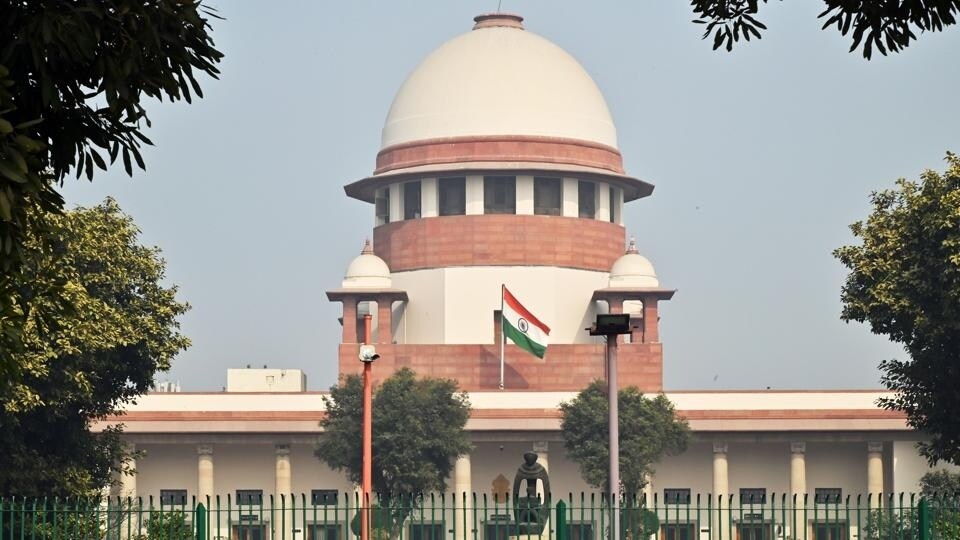
The SC, through three concurring judgements, has upheld the validity of the course of action taken by the Union of India in issuing the constitutional orders, except for holding the procedure of modifying Article 370 through Article 367 of the Constitution as invalid. Technicalities aside, this verdict arms the Union of India with a compelling justification for exercising its will over the states. It would seem the modus operandi of altering the boundaries of a state and extinguishing its “statehood” by converting it into a UT after imposition of President’s Rule has now received judicial endorsement.
Article 3 of the Constitution specifically provides that the state legislature should be allowed to express its views on any Bill that alters the areas or boundaries of that state before it is tabled in Parliament. When pointed out that the state legislature was suspended at that time and President’s Rule was in place, the Court declared that the views of the state legislature are not mandatory but only recommendatory. While this is entirely against the grain of federalism, it is also rather ironic. When it comes to the appointment of the Union judiciary, the SC has interpreted Article 124 of the Constitution in a purposive manner to hold the recommendations of the collegium of judges, something that is not specified anywhere in the Constitution, to be binding. There ought not to be one interpretation of the law when it comes to judicial appointments and another for the states that constitute the Union.
To justify the legal position and to limit the scope of the state legislature on Article 3 of the Constitution of India, the Court has relied on Babulal Parate vs the State of Bombay (1959) as precedent. This case relates to the reorganisation of states soon after Independence and has little practical relevance to the present-day federal framework. By doing so, the SC has neglected the evolution of jurisprudence over 60 years of how the Constitution has transformed to retain its basic structure, and consequently, recognised the essence of federalism.
The SC was also asked to rule on the constitutional validity of the bifurcation of the state of Jammu and Kashmir and the conversion of the state of Jammu and Kashmir into a UT. It is a matter of deep concern that after expressing its views on the constitutional orders dealing with the question of sovereignty of Jammu and Kashmir, the Court did not venture into the key questions touching upon the core issues of federalism. Specifically, in paragraphs 503 and 504 of the judgement authored by Chief Justice of India Justice DY Chandrachud, the SC has, on recording the submission of the “Solicitor General (for the Union of India) that statehood of Jammu and Kashmir would be restored”, deemed it not necessary to determine whether the bifurcation of the state was constitutionally permissible. Similarly, the question of whether Parliament can extinguish the character of statehood by converting a state into one or more UTs has been “left open” by the SC to be considered in “an appropriate case”. Whether there will be another opportunity to deal with issues of such federal significance in the near future is uncertain, but such judicial restraint is certainly a cause for concern.
In two places of the CJI’s judgement, the words of Babasaheb Ambedkar from the Constituent Assembly debates are reproduced, wherein he says that “the States under our Constitution are in no way dependent upon the Centre for their legislative or executive authority. The Centre and the States are co-equal in this matter.” It is these words that continue to guide the idea of India. If our cooperative federal structure, as conceived by the nine-judges bench of the SC in SR Bommai vs Union of India (1994) is to be safeguarded from future onslaughts, the Court must be called to resolve the questions that have been left unanswered in this judgement. For the sake of Kashmir as well as Kanyakumari.
Manuraj Shunmugasundaram is advocate, Madras high court and spokesperson, DMK. Sairaj Goudar and Haripriya Venkatakrishnan contributed to the article. The views expressed are personal


