
 E-Paper



Climate action will affect trade, investment, security
If trade measures have gained visibility recently and investment rethinking is in its incipient stage, the climate-security nexus has been in the making for more than a decade

 Prefer HTon Google


The 26th Conference of the Parties (COP26) of the United Nations (UN) Framework Convention on Climate Change is over.
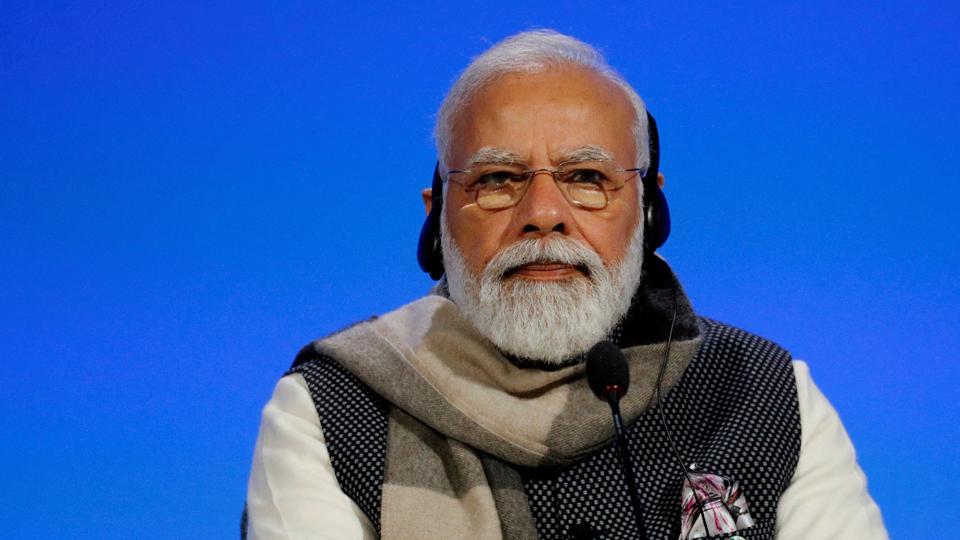
The pessimists say that Glasgow has widened the intention-action gap. The moderates cheer the adoption of the rulebook to enable regulations for international trade in carbon credits and the intention to increase funding for adaptation. The optimists point to pledges to tackle deforestation and methane emissions and the first global attempt to cut down coal use as practical steps.
However, if all the pledges are met in full and on time, the average global temperature is set to rise by 1.8 degrees Celsius above pre-industrial levels by the end of this century. The goal of keeping it preferably below 1.5 degrees Celsius remains elusive, while the adverse effects of the climate crisis are mounting. The legitimate question, therefore, is, what next?
In pursuit of speeding up the goal of net-zero emissions, multiple pathways are being chalked out. Efforts to “mainstream” climate into areas where it has not figured significantly earlier are underway. Using trade and tariff measures, security platforms, and international law forums is now fair game in the name of decarbonisation.
The environment-trade linkage is emerging rapidly as a favourite policy pursuit. The European Union (EU) had, even before Glasgow, put forward its carbon border adjustment mechanism (CBAM) proposal with an initial list covering steel, aluminium, cement and fertiliser. It envisages a gradual multi-year rollout starting in 2023, with it being fully in place by 2030. Some project it as essential to the goal to cut EU emissions by 55% by 2030. Others view it as protectionism, disguised in green. The United Kingdom (UK), Japan and Canada are exploring similar options.
The EU and the United States (US), while agreeing to dial down the reciprocal tariffs on steel and aluminium exports from the Donald Trump era, signalled their joint intention to take account of the “carbon intensity” of these industries. A pointer that climate concerns presented opportunities for a common approach towards targeting steel and aluminium products from other sources.
Following COP 26, the EU has announced plans that require companies selling six commodities (beef, soybeans, palm oil, coffee, cacao and timber) to its market to prove that their products did not contribute to legal and illegal deforestation or forest degradation through agricultural use. Those failing to do so could face fines on their annual turnover. The six products account for 19% of commodity imports into the EU. These first-of-their-type regulations are said to be designed to reduce the impact of European demand on the world’s environment.
Such ostensibly climate-related measures will have significant trade-related impacts. Once implemented, they will inevitably lead to disputes about their legality and applicability. The World Trade Organization (WTO) can become an arena of climate-related disputation. Since the WTO adjudication mechanism is not in a satisfactory state, unilateral measures may be resorted to. In short, climate is on the way to becoming the new weapon of choice in the ongoing global trade contestation. Calls are also growing for an overhaul of the metrics used by international investors and institutions in the face of the climate crisis. Financial re-evaluation of assets in light of climate risk assessments will follow.
If trade measures have gained visibility recently and investment rethinking is in its incipient stage, the climate-security nexus has been in the making for more than a decade. The UN Security Council has held meetings on climate and its implications for peace and security since 2007. What is new is the growing support; 12 of the 15 present members of the Security Council favour a draft resolution that seeks to enshrine climate security in the Council’s regular agenda; want the secretary-general to submit a report on climate security with recommendations on how to tackle climate-related risks; and appoint a special envoy for climate security. The hold-outs to the adoption are China, Russia and India. A move in the Security Council in December is likely. As two of the veto-wielding permanent members have serious objections, the outcome remains uncertain.
A new track that small developing island-states such as Antigua and Barbuda from the Caribbean and Tuvalu from the Pacific are adopting is to utilise the existing rules of international law to hold countries to account for their actions causing loss and damage to the global environment. They intend to seek the implementation of the “polluter pays” principle through established international legal mechanisms. Supported by experienced international lawyers, they plan to request an advisory opinion from the International Tribunal for the Law of the Sea (ITLOS) on the legal responsibility of States for carbon emissions, marine pollution, and rising sea levels. There is also talk of approaching the International Court of Justice (ICJ).
These multiple international efforts at mainstreaming climate concerns are not trivial pursuits. They have serious implications. Trade, investments, security and law are evolving as some of the new arenas of climate-related contestation globally. Countries such as India, which have a variety of interests across all these subjects, need to assess the post-Glasgow impacts holistically and understand the new directions that the climate crisis is taking.
As circumstances change, climate action will also have a new meaning. It will not be confined only to a circumscribed set of issues, but will expand across a broader canvas. New thinking, new institutions, new actions and new messaging will be required to address the new situations that will inevitably arise. New India needs to be ready for all this.
Syed Akbaruddin is a retired diplomat who served as India’s permanent representative to the United Nations in New York. He is currently the dean of Kautilya School of Public Policy
The views expressed are personal


