
 E-Paper



Criminal Identification Bill: A good step, but more needs to be done
The NCRB has been made the agency under the Act, which shall collect the record of measurements from state governments/Union Territory administrations/law enforcement agencies. The NCRB must receive additional resources to create such facilities for collection, storage, and analysis

 Prefer HTon Google


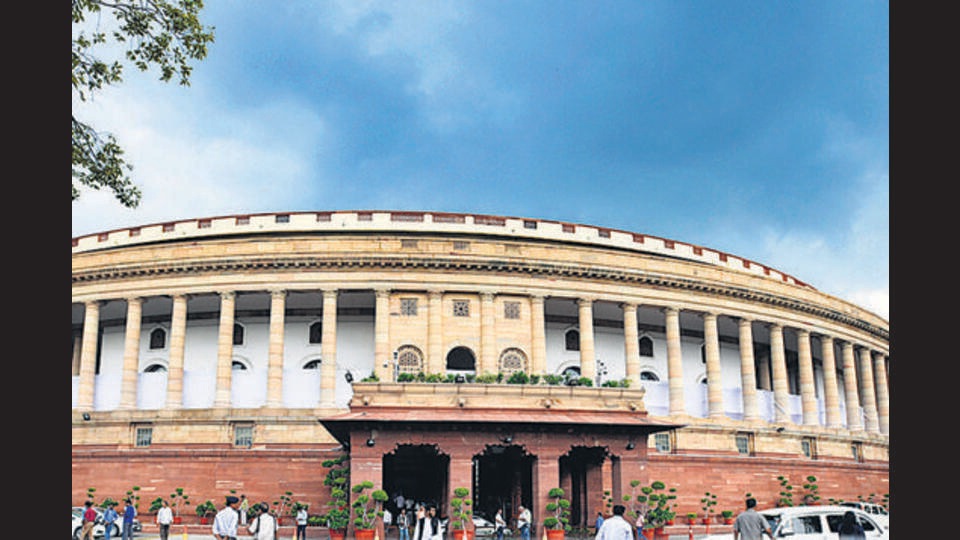
Parliament on Wednesday passed the Criminal Procedure (Identification) Bill, 2022, that seeks to allow investigators to collect certain identifiable information of convicts and other persons for purposes of identification and investigation in criminal matters.
This is how the law will work: Imagine a case where a gangster asks for ransom on the phone and his voice is recorded. Earlier, there was no database of recorded voice samples to compare and identify the gangster. With this new law, the police can record voice samples of every arrested criminal for future use.
However, specific passages of the Bill need to be clarified.
For example, Section 3 says: “….allow his measurement to be taken by a police officer or a prison officer.” Since measurements, as per the definition in the Bill, includes even biological samples (blood, fluid, semen or DNA), a policeman or a prison officer is not the appropriate person to take them.
Therefore, the wordings can be “on the direction of” instead of “by.” This will avoid confusion and litigation. Further, the term “biological sample” has also not been defined anywhere in this Bill/ the Code of Criminal Procedure/Indian Penal Code.
Second, in definitions under Sec 1(b) “measurements” includes physical, biological samples and their analysis. Now the question arises what are physical or physical samples? There is no such term anywhere in the law. The word creates confusion and can be done away with.
Further, the language under Section 8(3) is complicated and could well be on the same lines as Sec 8(4) meant for state legislatures.
The Bill, by and large, meets the requirement of law enforcement, but it could do more.
As per the Bill, if a criminal is discharged in a court of law, due to lack of evidence, his measurements taken on his arrest have to be erased from records, unless the court directs otherwise. Now, if he indulges in criminal activities again, there will be no previous voice record to compare his recorded telephonic voice.
The National Crime Records Bureau (NCRB) has been made the agency under the Act, which shall collect the record of measurements from state governments/Union Territory administrations/law enforcement agencies. It is, therefore, imperative to design standard data formats to enable sharing the same. The NCRB must receive additional resources to create such facilities for collection, storage, and analysis.
State governments and Union Territory administrations may have to notify an appropriate agency to collect, preserve and share the measurements in their respective jurisdictions. State Crime Record Bureaus (SCRB) are best suited to perform the task. SCRBs were created along with NCRB for storing and sharing of crime and criminal data.
One may wonder as to what is the need of magisterial powers, as given in Section 5, when the police are competent to take the measurement.
This is required because the police can take measurements only in case of arrested or convicted persons. But the power of the magistrate can be exercised in cases where a person has not been arrested.
The Bill has also taken care of privacy issues. The procedures will have to be prescribed under the rules and tabled before the Parliament or the legislature and, therefore, will have to stand the scrutiny of the right to privacy.
Ram Phal Pawar is a former IPS officer and director, NCRB
The views expressed are personal


