Real-time information is perishable, overtaken as it often is by events moving in the reverse or going haywire. Lately, it has been happening more often than not in the Congress.
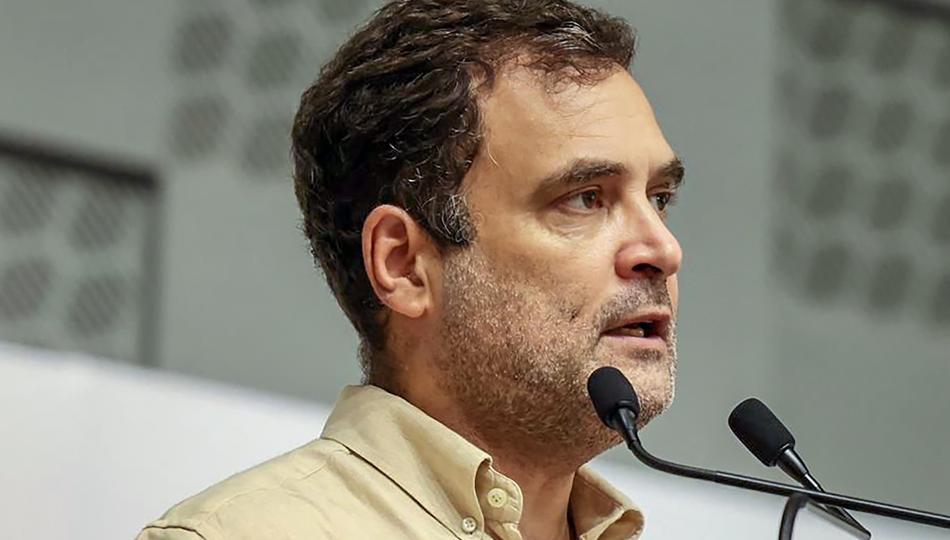
For the present, the chances of Rahul Gandhi consenting to contest for the party presidency in the upcoming organisational elections are remote. (PTI)
For the present, the chances of Rahul Gandhi consenting to contest for the party presidency in the upcoming organisational elections are remote. If one person in the know of things saw “zero possibility” of his candidature, another found him unresponsive to the cadres’ persistent calls for his return as the party chief. He is focused, instead, on the Congress’s over 3500-km Bharat-Jodo Yatra he intends leading from the start to the finish from September 7.
His commitment to the yatra is meant to show that he will continue working for the party even if he stays away from the internal elections to be completed by end-September. He simply doesn’t want any role in the de jure leadership question hanging fire since his resignation as president in the aftermath of the 2019 polls. That was his way of taking responsibility for the party’s rout on the trot after an equally resounding defeat in the 2014 Lok Sabha elections.
While quitting, he complicated matters by letting it be known that none among his family members, including his sister Priyanka Gandhi Vadra, will succeed him in office. Internal pressure saw his ailing mother, Sonia Gandhi, stepping in, but only as a stop gap arrangement till the election of a new leader.
Given its dependence on the Gandhi name, it’s not the least surprising that the Congress, often targeted for dynasty worship, has been in a state of suspended animation for over three years. Amid the prevailing confusion, Gandhi has remained unmoved by persistent appeals against abdication by colleagues at various party forums, including the Congress Working Committee (CWC) where he first announced his decision to step down.
The blueprint for internal elections has since been sent to the leadership by the Congress’s central election authority chaired by Madhusudan Mistry, who will perform concurrent duty as the returning officer. He told this writer that once the CWC finalises the election date, it’ll take the poll panel 26 days to complete the process.
Rahul’s yatra during polls
If organisational elections indeed are carried out in the remaining 40-odd days as per the proposed calendar, then the process will clash with the Congress’s “Bharat Jodo Yatra” which Gandhi will lead from the start, in Kanyakumari, to the finish, in Jammu and Kashmir.
By a conservative estimate, the 3,600-3,900-km long march will take 140-150 days to conclude if it progresses, as planned, at 25-km a day without forced or planned breaks.
The Himachal Pradesh and Gujarat assembly polls due in November and December will also happen while Gandhi is on the march. These might necessitate (campaigning) breaks, prolonging the yatra beyond January-February next year, or even later, subject to clause force majeure.
Simply put, Gandhi will be on the road for over six months from September 7, when he will start from Kanyakumari’s “Gandhi Mandapam” after a visit to Tamil Nadu’s Sriperumbudur where his father, Rajiv Gandhi fell to a human bomber on May 21, 1991. A memorial to the Mahatma, the Gandhi Mandapam is where his ashes were kept before immersion in the sea.
In terms of its route, reach and messaging, the Congress yatra will be informed by past such undertakings: Janata Party leader Chandrashekhar’s 1983 Kanyakumari-Delhi Bharat Yatra; YS Rajasekhara Reddy’s 2003, 1475-km tour of undivided Andhra which saw him winning successive elections that installed the Congress in power in the state and at the Centre; and former Madhya Pradesh CM Digvijay Singh’s 192-day, 3300-km circumambulation (parikrama) of Narmada in 2017-18.
Singh, in fact, has had a major role in delineating the Bharat Jodo trek which, if carried out in its entirety, will be the longest by any political leader in post-Independence India. He will be part of a small group of aides and leaders who will be Gandhi’s constant companions through the journey. Mobile containers will be used for night halts while the caravan passes 14 states, connecting with people and cataloguing their voices.
Pressure on Gehlot to take up presidency
As a backup plan, there is pressure on Rajasthan chief minister Ashok Gehlot to be the candidate for the presidency. He has the seniority and the experience, not to talk of the Gandhi family’s acceptance, to lead the party through its gravest existential crisis.
Never before has the 137-year-old Congress been in such dire straits. An unending string of poll defeats and loss of promising young leaders to rival parties, notably the Bharatiya Janata Party (which got 37.36 percent vote in 2019) has brought into question its electoral currency. The Congress’s vote share stood at 19.5 percent in the last general elections.
It is anybody’s guess whether Gehlot, whose political ambitions have hitherto been limited to his home province, will take up the challenge and move to Delhi. His stint as general secretary, organisation, during Gandhi’s presidency helped them develop a working relationship. That could be useful in reworking equations without hierarchical encumbrance if the Rajasthan leader shifts base to the All India Congress Committee (AICC) headquarters. The electoral responsibilities he currently has in Gujarat can be adjusted, if the need be, in accordance with his elevated role.
Sources privy to Gehlot’s thinking maintained that he is not dismissive of the proposal but feels he lacks the pan-India appeal which is a pre-requisite for nationally leading the party. He is also worried about whether he will be acceptable to the party bigwigs, regardless of the Gandhi-family’s endorsement of his candidature. On account of these factors, he is convinced that Rahul Gandhi isn’t easily replaceable as the party’s “best bet”, regardless of his reluctance and other shortcomings.
So, a little over a month ahead of the much-awaited organisational polls, the grand old party remains the way it has been — in suspended animation!
HT’s veteran political editor, Vinod Sharma, brings together his four-decade-long experience of closely tracking Indian politics, his intimate knowledge of the actors who dominate the political theatre, and his keen eye which can juxtapose the past and the present in his weekly column, Distantly Close

 E-Paper