
 E-Paper



Ecostani | As voting begins tomorrow, western UP will be the true litmus test
In all elections in the past decade, the party which had done well in western UP has won the elections in the country’s most politically significant state.

 Prefer HTon Google


The Uttar Pradesh (UP) assembly elections will kick-start with voting for western parts on February 10. Most opinion polls and trends emerging from the ground have given the ruling Bharatiya Janata Party (BJP) an edge over its principal rival, the Samajwadi Party (SP)-led alliance. However, opinion polls also agree that the BJP will not be able to repeat its stellar 2017 performance.
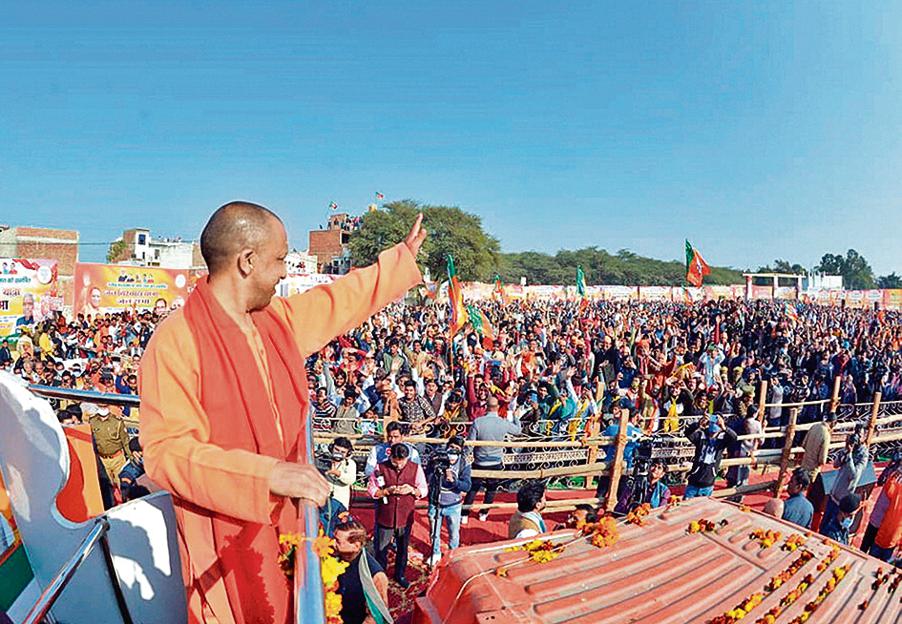
In 2017, of the 126 seats in western UP, the BJP won 102 seats, decimating the SP, the Bahujan Samaj Party (BSP) and the Congress. The BJP also performed well in eastern Uttar Pradesh, which sends 140 Members of Legislative Assembly (MLAs) to a 403-member assembly. The BJP won 120 of the 140 seats, helping the party to get 312 seats.
The performance of the BJP was good in other regions as well, but the resounding victory was on account of its performance in western and eastern parts of India’s most populous state.
The 2022 election is, however, different on several counts. First, the ruling BJP is not as popular as it was in 2017. Second, the SP has stitched together a better caste alliance of non-Yadav Other Backward Classes (OBCs) compared to 2017. And third, voters in UP have not repeated the same party in the hustings since 1989.
To the BJP's credit, people acknowledge that it has been able to improve law and order and the supply of electricity in the past five years. However, not enough government jobs, high inflation, and a cattle menace in farms due to stringent slaughter regulations are the reasons for electoral concern for the BJP. On infrastructure development, the government claims to have done a lot, while the Opposition SP counters this narrative.
In western UP, several BJP candidates have faced resistance from villagers, especially in Jat-dominated villages. Many candidates have not been allowed to campaign in villages, as residents blame the ruling party for a year-long farmer agitation on the borders of Delhi and poor remuneration for the crops, especially sugarcane.
In the digital electoral campaign era, videos of these protests were amplified to show that farmers are angry. However, the BJP has adopted the strategy of not creating much noise about its ground campaign in western UP as it did in 2017 to create a sense of confidence in the Opposition ranks.
The data backs the BJP in western UP. According to the Centre for the Study of Developing Societies (CSDS), the BJP got close to 72% of Jat votes in western UP, enabling its resounding victory. In 2019, this went up to 75%. Sanjay Kumar of CSDS admitted that the BJP may not be able to replicate 2017 performance in 2022 and shies away from predicting what percentage of Jat votes the BJP will get this time. “Even if BJP gets 50% of the Jat votes it would bolster its chances in western UP,” he told a web channel.
Many independent experts believe that the migration of Jats away from the BJP will be high in western UP. But the key question is whether it will be enough for the win of the Opposition as in at least half of the assembly constituencies in western UP, where the margin of victory earlier was less than 10,000 votes. Unlike many parts of the country, the assembly constituencies in Uttar Pradesh are huge, many even up to half-a-million. And, in that, a margin of 10,000 votes is not very high.
Experts also say that the BJP’s bid to polarise the polls on communal lines in western UP, which has the highest proportion of Muslims when compared to any other part of the state, may not be working to the extent the party would have liked.
UP chief minister Yogi Adityanath has repeatedly said that the election is between 80% (Hindus) and 20% (Muslims). He also said that while previous governments have spent money on Kabristans (Muslim burial grounds), his government has spent it on the beautification of religious temples. SP leaders, especially its chief Akhilesh Yadav, have not reacted to remarks of the chief minister and have spoken only about their party’s development agenda for different sections of the society. Yadav does not want to be driven into the Hindu-Muslim debate, which can polarise the electorate.
The polarisation effect, if any, may be in some pockets of urban-western UP, and is negated in villages due to farmers' anger. The BJP, in the past two decades, has won from Hindu-dominated urban areas in western UP. In 2017, it made inroads into the rural areas due to polarisation and the hope of good governance from Prime Minister Narendra Modi. On the contrary, this time, the common refrain is that BJP is trying to create a Hindu-Muslim divide only to win elections.
The real test of polarisation is western UP — with its large Muslim population, with some districts such as Muzzaffarnagar having up to 35% of Muslims. It has worked for the BJP in three elections — 2014, 2017 and 2019. With the BJP’s polarisation trump-card not having a visible impact this time and the SP-RLD being able to overcome initial alliance hurdles, the contest is close. In all elections in the past decade, the party which had done well in western UP has won the elections in the country’s most politically significant state.
Having said so, one needs to acknowledge that the election in UP is not as simple as it appears. There are several underlying factors at play with many castes and sub-castes. The BJP, in the past, has been able to bring the smaller sub-castes and Dalits together. It would be interesting to see whether the BJP will be able to retain them this time or not. Will UP go back to the pre-2014 era of voting strictly on caste lines with parties experimenting with social engineering?
All this will be clear on March 10, when the votes are counted.


