
 E-Paper



Keeping up with UP | What will it take to bring more women into the legislature?
With the recently passed women’s quota bill, a look at the track record of various states and political parties to ensure gender parity must give us pause

 Prefer HTon Google


The Congress national general secretary Priyanka Gandhi had promised 40 percent tickets to women in the 2022 assembly elections in Uttar Pradesh. Despite the best of intentions, her ambitious plan failed.
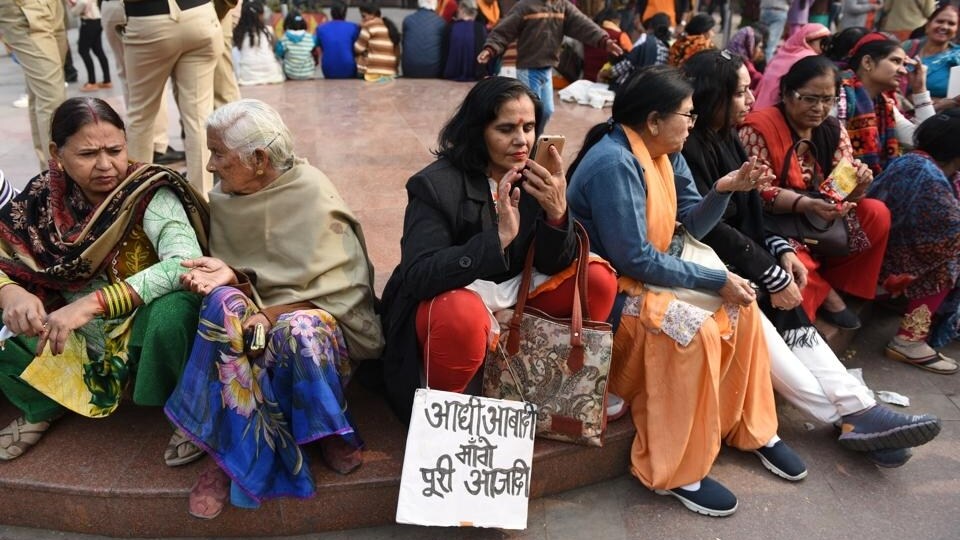
Why? The answer obviously would be that Congress is in a shambles, losing elections for over three decades in the country’s largest state, irrespective of the candidates, their gender and qualifications.
But the Congress played a gamble as it had little to lose. It also tested the waters to see if women, who have been granted entry to many male fiefdoms like the armed forces, as well as broken the glass ceiling in the IT sector and sports, were election-ready, as it were. Priyanka had also announced an exclusive women’s election manifesto while labelling her campaign as, ‘Ladki hun, lad sakti hu' [I am a woman, I can contest] to attract women voters.
The Congress hunted for women candidates and eventually fielded 159 in the 403 assembly constituencies of the state. The list included activists Sadaf Jafar, who was sent to jail during the anti-Citizenship Amendment Act demonstrations in Lucknow, Asha Devi, mother of a rape victim, Nida Ahmed, a former TV journalist, and Archana Gupta, former Miss UP.
Only one of the 159 candidates, Aradhana Mishra aka Mona, daughter of Congress veteran Pramod Tiwari, won the election. The others ended up with a couple of thousand votes in an election in which women outnumbered men in casting their votes — 62.24% women cast their votes compared to 59.56% men. The women voters did not vote for their gender despite the Congress party’s women's manifesto as well as the women-oriented poll campaign. As such only two of the 403 candidates won their seats with the party polling barely 2.33 percent votes.
Aradhana Mishra admits to the challenge that the party faced in finding suitable candidates in a patriarchal society, which she says will also take years to accept the 33 percent quota for women in the legislatures.
“Even decades after the 33 percent quota for women in the panchayat system was announced by late prime minister Rajiv Gandhi, the male members continued to dominate the system through a proxy rule. Not much has changed since then, as in most of the political parties, both the organisation as well as the cadre is dominated by men.”
Claiming that the Congress has been liberal, appointing two woman state presidents, she asks, “Can you identify women leadership in any other political party, like the Samajwadi Party (SP), the Bharatiya Janata Party (BJP) or even the Bahujan Samaj Party (BSP) that is led by a woman president, Ms Mayawati. The process will be slow but the quota will give ample opportunities to women to enter the electoral system."
Would this lead to Vidhayak Pati culture? The term borrowed from Pradhan Pati refers to the title given to the husbands of elected women village pradhans, when women’s reservation was introduced in gram panchayats. Vidhayak, in Hindi, means legislator.
As men have continued to dominate the panchayat system and the local bodies in the last three decades (the quota for women was introduced in 1993), many now fear the advent of Vidhayak Pati culture for two reasons: One, women may lack the confidence or training to win elections and deliver their legislative duties and two, male MLAs who nursed their constituencies for decades would obviously push their women relatives in reserved seats.
Notwithstanding the so-called Pradhan Pati syndrome, the reality is that some women leaders have displayed their administrative acumen in rural areas and their numbers are growing.
A ray of hope also comes from the fact that women, despite the domination of men in society, are winning elections in villages in the general category. In the 2021 panchayat elections in Uttar Pradesh for instance, 44% of the 59,613 gram panchayats were won by women — 11% more than the reserved quota of 33%. The panchayat system has given birth to Pradhan Patis, but it has also proved that women when given power, can deliver — sometimes better than men.
Senior lawyer and state’s first woman additional advocate general of Uttar Pradesh Bulbul Godiyal (2012-2017) contested the mayoral elections in Lucknow as a BSP nominee in 2017. Belonging to a family of lawyers, she had no political background when the BSP leader Mayawati gave her a ticket to contest elections. Godiyal did not win the election, but shared her experience: “There were so many women within the cadre holding aspirations to enter politics, contest elections. I don’t think there will be any paucity of women candidates. However, they need basic qualifications, and training to translate their aspirations into a reality. It’s not easy to contest elections and match the money and muscle power. One has to be thick-skinned in the rough and tumble of politics, whereas women generally are very emotional.”
According to her, the political parties should start identifying potential women leaders and groom them for the elections as well as for a bigger role in the interregnum period as there is still time for the implementation of reservation for women.
Often it has been observed that the participation of women legislators in the proceedings of the house is comparatively low as compared to men. “Perhaps they need training to boost their confidence to speak in the house,” Mishra said.
Uttar Pradesh has 47 women MLAs, of them 22 are first-timers. While some senior ruling and opposition party members raised issues of their constituencies in the assembly, the women MLAs in general remained silent spectators, rarely participating in the discussions.
In fact, UP Assembly Speaker Satish Mahana organised a day-long session for women legislators on September 22, 2022. In his words, “The women who have won the elections are obviously strong as well as competent but they may not be articulate. The session will provide them an opportunity to speak and boost their confidence.”
Interestingly, many women MLAs have left a mark. For instance, 31-year-old Ragini Sonkar of SP and 37-year-old Surabhi of Apna Dal (S) raised issues concerning women from menstrual hygiene to security and gender equality. Both are qualified doctors.
As Bulbul Godiyal said, “Women at every strata of our society, literate or illiterate, want to enter politics. They are enthusiastic and have the potential to win elections. The parties have time to evolve ways and means to groom women leaders, prepare them for the elections if they don’t want Vidhayak Patis.’
A study conducted by the Institute of Women’s Studies, University of Lucknow on women's participation in elections in 2003 had noted, “The nature of electoral politics in India also marginalises women and women’s issues from the political agenda. The elections are largely conducted by men and with men’s support. Electoral expediency requires women participants to compromise to survive in the man’s world of politics”.
Much water has flown down the Ganges since then.
The study had suggested a special grooming programme. “We all know that confidence, charisma and oratory skills are key to effective leadership. Women need grooming to understand the power they wield by enhancing their leadership style. Many countries are running such courses for women politicians. Such exposure would prepare more women for leadership roles.”
In some countries like the United States, private organisations are running proper courses to nurture female young politicians.
UP never had a woman opposition leader, speaker or deputy speaker though it gave to the country its first woman Prime Minister Indira Gandhi and its first Dalit woman chief minister Mayawati, the second to head the state four times beginning with its first tenure in 1993. Sucheta Kriplani was the first Congress chief minister to rule the state from 1963-67.
However, not much changed in the status or representation of women in the UP legislature or even in other states as political parties, even under the leadership of imperious women, continued to favour the kitchen-to-cabinet syndrome (housewife entering the arena).
Former Bihar chief minister Rabri Devi is a perfect example of a dutiful wife who occupied the coveted CM’s chair in 1997 after an arrest warrant was issued against her husband and the then chief minister Lalu Yadav in the fodder scam. It was an open secret as to who made the administrative decisions.
Interestingly, the country has seen the rule of 16 women chief ministers since Independence: Mamata Banerjee has been ruling West Bengal for over 12 years and is a strong leader ready to accept any challenge. Some of the prominent former/late CMs, who had either a long or a notable tenure include Vasundhara Raje Scindia (Rajasthan), J Jayalalithaa (Tamil Nadu), Rajinder Kaur Bhattal (Punjab), Sushma Swaraj (Delhi), Uma Bharti, (Madhya Pradesh), Sheila Dikshit (Delhi), Anandiben Patel (Gujarat) and Mehbooba Mufti (Jammu and Kashmir). All of them were in a commanding position but did little to promote women politicians in their respective states.
Ironically, while women could become ministers, they rarely held positions in the organisational decision-making bodies. Despite seniority, they were confined to the women’s wings of their political parties which hardly had any say in ticket distribution during elections.
Now, as five states head for polls in November 2023, there lies an opportunity for the political parties to display their commitment to the cause by fielding more women candidates, notwithstanding the hype over the passage of the women's quota bill.
Two of the five states, Rajasthan and Madhya Pradesh, have seen the governance of women chief ministers.
In Rajasthan, Vasundhara Raje Scindia, a heavyweight politician, has been the chief minister of the state twice. She is currently facing a tough challenge in maintaining her domineering position in the party as the party's high command has decided to test the waters without her at the helm of affairs.
Now coming to her state, though the political parties have given larger numbers of seats to women in successive elections, their numbers in the 200-member state assembly have remained below 30. As many as 118 women contested elections in 2003, 154 in 2008, 166 in 2013 and 189 in 2018. Of them, 29 won in 2008, 25 in 2013 and 27 in 2018.
Coming to Uttar Pradesh, there is no second-run woman leader one can count on in the BSP. The BJP, which claims to have launched a slew of welfare schemes for women, is yet to find a suitable leader for its state organisation. The same is the case with the Samajwadi Party. Only the Congress has been more liberal in promoting women's leadership.
The story is no different in other states. The political parties are rarely headed by a woman till she is someone’s daughter, wife or widow. Supriya Sule, daughter of Nationalist Congress Party (NCP) founder-president Sharad Pawar in Maharashtra may break the glass ceiling by inheriting the mantle from her father.
There is no paucity of able leadership as proven by many of the chief ministers who have performed at par if not outperformed their male colleagues. It’s a gender bias which required a Women’s Reservation Bill to break it.
Last month, the Narendra Modi government introduced the much-awaited Women’s Reservation Bill granting 33 percent quota in the Lok Sabha and the state legislatures almost three decades after the 72 and the 73rd amendment in the Constitution provided for one-third representation of women in urban and rural bodies in 1993.
In three decades, the political participation of women in rural areas increased with growing signs of assertiveness. And they are ready for bigger roles as well as elections.
From her perch in Lucknow, senior journalist Sunita Aron highlights important issues related to Uttar Pradesh


