
 E-Paper



Mandela's lasting legacy through a Tamil film's lens
On Nelson Mandela Day, remember Mandela's values through a Tamil movie with themes of identity, education, non-violence, hope, and social cohesion.

 Prefer HTon Google


Today, on Nelson Mandela Day, it is worth acknowledging the profound impact India and Indians have had on the revered South African leader. During an India-South Africa solidarity meeting in 1994, Nelson Mandela expressed deep admiration for India, stating, “Today, as we savour this moment of victory and begin the daunting task of building a new life for our people, we recall with pride and gratitude the sterling contribution India and its people made towards the attainment of that objective.”
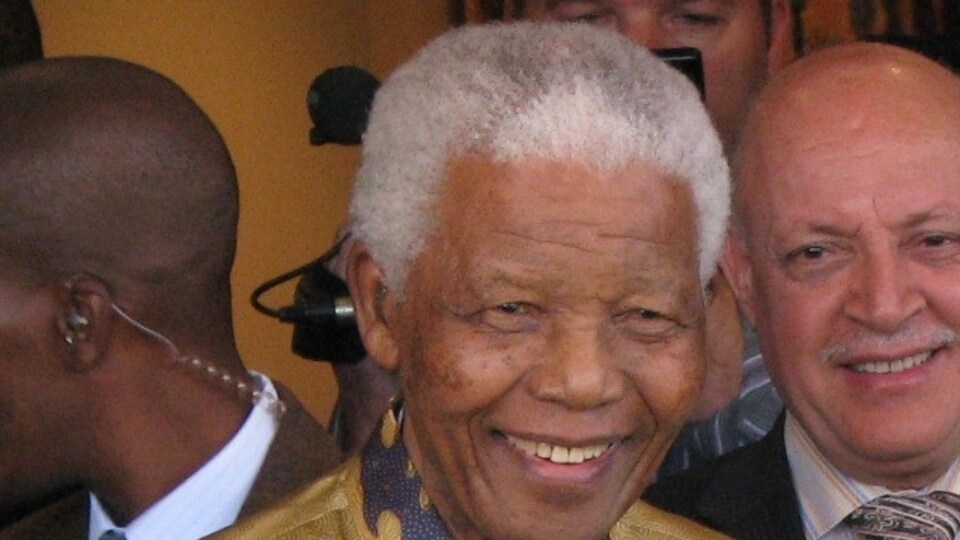
Mandela recognized India's consistent and principled role in focusing global public opinion on the evils of apartheid, even severing all ties with the apartheid state as an expression of abhorrence towards racism. India's championing of the anti-apartheid cause at the United Nations and other international forums further galvanized global support for the oppressed and voiceless South Africans. India played a pioneering role in the international anti-apartheid struggle.
Conversely, Nelson Mandela continues to inspire Indian popular culture, including mainstream movies. In 2021, a Tamil movie titled ‘Mandela’ made its debut on the popular OTT platform Netflix. Directed by Madonne Ashwin, the film is an effective political satire that resonated with audiences and was a national award winner, as well.
Without delving into the plot, it is worth exploring why the filmmakers chose to incorporate Nelson Mandela's name and how it remains relevant today, especially on this occasion. The movie touches upon several significant themes in my view, the first of those being identity.
In one memorable scene, the protagonist, played by Yogi Babu, seeks a name that would grant him an identity beyond being referred to as ‘podhu’ (common property). Eventually, he is given the name Mandela, drawing parallels with the popular South African leader. Yogi's character, like Mandela, grapples with the quest for identity within his village. The name Mandela becomes a catalyst for change, with the local post office even displaying a portrait of Mandela alongside Mahatma Gandhi.
The second leading theme in the film is education. Mandela is famous for saying, “Education is the most powerful weapon you can use to change the world.” This saying is embodied through a beautiful scene in the movie where Yogi Babu’s assistant Kirudha is offered help to enable him to read and write. Yogi’s character Mandela also encourages and enables children in his village to educate themselves at the local primary school.
The third theme is non-violence, as Yogi babu does not take the path of violence with the film’s director stating for a fact that the character is designed not to take the patsh of violence. As is well known, Nelson Mandela drew inspiration from the non-violent struggle to end apartheid. History holds evidence of the fact that many have sought social transformation over the divisions that exist in our society through non-violent methods.
Fourth is how Mandela's life serves as a testament to the power of hope. Overcoming adversity is a recurring theme in the film, emphasizing that hope triumphs in the face of challenges. The movie ends on a high note of hope as it shows that the village is the ultimate winner of the elections when they put forth their genuine demands in terms of road infrastructure or even access to tap water. It's symbolic of Mandela’s real vision and mission.
The fifth theme exemplifies social cohesion. The movie acknowledges deep-rooted caste divisions, but also emphasizes the importance of social cohesion. It underscores the need to unite and address common challenges, such as unemployment, infrastructure, and education. Yogi Babu's character frequently reflects on the essence of the name Mandela, reminding audiences of his values and the broader ideals he stood for.
When exploring historical figures, it is vital to glean lessons for contemporary times. The movie effectively depicts the essence of the man. It provides an opportunity for ordinary Tamilians and Indians to engage with Mandela's life, inspiring them to delve deeper into his legacy, accomplishments, and mission. The movie effectively communicates the universality of Mandela’s principles and their relevance beyond South Africa. Justice, equality, fraternity, liberty, and freedom are all universal aspirations that Mandela fought for all his life.
Finally, there are run-of-the-mill movies and then there are movies that prompt the viewer to question inequities, to deeply introspect, to rise above existent human divisions, and really push the envelope in working towards positive change within and around us. It is simple, is it not, that each individual has it in them to be that power of example to enable an equitable and inclusive society and inspire generations to come?
By drawing parallels between Mandela's life and the present context, the film encourages reflection and introspection in our society.
Sudarshan Ramabadran is an author and researcher. The views expressed are personal.


