
 E-Paper



NCR’s polluted air, water are a result of our apathy
Has our collective conscience sunk into apathy? How can government rules succeed until those who complain about pollution wake up to their own responsibility?

 Prefer HTon Google


This is not merely my weekly column but also a chronicle of helplessness — over the inexplicable apathy millions across the country exhibit as they breathe in toxic air. Numerous factors are to blame for the problem, but a fair share of the responsibility also rests with the victims of winter-time pollution in the national capital region.
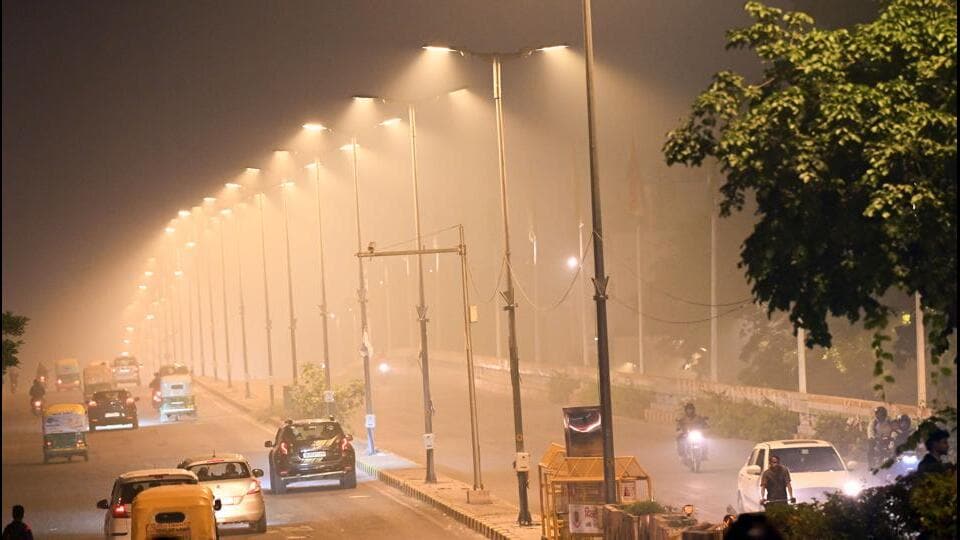
This time, GRAP-3 restrictions were imposed on November 6, a couple of days before Diwali. All civil construction activities were suspended. Non-BS-VI vehicles registered outside Delhi were barred from entering the Capital. The government recommended not stepping out of homes except for emergencies. Schools were asked to switch to online classes, and offices were advised to have half their staff work from home.
Just days before GRAP-3 was enforced, the Supreme Court had permitted the bursting of green firecrackers, that too within a stipulated daily time period; governments had been ordered to enforce the directive strictly. The exact opposite happened on the ground. Delhi and the NCR were subjected to the deafening noise of all manners of firecrackers — green and conventional — being burst on Diwali night and the night before and the next two nights as well. The toxic fumes turned the already polluted air lethal. Delhi’s Air Quality Index (AQI) turned severe late on Diwali night, going by the readings from several monitoring stations in the city. We have turned our own cities into gas chambers.
Doctors are calling it a health emergency, one we have inflicted upon ourselves voluntarily. The middle- and upper-middle classes, ever ready to blame the government at the drop of a hat, seemed locked in a race to shoot themselves in the foot. Consider the state of my housing society in Noida. Responsible behaviour is expected of its residents, yet they crossed every limit.
Last year, some had objected to late-night fireworks inside the society premises. This year, the clever minds found a workaround. From 8pm onwards, people began gathering on the road outside the society, and soon a competition ensued over who could burst the biggest firecrackers. The revelry might have dragged on for even longer had an accident not frozen the residents in their tracks. Just before midnight, a speeding vehicle rammed into a young girl celebrating in the middle of the road. Several others narrowly escaped being mowed down. The driver fled. Fortunately, the girl’s injuries were not life-threatening.
Rishi from Delhi’s Narela, was not so lucky. On Diwali night, a rocket he lit pierced his chest instead of shooting towards the sky and claimed his life.The tragedy of Monu from Anand Parvat in Delhi is also gut-wrenching. When he cited government rules to stop a neighbour’s child from bursting crackers late at night, he was beaten so brutally that he succumbed to his injuries.
Everyone lighting firecrackers knows well that they and their families will be the ones choking on the pollution, yet they still indulge in bursting them, almost as a strange death wish. Unsurprisingly, stray rockets landed on the upper floors of high-rise buildings in Mumbai and several other parts of the country, causing fires. Fortunately, the flames were doused before they could spread. But how long can the country push its luck? Here, I must draw your attention to a stark reality. Skyscrapers are mushrooming across all Indian metropolises, yet our fire brigades remain ill-equipped for them. In most cities, firefighters lack the equipment needed to reach the top floor of a high-rise from the outside. Under such circumstances, reckless fireworks can trigger a catastrophe at any moment. No one would like to see a Towering Inferno in their neighbourhood.
Has our collective conscience sunk into apathy? How can government rules ever succeed until those who endlessly complain about pollution wake up to their own responsibility? We must remember our forefathers were worshippers of nature.
Several other questions demand answers. The Supreme Court had ordered the bursting of only green firecrackers. Even if we ignore for the moment the fact that these are only a little bit less polluting than conventional ones, does India even manufacture enough green fire crackers to meet the demand and replace conventional ones? Shouldn’t an official audit of their production be made public? It is widely understood that large quantities of conventional firecrackers are imported from China, which emit far more toxins than Indian ones. Who is importing them, who is selling them, and why is no action taken against them? The Supreme Court had fixed a time window for bursting firecrackers — so why did explosions continue to rattle the NCR for two nights after Diwali?
It does not end there. Yesterday was Chhath. Devotees across the country waded into rivers and water bodies to offer arghya (offering) to the setting sun. Sipping the sacred water — aachman — is an integral part of the tradition. Yet the water in most of our rivers is not fit for bathing, let alone drinking. What else can be expected when people routinely dump industrial and farm waste, garbage, and human ashes into these very rivers?
Shashi Shekhar is editor-in-chief, Hindustan. The views expressed are personal


