E-Paper



New in Northeast | Kidnapping eventually turns to straying
This was not for the first time that Indian citizens have gone missing from the border region. In September 2020, five youths from the Tagin tribe, had gone missing from Upper Subansiri district

 Prefer HTon Google


Nine days after he went missing from the India-China border during a hunting trip with a friend, Miram Taron, a 19-year-old from Zido village in Upper Siang district of Arunachal Pradesh, was handed over to the Indian Army by the People’s Liberation Army (PLA) on January 27.
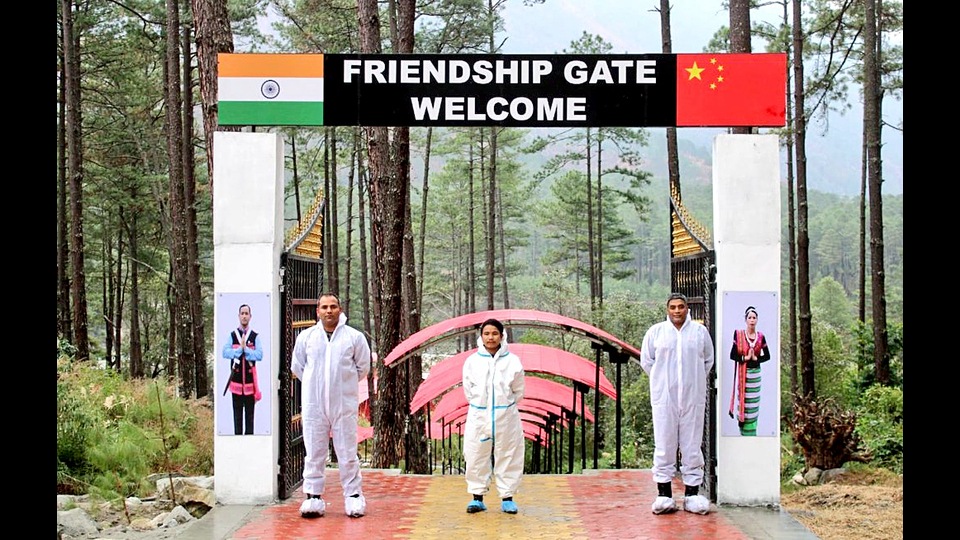
The teenager had gone missing from Lungta Jor under Siyungla area (Bishing village) of Upper Siang district on January 18. The handing over took place at the Wacha-Damai interaction point on the border.
As soon as news of Taron’s disappearance spread, it was alleged the teenager was abducted by the PLA from inside Indian side of the border. This was prompted by a tweet from Bharatiya Janata Party (BJP) MP from Arunachal-East, Tapir Gao, who stated that Taron’s friend, “who managed to escape from PLA,” informed about his abduction.
But following Taron’s handing over by the PLA, the Indian Army clarified on Thursday that the teen was not abducted, but he had “inadvertently strayed and went missing”.
The abduction incident was reported in news outlets in India and abroad. This gave Global Times, an English newspaper run by Chinese Communist Party, an opportunity to target India.
It published an article on January 27, the same day when Taron was handed over. The headline was: “China turns over Indian who illegally entered Chinese territory,” “refutes irresponsible rumors by India media’.”
As reported earlier, this was not for the first time that Indian citizens have gone missing from the border region. In September 2020, five youths from the Tagin tribe, who worked as porters for the Indian Army, had gone missing from Upper Subansiri district on the Indian side of the McMahon line, bifurcating Arunachal Pradesh and Tibet autonomous region (TAR) of China.
Following their disappearance, a brother of one of the youths posted on social media that they had been “abducted” by the PLA. The same accusation was made by Gao and Congress MLA Ninong Ering from Pasighat. It was later revealed that the youths had strayed across the border during an expedition to hunt and collect medicinal herbs. They were handed back to India after 10 days by Chinese authorities.
Promises and oaths to keep flock together during poll season
The coming assembly polls in Manipur, which are scheduled on February 27 and March 3, have caused problems for major parties like the ruling Bharatiya Janata Party (BJP) and the opposition Congress. While the BJP is concerned about keeping its flock together before the elections, the Congress is worried about how to prevent desertions once results are out.
A look at the sequence of events, following announcements of results in 2017, indicates the reason behind such concerns. Five years ago, the BJP won 21 of the total 60 seats, but managed to sideline the Congress, which secured 28 seats, and form government with support from National Peoples’ Party, Naga Peoples’ Front and others.
In 2017, soon after declaration of results, Congress MLA from Andro, Th Shyamkumar, switched to the BJP causing embarrassment to the grand old party. The trend continued over the next five years, with many Congress MLAs quitting and joining the ruling party. Prior to announcement of the coming elections, number of BJP MLAs had swelled to 31, while Congress shrunk to 13.
In order to prevent a repeat of that scenario this time around, the Congress is planning to administer oaths publicly to its contesting candidates “in the name of God” and in front of statues of Mahatma Gandhi, Jawaharlal Nehru and Bir Tikendrajit Singh, a Manipur prince who sacrificed his life for the motherland.
Unlike the Congress, the BJP didn’t have plans for loyalty oaths. Instead the party is said to have asked several intending candidates, especially in seats where there are a number of contenders for one ticket, to sign an “agreement of cooperation” stating that they won’t ditch the party if tickets are denied. Chief Minister N. Biren Singh informed HT that the party had taken into confidence ticket seekers constituency-wise and they had promise to support whomsoever the party chooses.
That didn’t seem to work as planned because when BJP announced its list of candidates for all seats on Sunday, several intending candidates left the party and decided to contest as Independent or join another party. Most of them went to Janata Dal (United), a party which didn’t win any seat in 2017. The BJP list had names of 11 former Congress MLAs while three sitting candidates of the saffron party were denied tickets.
Poem instead of prose in political slugfest
The Republic Day function at Rajiv Bhawan, the head office of Assam Pradesh Congress Committee in Guwahati, witnessed something new this year. Along with his speech, president of the opposition party’s state unit Bhupen Kumar Borah released a self-composed poem in Assamese titled I am a Fire Brigade.
“The Assamese society is being sliced like logs. And the fire from them is engulfing all. The society’s head is on fire. There’s fire in the hearts too. Government, you have started this fire. But I’ll douse it. I’ll be the fire brigade and sprinkle water. I’ll douse this fire,” a part of the poem read.
“There’s fire in marketplace due to price rise, there’s fire in hearts of unemployed youths. Instead of dousing these flames, those in power are fuelling flames in the name of language, community and religion. In order to counter these flames, I urge Congress workers to take a pledge to douse these fires and save democracy and constitution,” Borah said in his speech.
The poem and Borah’s words evoked a barrage of reactions from the ruling BJP. “Should I do the work of a chief minister or keep listening to poem recitations?” questioned chief minister Himanta Biswa Sarma. “We are not poets. We are busy serving the public. Borah should recite his poems at the session of Asam Sahitya Sabha,” quipped BJP state president Bhabesh Kalita.
The views expressed are personal