
 E-Paper



Not just EVs, India needs a national transport policy
The challenge is no longer simply to promote more EVs, but to establish how different mobility solutions can reduce petroleum dependence, among other benefits

 Prefer HTon Google


The Union finance ministry’s decision to make electric vehicles (EVs) the default choice for Union government staff cars marks a significant change in India’s approach to electric mobility. Under the revised guidelines issued on November 10, EVs will be preferred when existing government vehicles are replaced; the permissible purchase price ceiling has been raised to ₹20 lakh, compared with ₹10 lakh for conventional vehicles.
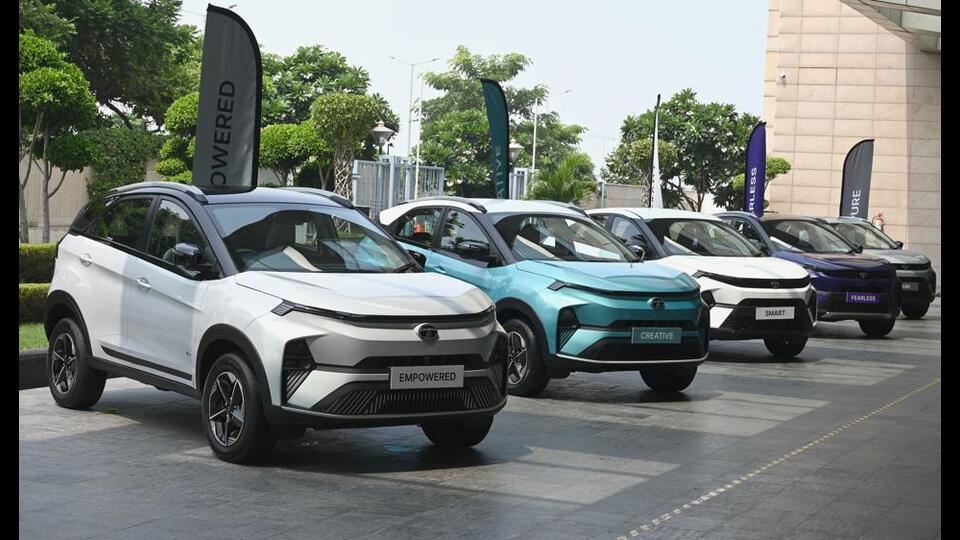
The significance goes beyond government purchasing more electric cars. By making EVs the preferred option, rather than simply incentivising their adoption, the government is beginning to use public procurement to create demand. But the decision also raises an important question: How does India ensure that such interventions contribute to a coherent, long-term mobility transition?
India’s EV market has expanded considerably, particularly in two- and three-wheelers, supported by central incentives, State policies and private investment. Yet, adoption remains uneven across vehicle segments and states. More importantly, ministries and agencies continue to advance electrification, alternative fuels, vehicle efficiency and charging infrastructure through programmes that are not always aligned in their objectives or implementation timelines.
The challenge is no longer simply to promote more EVs. We must plan to establish how different mobility solutions can collectively reduce petroleum dependence, improve air quality and deliver progressively lower carbon emissions.
Government fleets are well suited to electrification. Their operating patterns, parking arrangements, and replacement cycles are relatively predictable, allowing charging infrastructure and vehicle requirements to be planned together. Aggregated demand can also improve procurement efficiency and provide greater certainty to manufacturers and service providers.
However, increasing the purchase price ceiling should not translate into higher expenditure without corresponding benefits. Procurement decisions must consider total cost of ownership, including vehicle utilisation, electricity tariffs, charging costs, maintenance and residual value.
Equally important is infrastructure readiness. Procuring EVs without adequate charging facilities or electricity distribution capacity could undermine their operational and financial benefits. Government fleet electrification should, therefore, become an opportunity to establish measurable benchmarks for charging reliability, utilisation and lifecycle costs.
These lessons can inform wider electrification across public transport, commercial fleets and state government operations. But scaling such initiatives requires a national framework.
India should adopt a phased transition from Business-as-Usual (BAU) to Clean Mobility and ultimately Green Mobility, guided by a National Clean Mobility Policy. This distinction is consequential. Clean mobility focuses on reducing local pollution and dependence on conventional fuels, whereas green mobility must progressively achieve substantially lower lifecycle emissions, including those associated with electricity generation, fuel production and batteries. Electrification is central to this transition, but other technologies must be assessed against comparable economic and environmental criteria.
A credible roadmap should establish three planning periods. During 2026-2029, the priority must be building readiness: This means strengthening charging infrastructure, distribution network capacity, interoperability standards and financing arrangements. Government fleet procurement can provide valuable operational evidence, while states should identify infrastructure and investment gaps across different transport segments.
Between 2029 and 2035, attention should shift towards scaling solutions that demonstrate commercial and operational viability: Electric buses, urban freight and commercial fleets will require coordinated investments in vehicles, charging infrastructure and electricity networks. Fleet aggregation, leasing, targeted guarantees and risk-sharing mechanisms can help address financing constraints, particularly where high upfront costs and uncertain utilisation discourage private investment.
From 2035 to 2047, the emphasis should increasingly move towards genuinely green mobility: Technology choices must reflect lifecycle emissions, the changing electricity mix, resource efficiency and long-term energy security.
Strengthening public transport and shifting suitable passenger and freight movement towards more efficient modes must remain integral to this transition.
The objective should not be to prescribe one technology across all vehicle categories, but to establish transparent criteria for deciding which solutions are appropriate, where and when. Who will coordinate the transition? A national policy will have limited value without a mechanism to deliver it.
India, therefore, needs a National Clean Mobility Mission that can coordinate implementation across ministries, states, financial institutions and industry.
The division of responsibilities should be explicit: Policy sets the direction, the mission coordinates delivery, schemes provide targeted instruments, and projects translate priorities into measurable outcomes.
Such an arrangement would connect vehicle procurement and adoption targets with charging infrastructure, grid preparedness, financing and institutional accountability. Common national standards would provide consistency, while states retain flexibility to respond to local circumstances.
Annual monitoring, supported by substantive policy reviews in 2029 and 2035, would allow interventions to be adjusted as technologies, costs and market conditions evolve. Progress should be assessed through reliable mobility services, affordability, petroleum displaced, charging performance and lifecycle emissions, rather than vehicle registrations alone.
The wider significance of the finance ministry’s decision, however, will depend on whether the lessons from procurement inform larger investment and policy decisions. India has demonstrated that targeted interventions can accelerate EV adoption.
The next task is to ensure that these interventions work together. Making EVs the default choice for government cars is a start; making coordinated, economically viable and progressively greener mobility the basis of national transport policy is the real challenge.
Ria Sinha is senior fellow, Chintan Research Foundation. The views expressed are personal


