Scientifically Speaking | From admiring to eating: The 3500-year tale of chicken
Chicken is now the most popular meat in many countries. But there was a time when they were venerated as majestic and strange birds, when they were first encountered in parts of Africa and Europe.
Chickens are the most common domestic animal, with estimates of over 80 billion birds worldwide. That’s around 10 chickens per every man, woman, and child. But though chickens are found everywhere and commonly eaten, they weren’t originally considered a source of food.
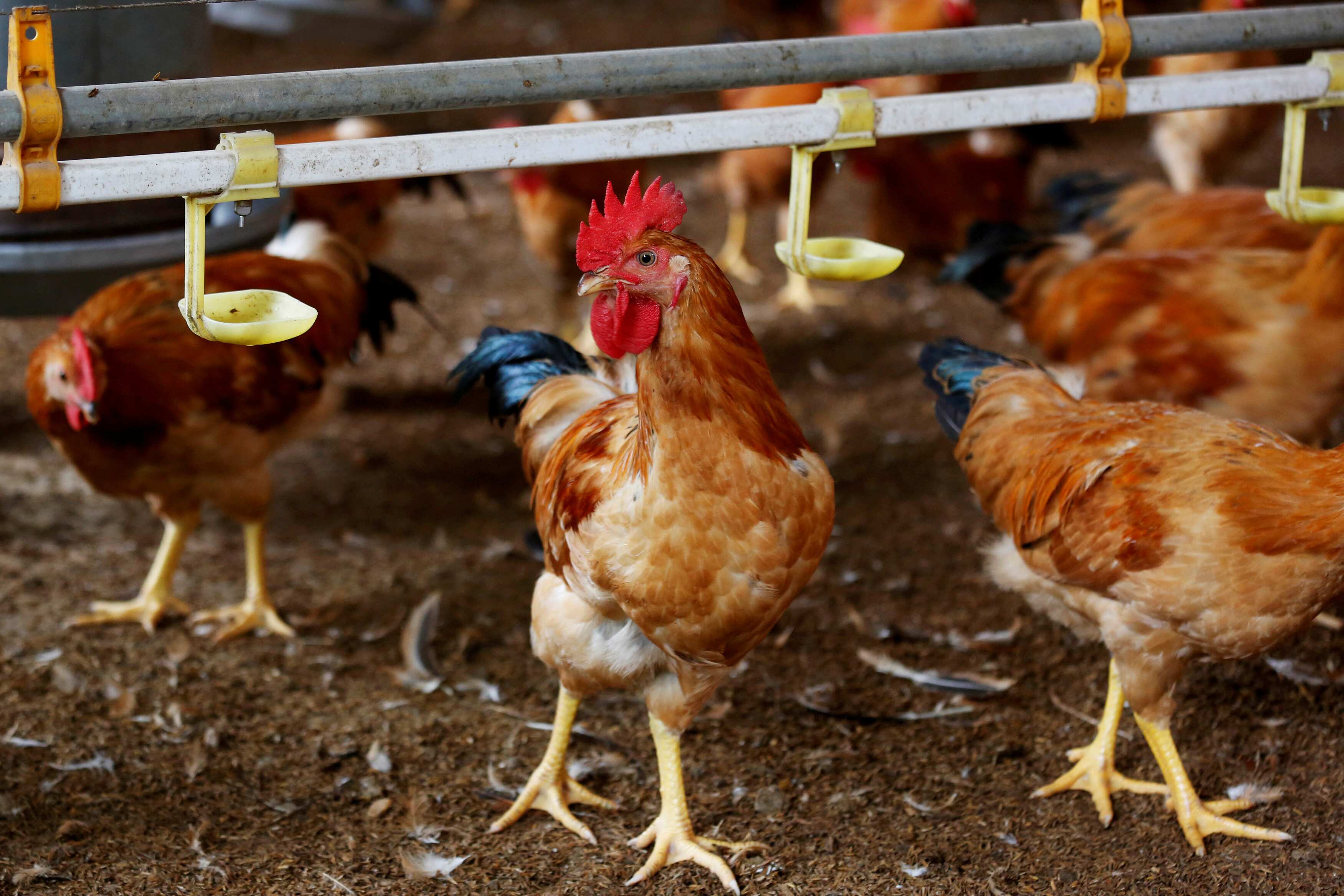
Chicken farming and meatpacking are a multibillion-dollar global enterprise today. (Reuters)
It is widely held that chickens were first domesticated in the Indian subcontinent since signs of chickens were found in Harappan civilisations. But the early history of the bird is not well known and has been debated among scholars.
A new study led by Greger Larson of the Palaeogenomics & Bio-Archaeology Research Network at the University of Oxford and published in The Proceedings of the National Academy of Sciences on June 6 disputes the claim that domesticated chickens originated in India, finding “unambiguous chickens” around 3,500 years ago in what is now central Thailand.
The team analysed chicken bones from hundreds of sites in 89 countries and matched their findings with available historical and cultural information. They conclude that chickens arrived in China, India, and West Asia a few hundred years after their initial domestication. And it is from here that chickens spread to western Africa and Mediterranean Europe.
Though chickens are commonplace now, it is amusing to think that they might have been venerated as majestic and strange birds when they were first encountered in parts of Africa and Europe. In China and other parts of Asia, chickens would also have been used in sport for cock fighting.
The researchers found that a species of bird called the red junglefowl had been present where the first signs of domesticated chickens emerge, pointing to a likely origin. In Thailand, chicken bones began to show up in sites dating to the time when dry rice agriculture emerged in the region. Rice cultivation and chicken farming seemed to go hand in hand for a few centuries.
What about the widely held notion that chickens were first domesticated in India? Two wild birds – the red junglefowl species and another kind of bird, the gray junglefowl are present in the Indian subcontinent making a proper identification of early domestication here difficult. But the authors of the current study claim that bones from Mohenjo-Daro and Harappa discovered earlier had been misidentified as chicken bones. They also write that Vedic texts make no mention of chickens until 1200 BCE. So, according to the new study, while wildfowl have been in India since antiquity, poultry farming started in India much later, after the Bronze Age Harappan civilizations. This would fit with their hypothesis of an origin further east near Thailand and then spread to India.
Whatever their origin, chickens weren’t routinely eaten after their early domestication. Complete skeletons of older birds have been found in some of the oldest sites indicating chickens were perceived differently back then. If chickens were routinely eaten, we would expect bones from birds to be tossed away. Also, bones would have cut marks. These kinds of bones were found in sites dating to much later.
It took hundreds of years for people to realise that chickens could serve as a regular source of food. The Romans were responsible for much of the spread of poultry for meat across Europe. Much later, the Catholic Church aided the rise of chicken-eating, because chickens (which are two-legged animals) were allowed during certain fasting periods when four-legged animals were not.
But throughout history, domesticated chickens looked nothing like the broiler chickens that provide meat and eggs on a mass scale today. Early domesticated chickens were much smaller than the production line “meat factory” poultry birds that grow rapidly today.
Even in India, the popularity of chickens among non-vegetarians is relatively recent. Chickens were never considered “prestige meat”. For example, in Eastern India, eating chicken was verboten among many non-vegetarian Hindu communities (up until my father’s generation in my own family).
In North America, chicken cultivation was relegated to the sidelines until the middle of the last century. A contest called the “Chicken of Tomorrow” helped to develop commercial broiler chickens that grew faster. Commercial breeding and the use of antibiotics made chickens almost monstrous in size compared to their early relatives.
Now, of course, chicken is the most popular meat in many countries. Chicken farming and meatpacking are a multibillion-dollar global enterprise today.
Anirban Mahapatra is a scientist by training and the author of a book on COVID-19. He’s writing a second popular-science book

 E-Paper