Scientifically Speaking | The scientific impact of the Covid-19 pandemic
As we approach the end of the third year living with Covid, what lessons have we learnt? Perhaps the greatest scientific lesson has been in the shift of mRNA vaccines from promising candidates to proven technologies.
We are approaching the end of the third year of living with the SARS-CoV-2 virus. What lessons have we learned from the pandemic? It may be human nature to brush aside bad news and to attempt to pick up our lives from before the emergence of the deadly virus, but we must not forget the enormous toll on lives and livelihoods.
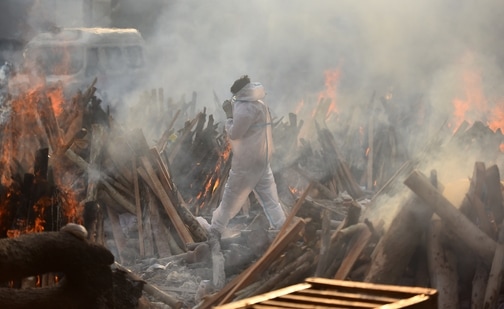
For every person reported to have died of Covid-19 in these two years, there may be two more that died from it without the diagnosis. (Raj K Raj/ Hindustan Times)
If 2020 was the year that the entire world was rudely awakened and scientists and policymakers rushed to limit the spread, then 2021 was the year that deadly strains like Delta and Omicron spread rapidly among populations. Just as vaccines were demonstrated to be effective against the ancestral strain, we faced the problem of how to get these vaccines made in sufficient doses and how to get them into arms. With waning effectiveness against the newer variants, scientists immediately rushed to devise modified boosters.
Most of the world reached a state of détente in 2022. The exception was China which had been lauded for effective measures in keeping infections low in the first two years of the pandemic, but which continued lockdown measures at the earliest signs of infections well into the third year.
A new study by the World Health Organization published in Nature last week estimates excess deaths of nearly 15 million attributable to the Covid-19 pandemic in 2020 and 2021. For reference, the number of reported deaths was 5.4 million in the first two years of the pandemic. In other words, for every person reported to have died of Covid-19 in these two years, there may be two more that died from it without the diagnosis.
But death toll is only one metric. Many of those who survived Covid-19 suffered from a host of post-infection maladies ranging from mild to disabling collectively called “Long Covid”. In the United States, there may be 20 million long Covid sufferers. While global estimates vary, around one in five of those who were infected by the virus reported that they were not back to pre-infection health two months later.
There is currently a rise in respiratory infections in the Northern Hemisphere. In the United States, this “tripledemic” (named because of the contribution of influenza, and respiratory syncytial virus, alongside Covid-19) is a reminder of the reality of living with a virus. I see very few people masking in crowded locations, hinting at the difficulty of effectively communicating information on risk. But on the positive side, I think more people would be willing to start masking up again if cases rose further — something that would’ve been unheard of before the pandemic. Now, those who are inclined to trust science know that masks are effective against a host of respiratory viruses.
There are also signs that the scientific lessons of the Covid-19 pandemic are helping in treating other diseases. In March 2020, I remarked on the remarkable pace by which genomes were being sequenced and vaccines (particularly those using the RNA platform) were being developed. A news article in Nature reports that genomic sequencing technologies and expertise developed during the pandemic is being used to track other infectious diseases such as Ebola and dengue in parts of Africa and Asia. The funding for infectious disease diagnostics and surveillance must continue to support these initiatives.
But perhaps the greatest scientific lesson has been in the shift of mRNA vaccines from promising candidates to proven technologies. The ability to rapidly design and specifically tailor mRNA vaccines was proven in real-time during the pandemic. The same technologies are being used now to design vaccines and therapeutics for influenza, respiratory syncytial virus, HIV, and malaria among other infectious diseases.
Last week, an mRNA vaccine showed impressive results in a skin cancer study. In a phase-2 clinical trial, the biotech company Moderna reported that an mRNA cancer vaccine reduced the recurrence of a type of cancer in a small number of patients by 44% when combined with an approved immunotherapy drug. The study which has not been peer-reviewed yet, is being hailed as a “penicillin moment” for personalized treatments for cancer.
Anirban Mahapatra is a scientist by training and the author of a book on COVID-19

 E-Paper