
 E-Paper



Should the Army be used in internal security situations?
Indian armed forces should be used against external enemies not internal threats. The latter should be tackled by central para-military forces.

 Prefer HTon Google


Within 10 days of his being appointed as Chief of Army Staff on March 31, 2010, Gen Vijay Kumar Singh called on then Home Minister P Chidambaram as part of protocol and courtesy. Chidambaram asked the then newly appointed Chief, who has been a Minister in the Narendra Modi government since 2014, about prospects of army deployment in Naxalite-infested areas of Central India. Ever the blunt talker, Gen Singh replied in negative as he said the Naxalite problem was a manifestation of a socio-economic problem in that part of the country. Chidambaram asked him again as to why was the Army then deployed in Jammu and Kashmir. The Army Chief said because it was not a socio-economic issue and was part of the proxy war waged by Pakistan.
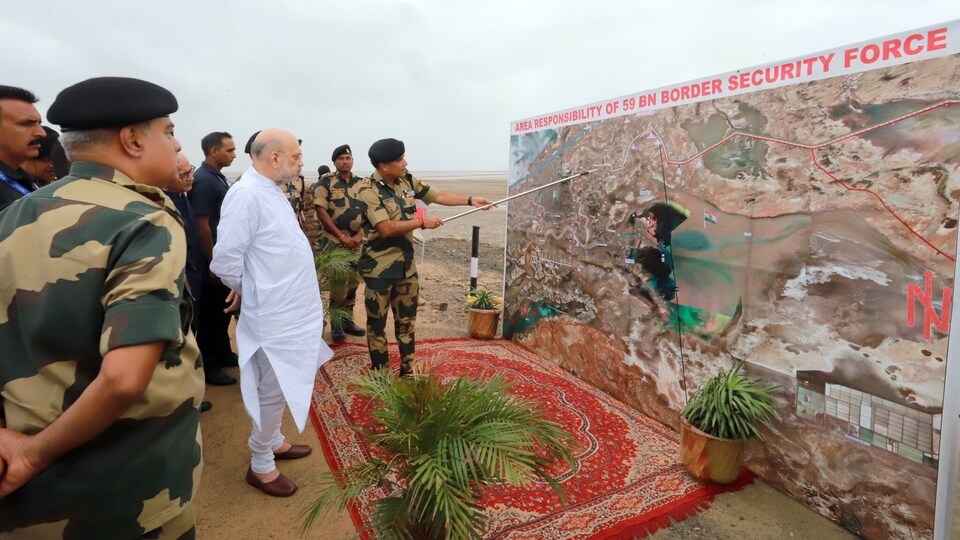
After Prime Minister Narendra Modi raised the issue of Indian Air Force (IAF) being used to quell Mizo insurgency in 1966 and Army attack on Akal Takht in 1984 to take out Khalistan extremists as ordered by then Prime Minister Indira Gandhi, the debate on whether the Indian Armed Forces should be used for internal security situations has been reignited. The IAF’s fighters were also used during the Naga insurgency in 1960.
After talking to serving diplomats, army and intelligence officers as well as ministers in the Modi government, HT found that the majority favored strengthening of the central paramilitary forces (like People’s Armed Police of China) to deal with internal security situations rather than deploying the Indian Army. While Army officers say that deployment of armed forces depends on the situation, top intelligence officers believe that troops should only be deployed for a short duration or they develop vested interests if deployed over decades like North-East or Jammu and Kashmir.
However, national security planners feel that Army or armed forces should only be used against external enemies as the troops have different rules of engagement and heavy area and field weaponry with a strong possibility of collateral damage as compared to the para-military forces. “The chances of armed forces using excessive force are always there as their primary task is to vanquish the enemy and not to subdue it and bring on the negotiating table…..the use of tanks in Operation Bluestar in June 1984 is too much even though the Khalistan extremists were fully supported by Pakistan,” said a senior diplomat.
Retired top army commanders who were involved in Bluestar believe that the Army had to use force as there was a time constraint on the operation and threat of public insurrection. In case of Mizoram, the IAF was used to carve out a route to evacuate Assam Rifles personnel who had been surrounded by Mizo insurgents or their posts had been over-run. The civilian casualties were collateral damage. Same was the case when IAF was used against Naga insurgents in 1960.
Army was deployed in Jammu and Kashmir as Pakistan was waging a full-fledged proxy war against India with the intention of conquering the then state through ISI sponsored jihadists aka as freedom fighters in Pakistani parlance. With the JK Police under threat of being compromised and the Pakistani terrorists using rocket launchers, anti-aircraft guns and rocket propelled grenades, the Centre had little option but to use Army or Rashtriya Rifles to counter the terrorists who had public support under duress or threat before 2019.
Post abrogation of Article 370, the situation has changed for the better in Jammu and Kashmir and Naxalite presence has been decimated to mere three districts of Chhattisgarh, the Modi government should streamline the Indian Army and empower para-military forces for use in internal security duties. The Indian Army, RR, BSF, ITBP and Assam Rifles should be freed from internal security duties and used only to guard the borders or CT duties on the LoC and the Indo-Myanmar border, India-Bangladesh or to defend the Siliguri corridor from Chinese belligerence.
PM Narendra Modi and Home Minister Amit Shah must empower the CRPF as the prime force for internal security duties apart from the state or UT police. In this context, the CRPF should have capable leaders who have experience in mob violence and intense law and order situations, not armchair strategists or paper tigers. The CRPF should also be empowered with state of art weaponry including area weapons so that they can counter the worst case scenario in whichever part of the country. The suggestion that the Indian Army should be used to sort out on-going Kuki-Meitei tribal conflict in Manipur is disastrous.


