
 E-Paper



Empowering Single Women in India: The Rise of the Ekal Nari Movement
A collective of rural single women is redefining how society looks at widows, deserted women, never-married women and divorcees. How? Read on…

 Prefer HTon Google


When Nirmal Chandel’s husband died all of a sudden of a heart attack two years after their marriage, there was grief but also, overwhelmingly, claustrophobia.
Back in 1989 young widows in Mandi, Himachal Pradesh where she lived faced even more restrictions: No going out even to visit parents; no singing, dancing or participating in any celebration; no bright-coloured clothes, bangles or dressing in a way that would bring attention to herself; not even non-vegetarian food, considered ‘heating’ and likely to create inappropriate desires in a woman condemned to a sexless existence.
A dull, colourless life stretched out for the 24-year-old.
She endured the deprivation and quietly followed the Rules for Widows. Then a year later her parents came to take her home for a short break. Somebody had already told Chandel about a non-profit in Solan district. When she made discreet enquiries, the organization, Social Uplift through Rural Action, or Sutra, said the 10th grade pass could get a job as an accountant. It would pay her ₹350 but included free board and lodging. She jumped at it.
Away from home for the first time in life, Chandel looked around. Widows, those who had never married, those abandoned by their husbands, those whose husbands had been jailed, everywhere there were single women. And each had more or less the same story.
Blamed for their husband’s misfortune and tolerated without any rights, they were consigned to a life of drudgery. If young, they worried about the education of their children. Exploitation, even sexual exploitation, was common. If older, they agonized about who would take care of them in their old age. And young and old alike shared a common concern about a roof of their own. They were living on the goodwill of their families—a goodwill that was dependent on their behavior and following the rules.
Strength in solidarity
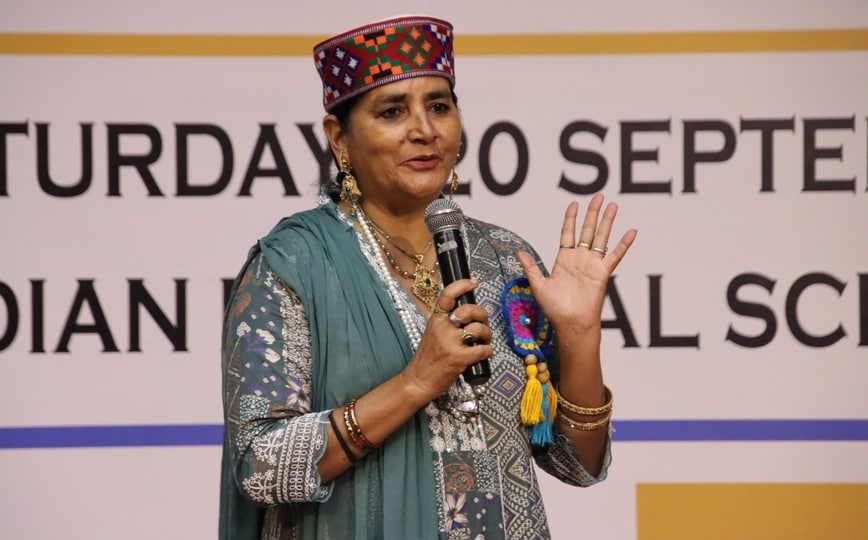
I am speaking to Chandel at the sidelines of the Martha Farrell awards for excellence in women’s empowerment. Named after the feminist-activist who was killed in Kabul in 2015, the award every year honours a remarkable individual as well as an organization for its work on gender. Dressed in cheerful blue with a jaunty Himachali cap on her head, Chandel is representing the Himachal Pradesh chapter of the Ekal Nari Shakti Sanghathan (ENSS or the collective of empowered single women) that she founded in the state in 2005 with just 105 women. Today it has 19,445 members across the state.
India has the largest number of single women in its history with a 39% increase in the number of single women from 51.2 million women in 2001 to 71.4 million in 2011, according to Census data.
There are also nearly three times as many widowed, separated and divorced women than there are men. For instance, between 1991 and 1994, 8% of all females in India were widows; just 2.5% for men, according to research by Martha Alter Chen of the Harvard Kennedy School. This is because, Chen analyzed, only 9% of India’s widows ever remarry, unlike male widowers who are far more likely to marry again.
Despite their numbers, single women, particularly in rural India, are amongst the most marginalized in the country. When Ginny Shrivastava, a Canada-born activist who has lived in India for over 50 years after her marriage to an Indian man, first got involved with the women’s movement in the late 1980s she was struck by how it was dominated by issues of dowry and rape. Single women belonged to no cause.
Starting in 1999 with a state-level convention in Jaipur attended by 450 widowed women to get to know their problems, Shrivastava founded the Ekal Nari Shakti Sanghathan which today has grown to a platform of 250,000 members across eight states including Gujarat, Jharkhand and Telangana. Rajasthan remains the largest chapter with 102,000 members.
In the last panchayat elections in Rajasthan, Ekal Nari put up 41 single women candidates for the post of sarpanch; 29 won and are leading their panchayats today.
Perhaps the collective’s most crucial goal is to dispel the idea that single women—widowed, separated, divorced, older unmarried women—are powerless, poor, and to be pitied. “Male-dominated society has tied single women with many social evils and conservative traditions for centuries, so that single women cannot come out of these shackles and raise their voices for their rights for lives with dignity,” it declares.
For widows there is some degree of sympathy, says Chandrakala Sharma, ENSS Rajasthan director. “But women who leave their husbands or are divorced do not get even that token sympathy.” At 18, married and already a mother of a six-month-old boy, Sharma had walked out of a marriage to an abusive drug addict. “I couldn’t even find a place to rent. Everywhere it was the same question, ‘where is your husband’?”
Marching together
In 2005, Nirmal Chandel went to Jaipur to attend an Ekal Nari convention and returned home determined to launch a Himachal Pradesh chapter unique to the needs of her state.
Three years later, Chandel organized over 2,600 single women for a three-day march to Shimla, the state capital to demand rights to land, health care and ration cards. It was a powerful procession, this group of widows and abandoned women presumed to be weak and powerless, demanding rights in their name, not as wives or daughters or mothers.
Over the years, Ekal Nari Himachal Pradesh has followed up to have elderly single women included in health schemes for senior citizens at subsidized rates. They have run awareness programmes with panchayats to inform them about various government schemes. They have helped scores of single women get ration cards and be included in the government’s pension scheme. And they have interceded with families and panchayats on behalf of women deserted by their husbands.
Property lands remains a huge pending issue. By law, a widow and her children are entitled to her late husband’s property. But on the ground this rarely happens, says Chandrakala Sharma. In Rajasthan, Ekal Nari has been increasingly working with women to ensure they get their rights.
But for divorced or abandoned women there could be maintenance but no property rights, leaving her vulnerable to either continue with an abusive marriage or leave with maintenance that is often poorly enforced.
From the abject wretchedness of “vidhwa” (widow) to the proudly assertive “ekal nari”, the change over the years since its founding has been remarkable. “Working with women gives us a lot of energy,” Chandel says while accepting her award. “Our sisters have had to put up with a lot of taunts in the past. But today even the government recognizes we are a force to reckon with.”
That’s it for this week. If you have a tip, feedback, criticism, please write to me at: namita.bhandare@gmail.com


