
 E-Paper



Terms of Trade | Multilateralism vs mercantilism: Our agri trade policy dilemma
No amount of trade reciprocation will placate the agri-business lobby in advanced countries to allow India to continue its agricultural support and mercantilism


Murasoli Maran served as the commerce minister under the Atal Bihari Vajpayee government from 1999-2002. He was the best commerce minister India has ever had. This is not because India enjoyed one of its best-ever export performances during and immediately after his tenure. Maran’s biggest contribution to India’s, in fact, all of the Global South’s trade fight was in the role he played at the Doha Ministerial meeting of the World Trade Organisation (WTO) in 2001. The Doha Round declaration, as the outcome is popularly known, forced advanced countries to accept the fact that the multilateral trade regime could not just be about opening up the Global South’s markets. Maran and his peers from developing countries forced advanced countries to agree that issues of development and livelihoods in the developing countries were equally important. Agriculture and food security are among the most important issues discussed in the Doha Round.
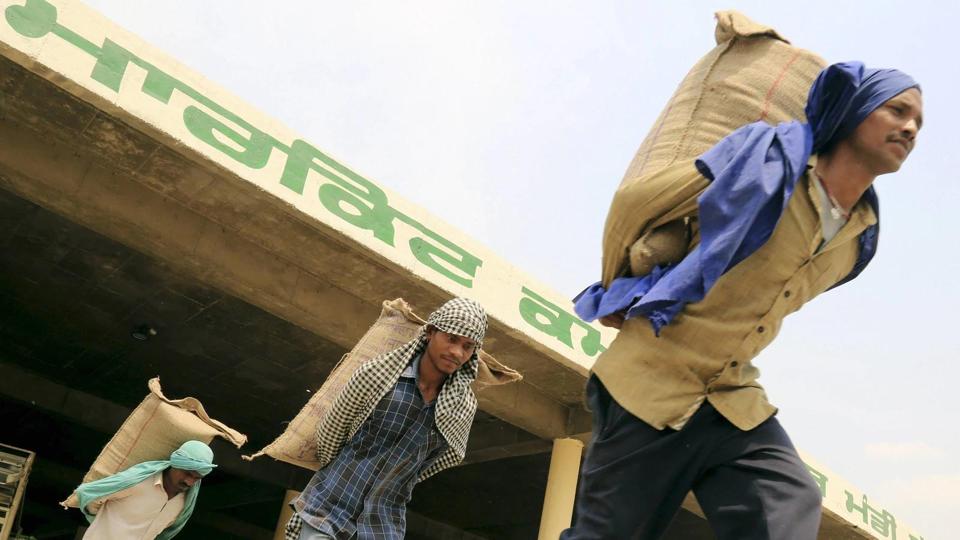
It will not be an exaggeration to say that India’s National Food Security Act (NFSA) and subsequent additions to it such as the ongoing Pradhan Mantri Garib Kalyan Yojna (PMGKY) would have been vulnerable to hostile trade litigation in the absence of the outcome of the Doha Round. To be sure, schemes such as these, still do not have carte blanche. India has managed to pursue these programmes, which, as the pandemic has taught us, are absolutely critical for food security and livelihood concerns, because it was able to secure a so-called Peace Clause in the Bali ministerial round of the WTO in 2013.
What explains these legal hurdles and the workaround India has been able to manage? The Agreement on Agriculture (AoA), which governs international trade in agriculture under the WTO, is among the most unfair trade treaties in the world. It classifies subsidies into three heads: Green Box, Blue Box and Amber Box. The first two largely contain income transfers. Most of the advanced world’s support to agriculture comes under these two categories. The world’s most subsidised agriculture, by the way, is practiced in the United States. A 2016 Economic and Political Weekly (EPW) paper by Biswajit Dhar and this author looked at this issue in detail.
Product-specific support mechanisms such as Minimum Support Price (MSP), which is the mainstay of India’s food security programme, are clubbed under the Amber Box. While support under the Green Box and Blue Box categories faces no restrictions, Amber Box support is subject to a de-minimis criterion which says that total support cannot cross 10% of the value of production of a crop.
It is not very difficult to see why the free pass to Green and Blue Box and the restrictions on Amber Box are discriminatory. Farmers are a very small proportion of the workforce in advanced countries unlike developing economies such as India. This means that it is far more difficult for countries such as India to provide income support to farmers.
The Doha Round has not seen much progress in subsequent discussions at the WTO. In fact, most commentators agree that the multilateral trade regime itself is running the threat of becoming redundant as populism takes over the first world and countries are more interested in negotiating bilateral or regional trade agreements rather than invest in the multilateral framework.
Why is this column talking about these issues today?
Global food markets have seen a massive shock due to the Russian invasion of Ukraine. Food prices have climbed to an all-time high and many food-importing countries are facing the prospect of either an import bill shock or a shortage of staple cereals such as wheat. India, which is sitting on around 19 million tons of wheat stocks at the moment has announced that it is willing to fill the gap in the global food market. Commerce Minister Piyush Goyal expects India’s wheat exports to reach 10-15 million tons this year. The government’s wheat export ambitions need to look at two issues carefully.
First is the possibility of this year’s wheat production being lower than expected. Some experts believe the shortfall – it is expected because of the premature onset of the summer season and a fertilizer shortage in the previous sowing season – could be equal to what the government thinks our exports will be. This could create a shortage in the domestic economy, at least to the extent of eroding the government’s stocks. Anecdotal reports from states such as Punjab already indicate that government procurement is much lower than what it used to be. To be sure, the reduction in procurement is not just because of low output, but also because farmers are being able to manage prices which are higher than MSP in the private market.
A big reduction in the government’s wheat stocks will generate tailwinds for domestic prices and might worsen what is already a precarious situation on the price front. Ominous as it sounds, in this author’s opinion this is not the biggest issue of concern on the agricultural policy front. At worst, the shortages will kick in after a couple of months and the government will drop its ambitious targets for exports, and perhaps also impose an export ban, which, notwithstanding this government’s self-proclaimed commitment to agricultural reforms, have become an integral part of its agricultural policy.
The bigger danger from such mercantilist talk in agriculture – this government has not lost one occasion to brandish India’s agricultural exports and future possibilities – is the potential backlash India can face in multilateral trade negotiations in agriculture. While it is politically beneficial for a government to show off India as a powerhouse of agricultural exports and make claims that farmers’ incomes have doubled under this regime, such rhetoric can be extremely damaging in trade negotiations.
Facts speak for themselves. A 2021 <i>Economic and Political Weekly </i>paper by Biswajit Dhar and this author flagged some of these issues. “India has notified to WTO’s Committee on Agriculture that 99.43% of its farmers, or those operating on holdings of 10 hectares or less, are “low income or resource-poor”, the paper noted, while adding that “several WTO members, including the US, Canada, Australia and the European Union, have argued that India has been violating its subsidy commitments in respect of several crops”. While such claims are not exactly true — the paper discusses this in detail — what is true is that declarations of exporting from government accumulated wheat stocks violate India’s commitments in the WTO – India justifies its subsidies in the name of protecting food security and not earning wheat dollars – and could take India down a slippery path in international trade negotiations.
Of course, the ideal outcome in trade negotiations should have been that advanced countries also faced questions on their massive agricultural subsidies. It does not take rocket science to realise that subsidies have the same effect – lowering the economic cost of farmers – whether they are product specific or income transfers. It is this question that India must confront honestly.
Despite heroic efforts by the likes of Maran in 2001, advanced countries stalled the Doha Round in the WTO in subsequent negotiations lest their domestic interests are compromised. After its initial reluctance to enter into regional and bilateral trade agreements, the current government seems to have made up its mind to go full throttle on them. Such negotiations, however, provide no guarantee that advanced countries will not try to harm India’s agricultural support mechanisms through hostile litigation or question them in multilateral forums. The likelihood of such pushback will only increase when India’s actions (such as plugging this year’s shortage in wheat markets) pose a threat to the profits of the big players in global food trade.
A slightly provocative analogy could be given to close this argument. Many liberals would want the US government to penalise the Indian state against what they claim are violations of civil liberties in India. The veracity of these claims notwithstanding, there has been a voice which has been (in this author’s view rightly) arguing that India’s importance in the US’s realpolitik strategy to contain China in the Indian Ocean region is too big to be sacrificed at the altar of civil liberties.
A similar logic could be given for agriculture as well. No amount of trade reciprocation or bilateral deals will placate the powerful agri-business lobby in advanced countries to allow India to continue its agricultural support and mercantilism at the same time. Unless, of course, India can build an effective alliance with other countries in the Global South and get rid of the unfair trade laws in the multilateral trade regime, which are the source of advanced country dominance in agricultural markets. Maran’s successors have managed to kick the can of multilateralism versus mercantilism down the road for almost two decades. That road might hit a dead end very soon.
Every Friday, HT’s data and political economy editor, Roshan Kishore, combines his commitment to data and passion for qualitative analysis in a column for HT Premium, Terms of Trade. With a focus on one big number and one big issue, he will go behind the headlines to ask a question and address political economy issues and social puzzles facing contemporary India.
The views expressed are personal


