
 E-Paper



The Art Of A Good Unicorn| The allure of AI for startup founders
The AI hype has given rise to a situation where you might have to force-fit AI in your startup. Is it a wise move?


In the buzz surrounding ChatGPT and other services, startups may feel the heat to integrate AI in their operations. They must think about AI washing before they do so.
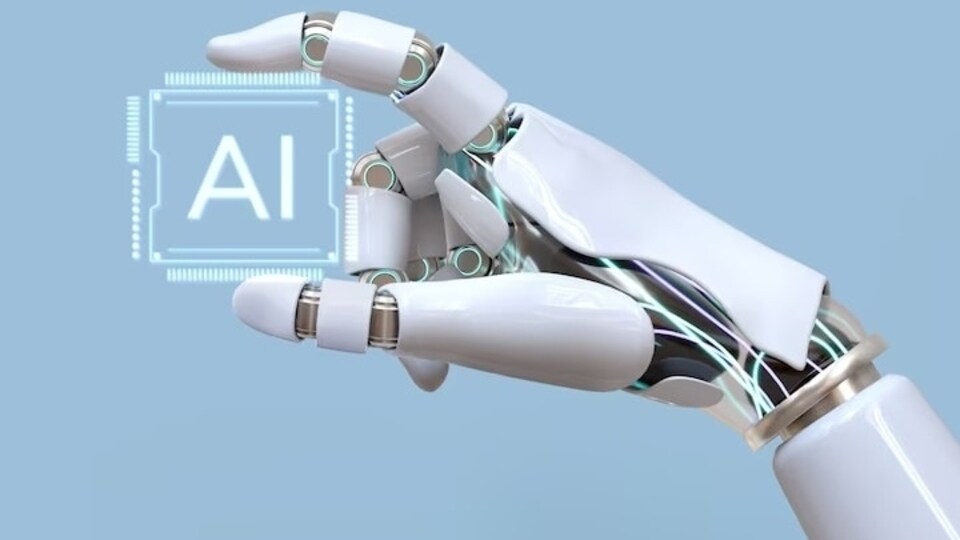
It seems like everyone’s new favourite word in 2023 is Artificial Intelligence (AI). It’s not like AI was just invented, but OpenAI’s release of ChatGPT in November 2023 to public accolade and doomsday predictions in equal measure came at a time when startups were facing a funding crunch, macroeconomic headwinds, and lay-offs. The funding winter meant that these ventures had to think of innovative ways to attract substantial funding. So, why not go the AI route? After all, it’s the only thing everyone’s talking about, whether in a positive or a negative manner.
What if AI wasn’t needed in a startup’s core operations? Maybe, in a last desperate move, it might be claimed that AI can be integrated into your company, even if it’s not exactly true or if the connection is tenuous. Let's call this phenomenon “AI washing”, similar to “greenwashing”. Just as companies deceptively tell stakeholders that the company is environmentally sound, sustainable and green, enterprises embellish their use of AI. Or it’s like “cloud-washing”, where enterprises say their products and services are cloud-based, when they’re not — capitalizing on the hype of cloud computing — without actually integrating it into the company. AI washing would be when a company is pretending to be powered by artificial intelligence when it actually isn't.
But, why are startups AI washing?
Securing funding can be a major reason to help navigate the current challenging funding winter. There may be a desire to attract investors — who appear to be more than ebullient towards investing in AI-driven companies, seeing as how other people are talking about AI and Generative AI. The current investment landscape is marked by euphoria and excitement around AI technology. With investors valuing AI companies, startups may be motivated to tap into this enthusiasm to increase their valuation and secure funding.
Or perhaps, it could be all about brand visibility and media attention. By marketing themselves as “future-ready” and at the forefront of innovation, startups think they can gain a competitive advantage and attract customers and partners alike who prioritise AI-driven solutions — which can attract current and existing investors to open doors to new opportunities.
It could also be all about the talent. Even if AI isn’t central to a startup’s core operations, it could be a way to acquire talent, especially in the form of skilled AI experts who can build and maintain real AI systems, strengthening technical expertise and making a venture more appealing to potential clients and investors.
Of course, these motivations can seem compelling. As a startup founder, you may think that the benefits outweigh the risks. But, do you know the risks? There could be legal repercussions and your startup’s reputation could be affected in the long run.
According to a 2019 report by London venture capital firm MMC Ventures, around 40% of 2,830 European companies, that claimed to be AI start-ups, used virtually no AI at all.
In 2019, Engineer.ai, a mobile app developer startup, was accused of lying about claiming to be AI-based, when it wasn’t. The Indian startup crafted the narrative that AI was central to their product offerings, which may have led to them raising close to $30 million from the likes of Softbank, Lakestar and Jungle Ventures. But, instead, it was using the natural intelligence of its human software engineers. Engineer.ai management clarified its stance was always about using human-assisted AI.
Flagging caution over AI, the United States’ Federal Trade Commission (FTC) announced in February 2023 that enterprises ought not to make exaggerated claims about the use of AI. Stating that overusing and abusing 'hot marketing terms' was not the right way to go, the FTC asserted that false and unsubstantiated claims about a product’s efficacy are their bread and butter. The FTC also said that exaggerating what an AI product could do would still be an issue, if claims lack scientific support or if they don’t apply to all users.
What if the existing tech is obsolete? I remember talking to some founders about how AI was penetrating their companies. One of them runs a travel company and he tells me that venture capitalists (VC) are pressuring him to incorporate more AI, even though he feels it is not necessary. This founder believes that his products and services need personalised customer interactions to provide warm travel experiences, so a human touch would serve the company better in the long run than a cold, lifeless and emotionless AI. This founder is trying to resist the use of AI, as he feels it undermines the core vision and direction of his startup.
Another founder I’ve spoken to uses machine learning (ML) for language localisation in India.
In this case, AI could be helpful to break down the languages and help other companies talk to people in different regions of India. But, going beyond this, could AI and ML be used for learning dialects? Like, if a user goes to a city in India, there could be different sub-dialects that vary from place to place. AI could be trained to understand these sub-dialects. Could this be a case of ramping up the use of AI in one’s startup?
Keep in mind that global VC funding is experiencing a dry spell, falling more than 50% year over year in Q1 2023. This is keeping in mind Microsoft's reportedly $13 billion investment in OpenAI this year. Stripe, a payments processing company which has adopted GPT-4 to streamline its user experience, has raised new funding this year that values it at about $50 billion. Sure, it’s not as great as its valuation of $95 billion in 2021, but it's performing its best in tough times.
The current landscape seems to scream how deal flow and funding are down. Investor confidence is low and there’s even a failure in established institutions like Silicon Valley Bank and First Republic Bank. So, if you’re not going to be using AI when it’s not applicable to you, how can you raise funding in such a challenging market environment?
There are some commandments that founders could abide by to increase their chances of success, as outlined by VC firm Andreessen Horowitz. As a founder, if you’re burning cash and running out of money, swallow your pride, keep your feet grounded and raise money even if it hurts by being flexible on structures. You should also avoid anchoring around price expectations or your last round valuation, for you run the risk of not receiving a term sheet if your expectation is a high price.
All it takes is one “yes” to get the ball rolling and build additional term sheets. Also, you could optimise for size, not dilution, though the standard approach has been the latter, but in this environment, maybe optimising for round size could be the way to go.
Another piece of advice is to stress-test one's burn multiple, which is to see how much cash you're burning to generate every incremental dollar or rupee of revenue. This lets you know where your largest burn is happening and whether there’s substantial justification for the same. Doing more with less could be attractive to investors. The blitzscaling strategy, where the goal is to grow really quickly to build out your company and prioritize growth over efficiency or profitability, may have prominence for startups right now.
The AI revolution is often compared to the PC revolution, owing to both of their transformative impact across society. Both would revolutionise how people work, communicate and access information, enabling better productivity, efficiency and access to information. The impact of AI is still to unfold. So, there could be serious temptations to embrace AI as a startup founder, even when it’s not necessary for your core operations. The AI adoption trend ought to be driven by genuine operational needs, not just fundraising purposes. AI or no AI, can your startup adapt and align in a way that’s sustainable in the long run?
Shrija Agrawal is a business journalist who has covered startups and private capital markets before it was considered cool in India
The views expressed are personal


