
 E-Paper



The Political Eye | Being Akhilesh: The challenge for a next-gen leader
Mulayam’s political legacy enabled his son to access power early. But differences between the two, and the distinct political context, adds to Yadav’s opportunities and challenges

 Prefer HTon Google


In 1989, Mulayam Singh, at the age of 50, became the chief minister of the then undivided Uttar Pradesh (UP) for the first time. This marked the culmination of what can be considered the first phase of his political life.
Singh had, by then, been a legislator in the assembly (he was first elected in 1967). He had spent time as a political prisoner (for 19 months during the Emergency). He had served as a minister at the state level, in charge of cooperatives, after the 1977 elections, and then leader of opposition in the UP legislative council and the legislative assembly in the early-to-mid 1980s. Singh then effectively took over the opposition political space once occupied by Chaudhary Charan Singh, after decisively displacing the former prime minister’s son, Ajit Singh, who had hoped to inherit the mantle. By the time he became CM, Mulayam Singh represented the primary anti-hegemonic political force of the state – the Congress, remember, was the hegemon of the times. He displaced the hegemon in such a manner that the Congress has not returned to power in the state since then, for the last 33 years.
In July this year, Mulayam Singh’s son will turn 49.
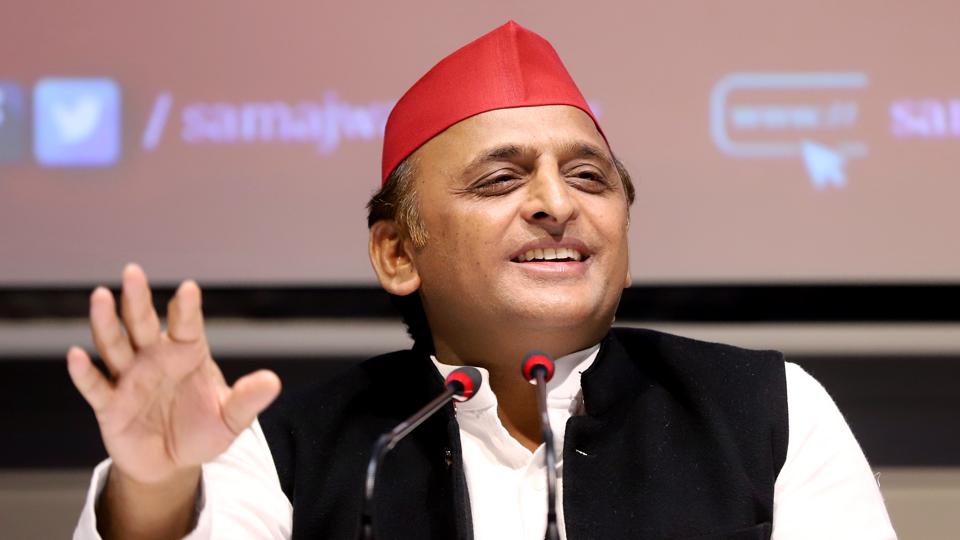
Like his father, Akhilesh Yadav today represents the primary anti-hegemonic force of his time – the Bharatiya Janata Party (BJP) is the hegemon of today and the Samajwadi Party (SP) is its true challenger. Like his father, he represents the same social forces that catapulted and then sustained SP in power for years. But along with the convergences are the divergences. And in these interconnections and differences between the father and the son lies the opportunity and the challenge for Akhilesh Yadav.
For one, unlike his father, who became a member of Parliament for the first time only in 1996 when he was 57, Akhilesh Yadav began his political career in the Lok Sabha at the age of 27, in 2000. Barring the five years that he was CM between 2012 and 2017 – he chose to be a member of the state legislative council, and not the assembly – Yadav’s legislative career has been on the national stage.
Think about it. The father began his political life in his college years, in the rough terrain of Etawah, and entered the UP legislative assembly when he was 28 – he then stayed on in the state legislature for another 30 years. The son parachuted into Parliament, came to the state legislature only when he was CM, and then immediately returned to Parliament when he lost power in the state (in 2017), and for the first time, is contesting elections from an assembly constituency. There is nothing wrong with this necessarily; nor is Yadav the first son of an established leader to prefer Parliament. But this difference is striking. Akhilesh Yadav did not begin with the same immersion in grassroots politics that comes with political socialisation in district and state politics in one’s early years; he arguably did not have the same hunger that is so essential for success when you start out alone with no party infrastructure or extended political clan or control over the state apparatus to enable your rise; and he has shown little interest in being an opposition figure in the state legislature.
Two, unlike his father who assumed the mantle of executive power as CM at 50, Akhilesh Yadav became CM at the age of 38 in 2012. This, in some ways, helped offset his earlier lack of experience and gave Yadav precious political and administrative exposure – only two other leaders of his generation from political families have enjoyed this advantage. Omar Abdullah is 51 and has been a one-term CM of the erstwhile state of Jammu and Kashmir, Jagan Mohan Reddy will turn 50 this year and has been CM of Andhra Pradesh for two years.
Again, unlike his father, who never enjoyed a full term as CM, Yadav was the head of the government for a full five years. To govern a state as large and complex as UP, get an understanding of the intricate maze that constitutes the state’s administrative apparatus, repeatedly travel to its diverse regions, sense the change in popular aspirations, and battle the multiple political challenges that inevitably emanate from those within and outside the party when one is in power is a rare opportunity. As an aside, it is interesting that UP’s battle this year is between two men of around the same age (Yogi Adityanath will turn 50 in June), relatively young in Indian politics, with both men having served as a member of Parliament for multiple terms, and then CM of India’s most populous state for a full term already. If there is proof needed that a generational transition is well and truly underway in Indian politics, turn no further than UP.
And perhaps this generational difference explains the third significant difference in the politics of Mulayam Singh and Akhilesh Yadav. Singh was inspired by Ram Manohar Lohia, whose views on the assertion of backward communities as essential to deepening India’s representative democracy, opposition to English language, and opposition to the Congress remained the three abiding principles of Mulayam Singh’s political life. Add to this a dose of hard secularism, which was essential to carving out a winnable political coalition in a state such as UP with 20% Muslims.
None of these four principles has been integral to Akhilesh Yadav’s politics. Take the approach to caste politics. In the 2017 election, Yadav genuinely thought that he had the opportunity to transform SP into a force that went beyond Yadavs – and could win the support of upper-castes, for what he saw were the development achievements of his government, including the emphasis on infrastructure. This did not happen, largely because SP was still seen as a party of Yadavs but also because in UP’s deeply entrenched caste politics, what a leader may see as good work is not enough to carve out wide social coalitions. Mulayam Singh would never have entertained such illusions, and remained crystal clear in catering to only his core social support base. Singh’s error was that his party shrank from being one of all OBC groups to one of the Yadavs to one of his family. This left his son with political baggage, and inhibited SP’s growth – but the old clarity is what Akhilesh Yadav is now seeking to replicate in the 2019 election, by turning to the original coalition of all backward communities and giving space to other OBC sub-groups.
Take the approach to English, and at the cost of being reductive, modernity and technology. Yadav is an engineer who studied in Sydney rather than Etawah; he married outside his caste; and his family is partial to annual summer vacations in London. If, in his first term in office, Singh restricted the use of English, Yadav, in his first term in office, made the distribution of laptops to students a political platform. Mulayam Singh was wary of the market (at least until Amar Singh came into his life and made him a friend of corporate capital). This scepticism towards the idea of “development”, just like his neighbour Lalu Prasad’s scepticism about development, came from the conviction that their constituency was not equipped to take advantage of the fruits of infrastructure or investment; what mattered was political empowerment, which could come only with access to state power and resources. Akhilesh Yadav, like others in his post-liberalisation generation, does not share this conviction – and in terms of economic philosophy has little that is different from either his competitor, Yogi Adityanath, or others in the political fray in UP.
Or take the approach to the Congress. For Mulayam Singh, the Congress was the party that represented the Brahmans, Dalits and Muslims and had excluded the backwards; the Congress was the party that had dealt a raw hand to his mentors, from Lohia to Charan Singh; and the Congress was the party that had to be dislodged from UP to be able to successfully carve out a political platform that remained in power. For his son, the core contradiction is with the BJP. The BJP represents not just the upper caste groups but has also cannibalised his wider OBC politics by sharpening the contradiction between Yadavs and non-Yadavs and coopting the latter; the BJP’s politics has made the task of a political coalition between Hindu sub-castes and Muslims, the classic SP formula, difficult to pull off; and unless the BJP is dislodged from power, Yadav will remain a leader who is important, but secondary, in state politics and peripheral in national politics. It is in this quest that Yadav allied with the Congress in 2017 and the Bahujan Samaj Party in 2019 – decisions that his father would not have taken. And it is in this quest that Yadav has allied with Jayant Chaudhary – the son of his father’s old rival, and the grandson of one of his father’s political mentors, a decision that Mulayam Singh would approve.
Or take the approach to secularism. Mulayam Singh, as CM in his first term, 32 years ago, ordered the police to fire at kar sevaks in Ayodhya; his son welcomed the Supreme Court’s verdict that enabled the construction of Ram Temple in Ayodhya. Singh’s opposition to the demolition of Babri Masjid won him a lifetime of loyalty of the state’s Muslims; Yadav is viewed by the community as the best bet in taking on the BJP, but only because the SP is the primary challenge. Like other “secular” politicians of his generation, Yadav has decided the best way to take on the BJP’s majoritarianism is through silence, unlike his father (or Lalu Prasad) who had decided that it must be done through outright confrontation.
It is this mix that makes Akhilesh Yadav similar, yet so distinct from his father. He has enjoyed easy access to power and privilege – unlike his father. But he has also had to deal with an entirely new framework of politics – the politics of caste, the politics of religion, the politics of development, the politics of public communication, and the inter-relationship between these elements, poses challenges distinct from the time his father led the party. Has Yadav absorbed the grit and astuteness of his father, while adapting to the new realities of his time? 2022 will be proof.
The Political Eye is a weekly column focusing on Indian politics.
The views expressed are personal


