
 E-Paper



The story of challenges, the story of resilience
India has a diverse landscape with villages in remote areas. Health workers, however, overcame these challenges to ensure that people across the country got vaccinated


At a time when the world was caught up in the maelstrom of World War I and the Spanish flu, young men from India were forced to go and fight on the frontlines in Europe and Africa in support of the British Empire. Indian soldiers wrote a new chapter of bravery on all fronts. At that time, The New York Times wrote: “The world must pay India in whatever India wants, for without Indian products, there would be greater difficulty in winning the war.”
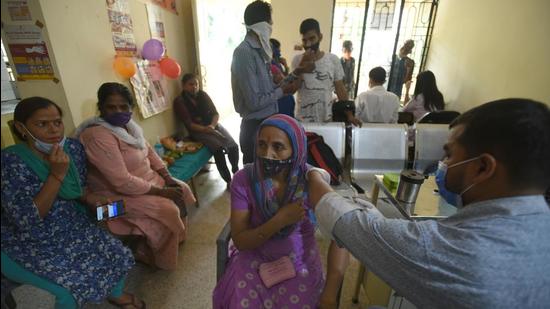
As a nation, we tend to be apprehensive. This is the case with the battle against Covid-19. We may now have crossed the billion-dose mark in vaccinations. But we seem to have forgotten how difficult the journey has been.
Until eight months ago, the government machinery itself was sceptical about how the vaccination campaign could be moved to a decisive stage. One concern was where we would get the quantities of vaccine needed. Wealthy nations were quick off the block to reserve vaccines for themselves.
When Prime Minister (PM) Narendra Modi reviewed vaccine manufacturing units in pharma companies of Hyderabad and Pune, an ugly round of political mud-slinging began, ignoring the importance of this in the challenging battle against the virus. They easily forgot: A journey of a thousand miles begins with a single step.
Then there was the issue of creating an effective cold chain for the vaccines across the country. India has a vast and diverse landscape with villages in remote mountain areas, near deserts and isolated islands. In addition, there were inclement weather conditions to consider. Health workers overcame all these challenges.
I visited some primary health centres in villages both in the hills and plains to see for myself the situation on the ground. When I was in a village in Uttar Pradesh, a dust storm was on and there was no electricity.
Two health workers were seen storing vaccines in a bucket full of ice cubes. I asked them if the vaccines were safe and I was told that this “cold chain” was totally effective. Meanwhile, the second wave of the pandemic set in. The health workers persevered. It is in these moments of crisis that a unique sense of unity and zeal develops in Indians.
All attempts by naysayers to debunk the efforts undertaken in the battle against Covid-19 fell flat. India is used to large vaccine campaigns such as the one against polio, so there wasn’t any major resistance to the Covid-19 vaccine.
Let us look at some examples from around the world. Russia is lagging behind with only around 34% of people having been administered the vaccine. Similarly, the average immunisation rate in key Bible Belt states in the United States (US) is much less than that in India. Distrust of the leadership in Russia and religious superstitions in the US are proving to be obstacles.
At the beginning of the pandemic, there were very few laboratories in India which could test for the virus effectively. Health is a state subject in India. Given this, even if there was a magic wand available, the central government could not do anything in a hurry. India is a country beset by political animosities. There are many states where the parties which are in Opposition at the national stage are in power, and they are bitterly opposed to the Centre on many issues. It was difficult to get them all on the same page with regard to the vaccination drive.
The Union government left no stone unturned to address the concerns of these states and arrive at a common ground. The PM and home minister Amit Shah repeatedly spoke to many chief ministers to impress upon them that this was a challenge for all Indians, irrespective of political affiliations.
Apart from the pandemic, India was and is facing challenges on several fronts. In the midst of the fight against pandemic, China created unrest on the borders. So, it was only natural that New Delhi was distracted. The incident at Galwan Valley on June 15, 2020, in which 20 of our soldiers lost their lives, took place when the first wave of pandemic was still raging. It came as a huge shock to India at a time when all energies were directed towards the fight against Covid-19. But the government and the nation stood firm and refused to back down despite China’s sabre-rattling. Once again, we were in a similar situation to the time when we had to combat the Spanish flu and lose our soldiers in battle in World War I, but we didn’t blink an eye.
But in our moments of pride, we must not lose sight of the fact that the battle is far from over despite crossing the billion-dose mark. The third wave could well be upon us if we are not careful. The economic downturn in the wake of the pandemic has broken people’s backs. The real test of the collective spirit we have demonstrated in the fight against Covid-19 is yet to come.
Shashi Shekhar is editor-in-chief, Hindustan
The views expressed are personal


