
 E-Paper



Trans-rights and the need for a nurturing ecosystem
Role models such as Dr Jency serve as powerful demonstrations of the potential and capabilities of aspiring trans-person.

 Prefer HTon Google


Transgender rights have often been overlooked in the debate on gender despite several steps towards their inclusion — such as the “third gender” option on application forms. Often victims of family conflicts and forced treatments to “correct” them, they remain vulnerable to exploitation and marginalisation — more so given a constant fear of disclosure and potential rejection. This persistent state of fear and anxiety can inflict profound psychological trauma, leading to feelings of worthlessness, isolation, and despair. Parents often exacerbate this, by exerting pressure on children to deny or suppress their true gender identity.
The Transgender Rights Association (TRA), led by Jeeva Rangaraj, has been at the forefront of advocating for the rights and inclusion of transgender persons in Tamil Nadu since its inception in 2007. Jeeva Rangaraj, in her capacity as a member of India’s first Transgender Welfare Board, has championed policies and programmes aimed at promoting education, expanding livelihood opportunities, ensuring access to safe and affordable housing, and guaranteeing fundamental social entitlements for transgenders.
TRA operates a Garima Greh, a shelter and resource centre funded by the Union government since June 2021. Garima Greh provides a safe, supportive, and nurturing environment for transgender persons to develop valuable skills, and enhance their employability. In collaboration with DASRA, a philanthropic organisation, TRA has successfully trained over 100 individuals in a diverse range of fields. TRA also actively conducts sensitisation events in colleges, universities, and public spaces throughout Tamil Nadu. It has consistently emphasised the importance of a supportive and inclusive environment, including the presence of gender-sensitive staff, the provision of gender-neutral facilities, and the implementation of unbiased and accessible complaint mechanisms.
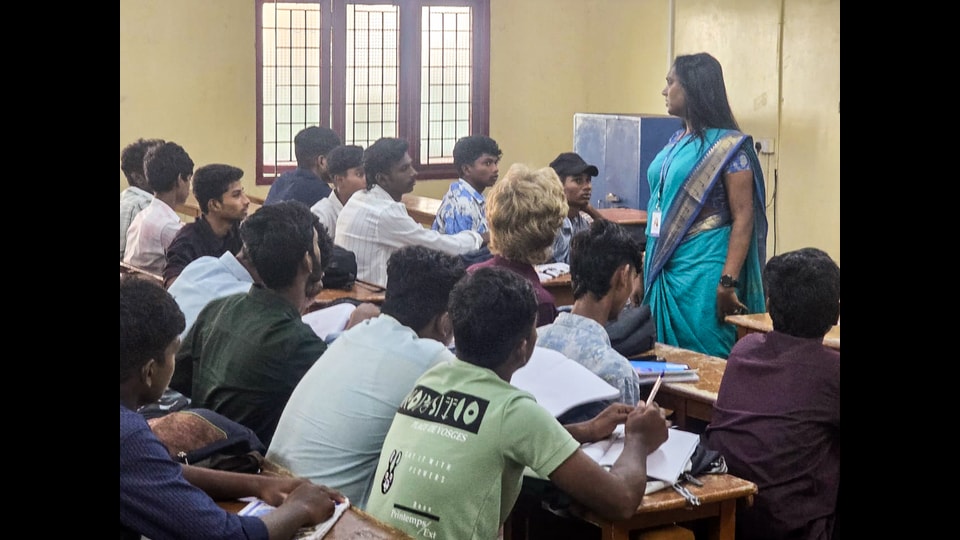
TRA and Garima Greh played a vital role in supporting Dr. Jency, a trans-person recently appointed as an assistant professor at Loyola College, Chennai. Jency says, “The road was not easy. I was stared at in public transport because my voice was different. Neighbours tried to correct my walk and mocked me for being effeminate.” She speaks sadly of how when she moved away from her rural community to study, people thought she had been coerced into sex trade. It was only when she became an assistant professor that she got recognition for her hard work. “I am a professor first and a transgender after,” she says. Much more needs to be done on the societal front, she says, but there are small, positive changes evident now. Loyola College’s proactive policies, including scholarships for transgender students and awareness workshops to promote acceptance, demonstrate a significant and positive change.
TRA has also provided invaluable support to Deepak, a trans-man, in his pursuit of a degree in Visual Communication, and to Idayakani, another transman, in his studies towards a BA in Tamil Literature at Loyola College. A job fair organised by TRA facilitated placements for transgender individuals at reputable organisations. Despite the existence of progressive social welfare models in Tamil Nadu, further efforts are necessary to fully realise the rights and potential of the transgender community.
Role models such as Dr Jency serve as powerful demonstrations of the potential and capabilities of aspiring trans-person. Replicating Loyola College’s example of inclusivity and support across India would significantly advance the cause of transgender rights.
Ultimately, positive and lasting change in the lives of the transgender community hinges on the willingness of the government, institutions, and society as a whole to fully embrace and showcase examples of acceptance, understanding, and genuine inclusion.
The views expressed are personal.


