
 E-Paper



What’s behind BJP’s huge win? Mostly Brand Modi
Modi’s campaign blitz was crucial to the scale of the victory. The Prime Minister led the campaign from the front, addressing dozens of rallies and doing close to a hundred kilometres in roadshows

 Prefer HTon Google


Ever since the Aam Aadmi Party (AAP) made its intent clear on Gujarat with an energetic early campaign, there was a sense that the Bharatiya Janata Party (BJP) was headed for a very big victory in the state, maybe its biggest ever. This was not because there were early signs of massive popular attraction for the BJP or endorsement for the work done by its government in the last five years. Instead, it was pure electoral mathematics. The entry of the AAP meant a triangular contest, resulting in a division of the anti-BJP vote.
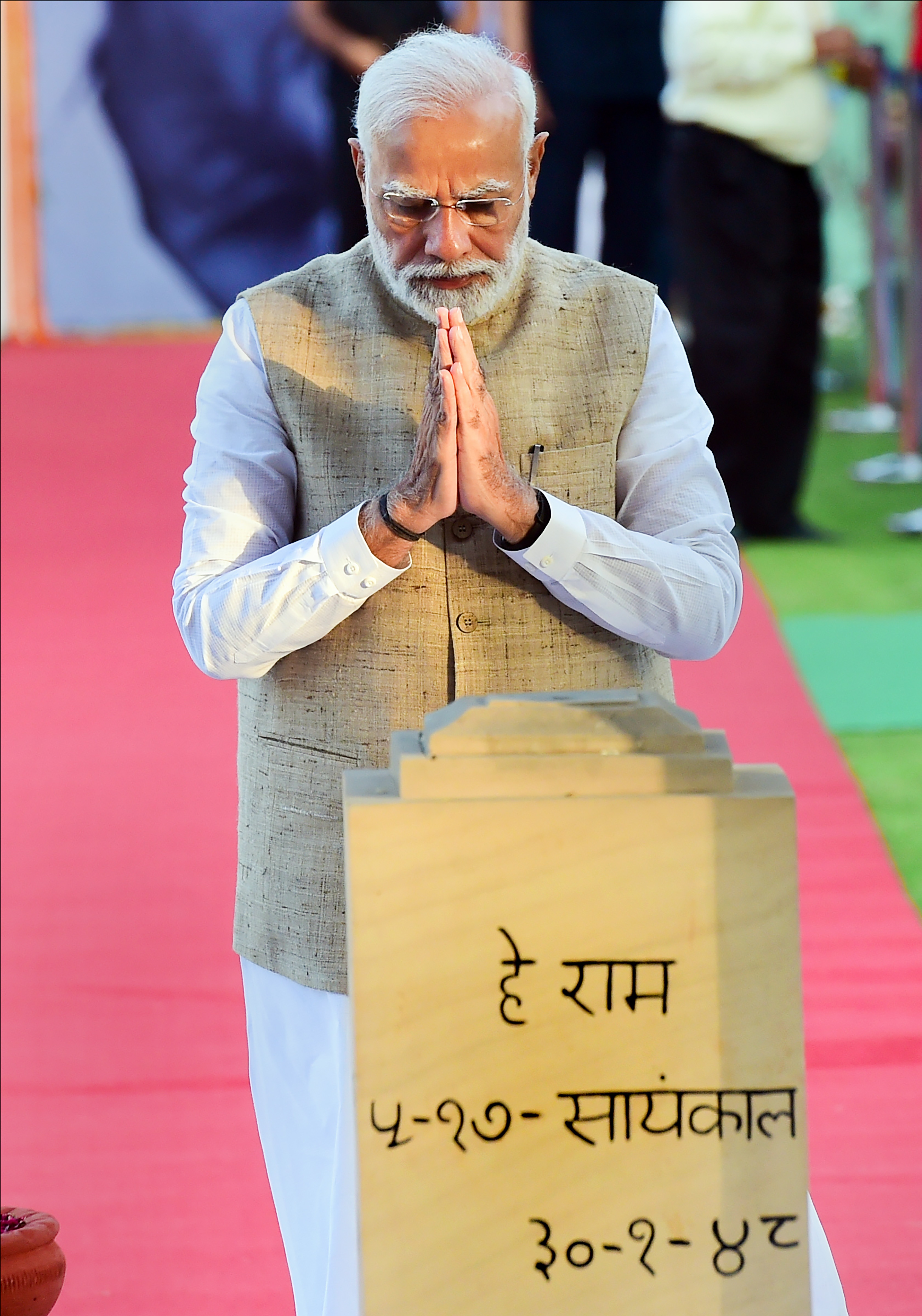
The 2022 Gujarat verdict, however, indicates that the split in anti-BJP votes was not the biggest contributor to the scale of the BJP’s victory. Instead, the Narendra Modi factor, the issue of Gujarati asmita (pride), some degree of approval of the new state government’s performance (the chief minister and entire council of ministers were changed 15 months ahead of the polls), and the absence of a viable alternative played an equal, if not bigger, role.
The BJP would have anyway won the elections, but Modi’s campaign blitz was crucial to the scale of the victory. The Prime Minister led the campaign from the front, addressing dozens of rallies and doing close to a hundred kilometres in roadshows. He paid numerous visits to his home state in the last six months, beginning the day after the party won an unprecedented victory in Uttar Pradesh. Our surveys also showed that while there was ambivalence about the state government, Modi consistently secured high approval ratings. Sensing this sentiment, Modi turned it to his advantage; whatever personal attacks were directed against him were immediately connected by the BJP to his persona as a son of the soil. Modi also reminded voters how he was insulted by Congress leaders in the past — words used by the Congress such as Maut Kaa Saudaagar (merchant of death) had worked in the past to mobilise support — to evoke a sense of asmita, and that seems to have triumphed all other issues.
Being in power continuously for 24 years, one would have imagined some anti-incumbency, but that was hardly visible on the ground. One didn’t get a sign either in favour of incumbency or against it, but general equivocation, a sign that the outcome of the elections was a foregone conclusion for many. A low turnout was further testimony to middling voter interest and the fact that while opinion on the performance of the Bhupendra Patel government was mixed, there was no real sense on the ground that the BJP was in any danger.
In our surveys, people expressed their concerns about price rise, unemployment and corruption, but when they were asked if BJP governments over the years had done well, the answer was always positive. A sizable proportion of Gujaratis believed that basic amenities such as drinking water, roads, electricity supply, government schools and hospitals had improved during the tenure of the BJP. This becomes especially important against the background of discontent seen in 2017, when the BJP slumped to its lowest tally in a generation.
Adding to this was the overwhelmingly positive impression of the Union government, which reinforced the BJP’s campaign pitch of a double-engine government. With no real Congress campaign to worry about and the AAP still finding its feet in the state, the BJP managed to not only retain its traditional voters, but wrest back support of the influential Patidars, who were crucial in propping up the Congress challenge five years ago.
A word on the AAP. It may not have performed as well as it had hoped — it ended in single digits in terms of seats, and a distant third, behind even the decimated Congress — but its 13% vote share in Gujarat (also the third after the BJP’s and the Congress’s) allows it to establish a beachhead in a state that was a political duopoly for 25 years. Attention must also be paid to the fact that the party appears to have shaved off more votes from the Congress and played spoiler in several seats, than make any real dent in the BJP’s chances. This will have implications for national politics.
For the Congress, the alarm bells should start ringing in Gujarat, notwithstanding its win in Himachal Pradesh. Examples from Delhi and Punjab should be a warning signal that when the AAP establishes a toehold in a state with a duopoly, it only grows at the expense of the Congress, which tends to fade away once it’s been displaced from a strong second position. This happened in Punjab, where in 2017, the AAP established a respectable footprint and voter base, only to blank out the Congress five years later. And this happened in Delhi, where the AAP won 28 seats in 2013 and formed the government with the support of the Congress, only to take over its entire base in the Capital and leave it with scraps. To ensure that the AAP doesn’t squeeze the Congress out of political space in Gujarat, the latter must move quickly.
The Gujarat assembly elections in 2027 will be interesting. Will the Congress be able to attempt a comeback based on its core support that didn’t desert the party even in a wipeout? Will the BJP start taking the AAP as a serious adversary? By 2027, the BJP will have been in power in the state for 32 years. There will certainly be anti-incumbency — which will be up to the Opposition to exploit — but the swing factor will be PM Modi. If he spearheads the campaign, it will still be advantage BJP.
Sanjay Kumar is professor, CSDS, and co-director, Lokniti
The views expressed are personal


