
 E-Paper



Photos: Rhythm and smiles as Morocco’s Gnawa artists get UNESCO listing
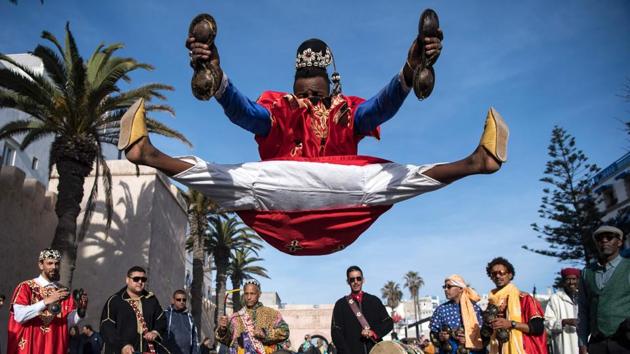
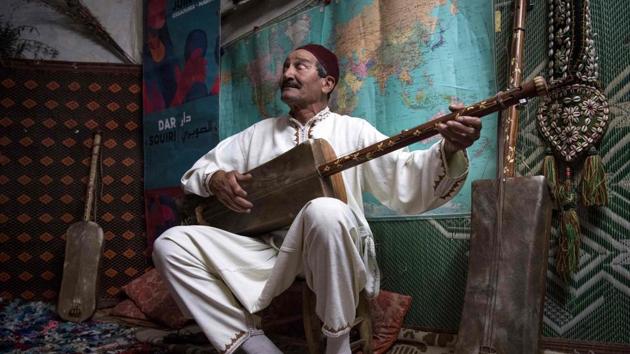
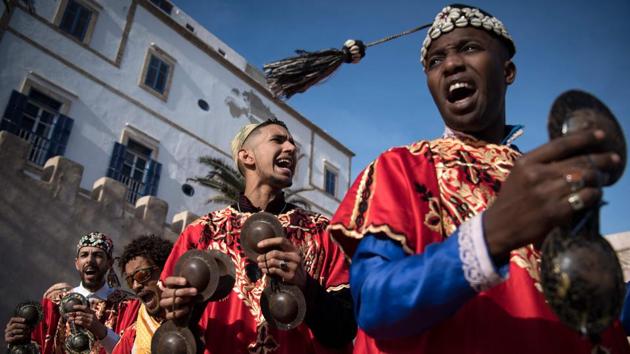
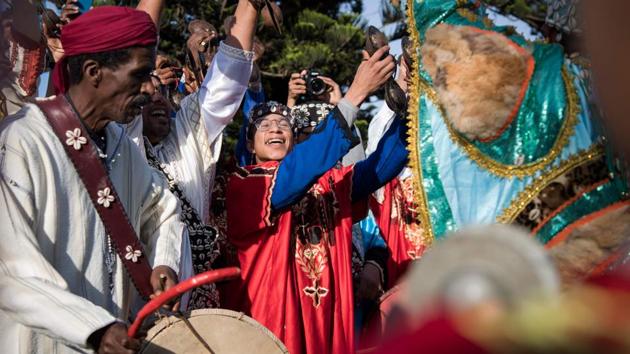
Gnawa culture, a centuries-old Moroccan practice rooted in music, African rituals and Sufi traditions, was added to UNESCO's list of Intangible Cultural Heritage of Humanity earlier in the week. Gnawa refers to a "set of musical productions, fraternal practices and therapeutic rituals where the secular mixes with the sacred", according to the nomination submitted by Morocco. Often dressed in colourful outfits, Gnawa musicians play the guenbri, a type of lute with three strings, accompanied by steel castanets called krakebs.
Updated on: Dec 17, 2019 1:55 PM IST


Share via


Copy link

1/7
 View Photos in a new improved layout
Updated on Dec 17, 2019 1:55 PM
In a riot of colour, acrobatics and drum beats, Morocco’s gnawa artists joyously celebrated the inclusion of their ancient art-form in UNESCO’s list of Intangible Cultural Heritage of Humanity. Troupes of the artists in traditional costumes paraded through the white-and-blue citadel town of Essaouira in southern Morocco Saturday, the sound of their lute strings and steel castanets filling the streets. (Fadel Senna / AFP)
2/7
 View Photos in a new improved layout
Updated on Dec 17, 2019 1:55 PM
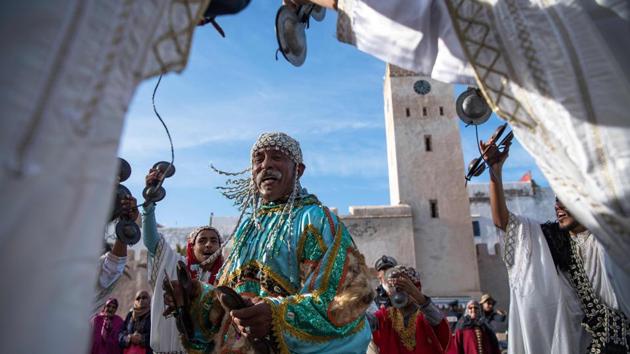
A Gnawa traditional group performs in the city of Essaouira. “Our goal is to bring this music to the world,” said Mokhtar Gania, 56, one of the great Gnawa masters, with a broad grin. The tradition, which includes the veneration of Islamic holy men, dates back to at least the 16th century and combines ancestral African practices, Arab-Muslim and Berber influences. (Fadel Senna / AFP)
3/7
 View Photos in a new improved layout
Updated on Dec 17, 2019 1:55 PM
A Gnawa master performs in his studio in the city of Essaouira. Gnawa ritual music traces its roots to the descendants of former slaves from sub-Saharan Africa. It was once a set of esoteric rituals of rhythm and trance practised by brotherhoods and reserved for initiates, but it has since spread throughout the world, popularised by a festival that started in 1997 in Essaouira. (Fadel Senna / AFP)
4/7
 View Photos in a new improved layout
Updated on Dec 17, 2019 1:55 PM
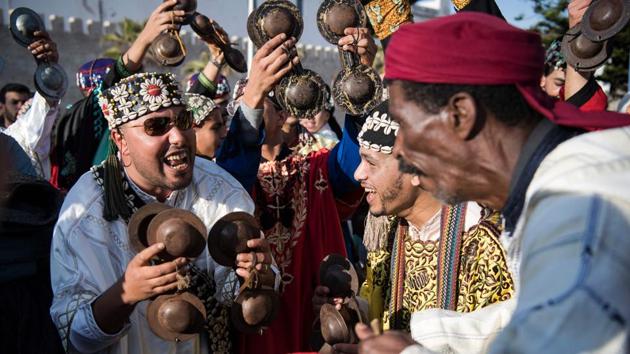
This small fortified city clinging to a rocky peninsula on the Atlantic coast that is also known as the “City of the Trade Winds”. Now the picturesque port town attracts waves of fans each year from across the globe to the Gnawa and World Music Festival. It has seen jazz greats such as Pat Metheny, Didier Lockwood and Marcus Miller perform with the most famous Gnawa masters. (Fadel Senna / AFP)
5/7
 View Photos in a new improved layout
Updated on Dec 17, 2019 1:55 PM
Before the festivals, “this culture, recognised by major names on the world music scene, did not have the place it deserved in the Moroccan popular imagination,” said Neila Tazi, producer of the event. For Andre Azoulay, adviser to King Mohammed VI and president of a local cultural association, the UNESCO listing is “a recognition of Essaouira’s pioneering commitment” to a community that was long marginalised. (Fadel Senna / AFP)
6/7
 View Photos in a new improved layout
Updated on Dec 17, 2019 1:55 PM
Malaam Seddik El Arch, 68, is a privileged witness of this evolution. Today, “musicians of all nationalities come here to learn guenbri,” he said in the old city of Essaouira, itself a UNESCO World Heritage Site. “Despite the language barrier, we manage to get along and play together,” he said. “Music is a universal language.” There is also a new generation, ready to take over. (Fadel Senna / AFP)
7/7
 View Photos in a new improved layout
Updated on Dec 17, 2019 1:55 PM


