
 E-Paper



Photos: Revisiting Satyajit Ray on his 97th birth anniversary
Satyajit Ray would have turned 97 today. Born on May 2, 1921, Satyajit Ray created a stir with his very first film Pather Panchali in 1955 and continues to inspire generations of filmmakers across the globe to look at themes of society and at their subjects with empathy. On his birth anniversary, a look at the many caps Satyajit Ray the auteur donned as an illustrator, writer, music composer and film director.
Updated on: May 2, 2018 3:38 PM IST


Share via


Copy link

1/8
 View Photos in a new improved layout
Updated on May 2, 2018 3:38 PM
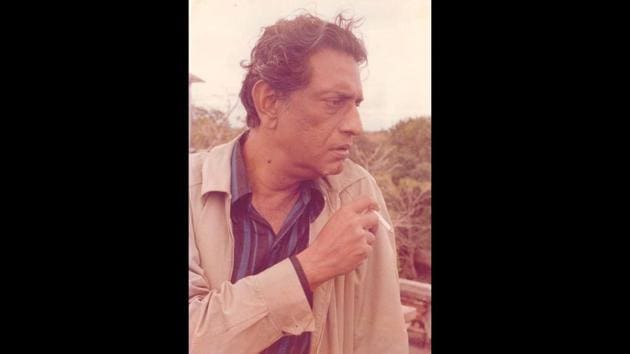
Born on May 2, 1921, to a family with generations artistically inclined, Satyajit Ray is known as a filmmaker, writer, a music composer and also an illustrator. Common among these vocations is Satyajit Ray the storyteller, adapting mediums and forms to handle themes with subtlety and a unique sensitivity. (HT Archive)
2/8
 View Photos in a new improved layout
Updated on May 2, 2018 3:38 PM
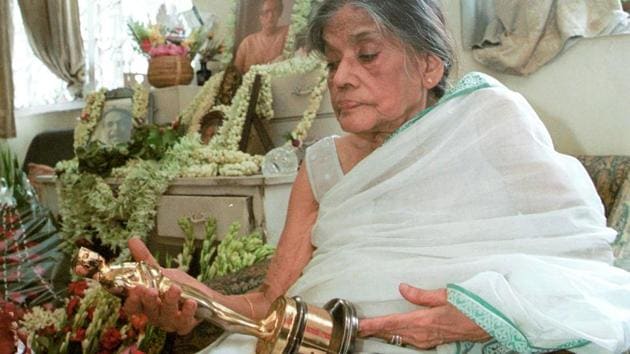
In a career spanning over five decades, perhaps the only thing resembling a Bollywood movie in his life was his marriage to Bijoya Roy seen here in 2002. A close relative and older than him, the two dated for years and married secretly, only to later convince their families and marry again in Bengali rituals. (Subhendu Ghosh / HT Archive)
3/8
 View Photos in a new improved layout
Updated on May 2, 2018 3:38 PM
Ray avoided the cliché of falling for tropes and instead created a trademark aesthetic across his work. In his second original screenplay, Nayak (1966), starring Uttam Kumar and Sharmila Tagore for instance, he peels back the persona of a cinema idol, presenting the man behind the facade, burdened with loneliness and needing empathy, instead of fame and adoration. (HT Archive)
4/8
 View Photos in a new improved layout
Updated on May 2, 2018 3:38 PM
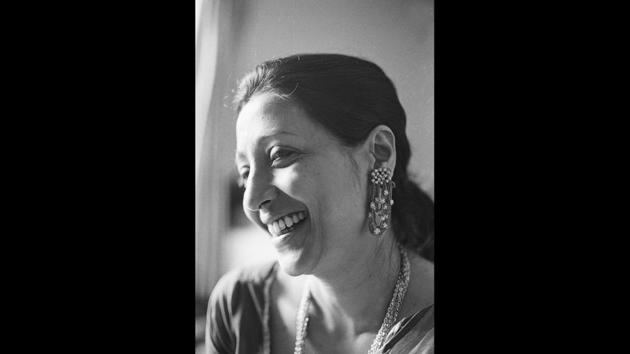
While Ray’s cinema managed to cover a breadth of issues with hues of neorealism, among his most well known unrealised projects was an adaptation of the novel ‘Devi Chaudhurani’ in the 1960s. He approached Suchitra Sen, who later said she refused over dates. The two masters of their crafts couldn’t collaborate and Ray never made the film as a result. (Chawla / HT Archive)
5/8
 View Photos in a new improved layout
Updated on May 2, 2018 3:38 PM
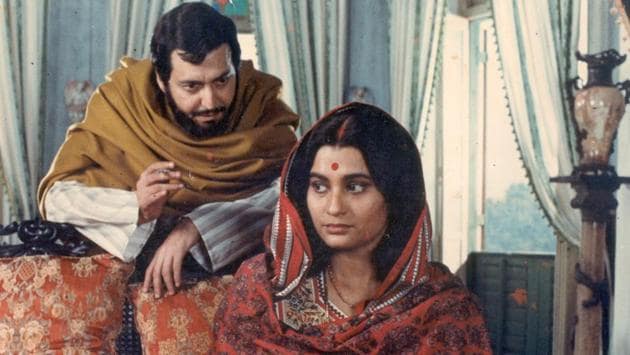
Satyajit Ray’s films realistically addressed the relationships of women across society, not shying away from depicting his female protagonists outside their homes, or addressing their conflicts. Ghare Bhaire (1984) adapts Tagore’s novel and presents the emancipation of women and its effect on their lives and pre-existing relationships in the aftermath of Curzon’s partition of Bengal. (HT Photo)
6/8
 View Photos in a new improved layout
Updated on May 2, 2018 3:38 PM
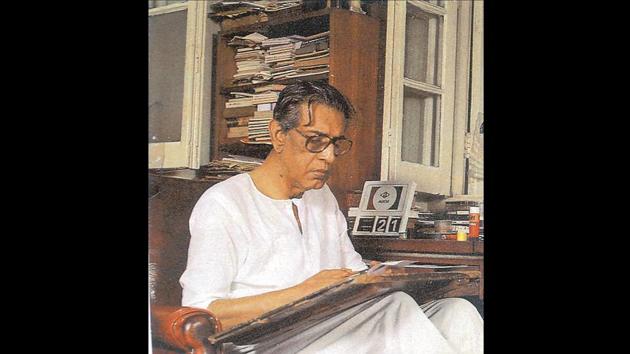
As an auteur, Ray was often penning the lyrics for his films and composing the music as well. His understanding of Western classical music played into creating contemporary scores. Feluda the detective and Professor Shonku the scientist are his most famous literary creations. In writing he explored the themes of suspense, the macabre, and also reflected on cinema. (HT Archive)
7/8
 View Photos in a new improved layout
Updated on May 2, 2018 3:38 PM
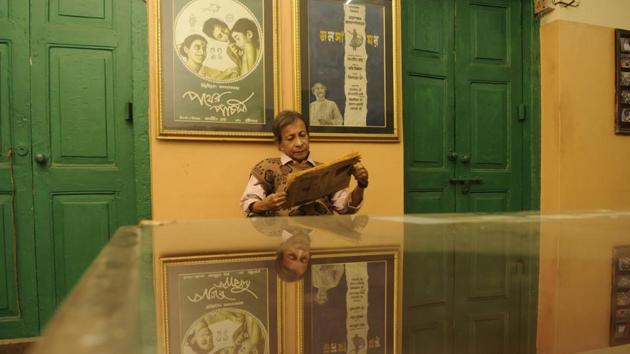
Posters of Satyajit Ray’s iconic films Pather Panchali (1955) and Jalsaghar (1958) hang at Aurora Film Corporation’s office in Kolkata. Before cinema Ray was a visual illustrator and the movie posters he designed reflect his skill for rendering complex themes down to a single image. His interest in typography resulted in four typefaces for the Roman script and many more for Bengali. (Samir Jana / HT Archive)
8/8
 View Photos in a new improved layout
Updated on May 2, 2018 3:38 PM


