
 E-Paper



Photos: How climate change is unearthing new histories
Dino footprints exposed in a drying riverbed, sunken cities, once-submerged idols. See how a warming Earth is impacting ancient sites around the world.
Published on: Sept 23, 2022 7:53 PM IST


Share via


Copy link

1/8
 View Photos in a new improved layout
Published on Sept 23, 2022 7:53 PM
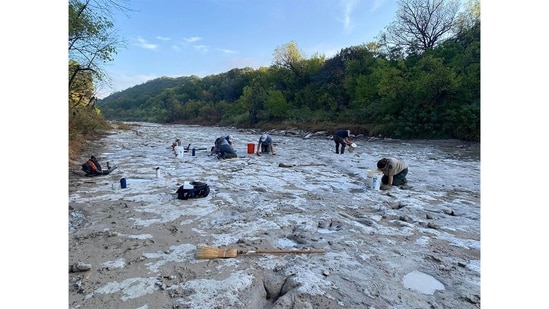
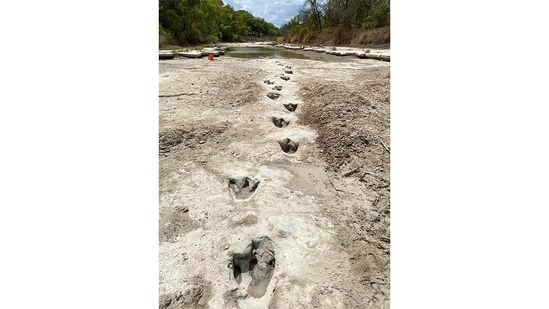
In Texas, USA, a mega-drought has revealed 113 million-year-old footprints of an acrocanthosaurus in the dried-up riverbed of the Paluxy River. The massive footprints, ironically situated within the Dinosaur Valley State Park, have not been seen since 2000. (Image Courtesy: Paul Baker)
2/8
 View Photos in a new improved layout
Published on Sept 23, 2022 7:53 PM
The trail is most likely the work of a single acrocanthosaurus, most likely 15 ft tall, weighing seven tonnes, archaeologists say. The two-legged, three-toed apex predator lived in the Early Cretaceous period, about 50 million years before its more famous cousin, the tyrannosaurus rex. (Image Courtesy: Paul Baker)
3/8
 View Photos in a new improved layout
Published on Sept 23, 2022 7:53 PM
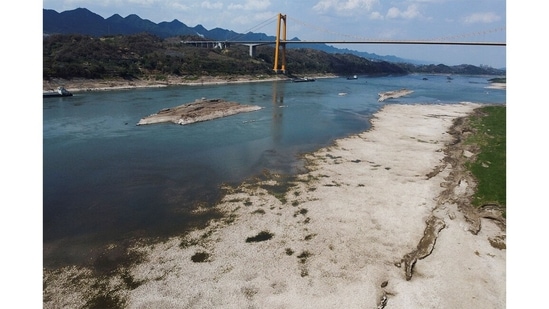
China is experiencing its most extreme heatwave in six decades. Rainfall along the basin of the Yangtze, the world’s third-largest river, has been 45% lower than usual. Lower parts of the basin are now in full view. (Thomas Peter/REUTERS)
4/8
 View Photos in a new improved layout
Published on Sept 23, 2022 7:53 PM
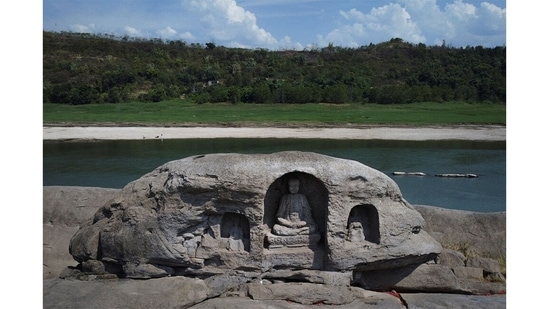
At the Foyeliang island reef, three 600-year-old Buddhist statues, carved into a boulder, are now visible. They date to the Ming and Qing dynasties. The largest is about 1 metre high and depicts a monk sitting on a lotus pedestal, flanked by two junior monks, presumably blessing boats as they pass by. (Thomas Peter/REUTERS)
5/8
 View Photos in a new improved layout
Published on Sept 23, 2022 7:53 PM
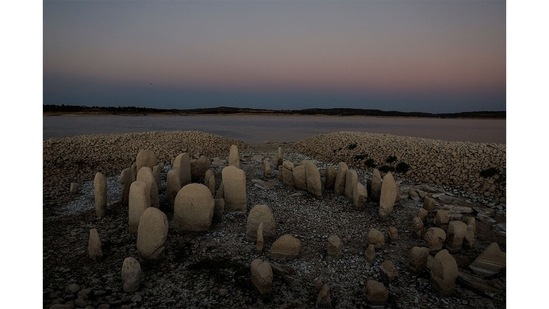
As droughts drop Spain’s Valdecañas reservoir to less than 30% of its capacity, an ancient funerary mound is now visible. Some 144 megalithic stones from 5000 BCE, arranged like a sort of Stonehenge, are being studied at close range. (Susana Vera/REUTERS)
6/8
 View Photos in a new improved layout
Published on Sept 23, 2022 7:53 PM
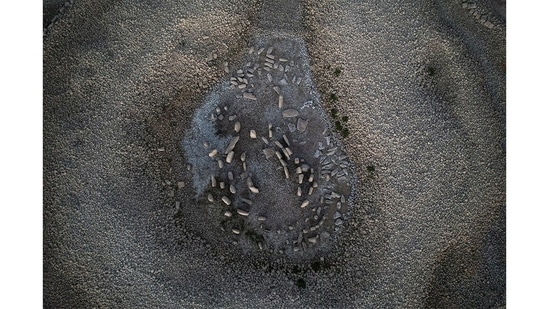
The 6-foot-high stones are arranged in concentric circles. The site was discovered in 1926 but has been submerged since the 1960s, after the area was flooded in a development project. Since the water is erasing some of the carvings on the stones, there is talk of moving the arrangement out of the reservoir. (Susana Vera/REUTERS)
7/8
 View Photos in a new improved layout
Published on Sept 23, 2022 7:53 PM
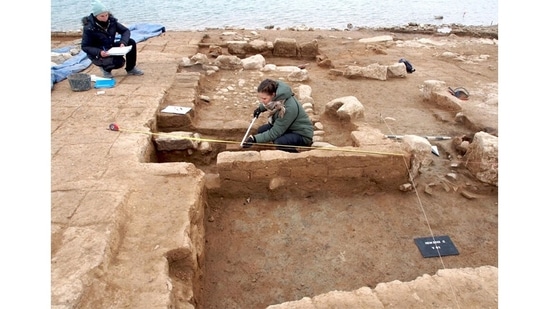
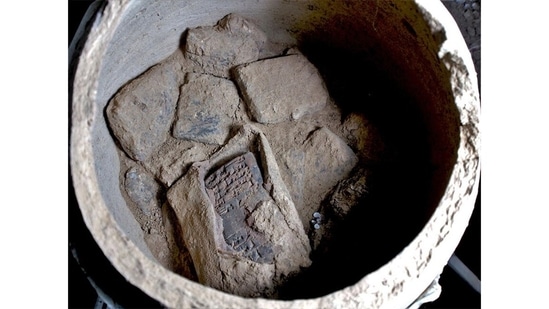
In southern Iraq, as water was diverted from the Mosul reservoir to drought-stricken regions, the ruins of a 3,400-year-old city emerged as the water receded. The settlement is thought to be Zakhiku, a key city in the Mittani Empire (c. 1550 to 1350 BCE). Researchers uncovered the remains of walls, a massive fortification, multi-storey warehouses, ruins of a palace. (Image Courtesy: Universities of Freiburg and Tübingen, KAO )
8/8
 View Photos in a new improved layout
Published on Sept 23, 2022 7:53 PM


