
 E-Paper



Photos: Bihar’s Launda Naach artists; performing an art mired in taboos
Bihar's vibrant folk art form, 'Launda Naach' is known for its risqué jokes, unsophisticated language, men in drag and caste connotations. A legendary 92-year-old performer recalls a life on stage.
Updated on: Nov 06, 2017 1:46 PM IST

Share via


Copy link

1/9

 View Photos in a new improved layout
Updated on Nov 06, 2017 1:46 PM
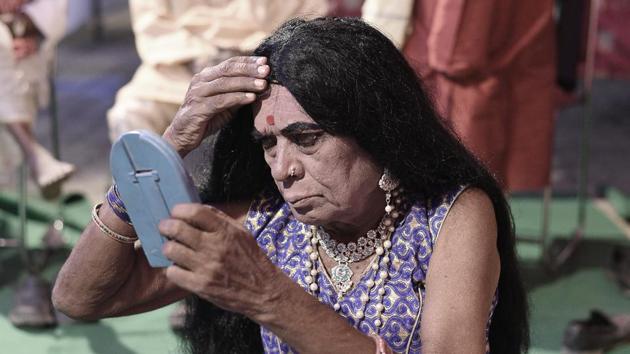
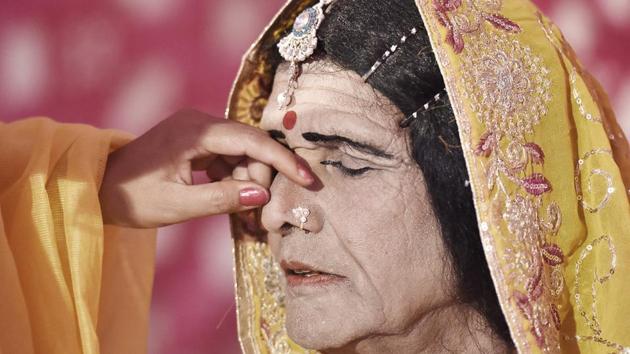
Ramachandra Manjhi is 92 but his crinkled hands steady themselves the moment kohl touches his face. With precision, he draws his eyebrows with a matchstick, peering into a grimy mirror. Manjhi is a legendary Launda Naach artist, a folk art form from Bihar comprising songs, dance, comedy and theatre, where men impersonate women in performances that last all night. (Sanjeev Verma / HT Photo)
2/9
 View Photos in a new improved layout
Updated on Nov 06, 2017 1:46 PM
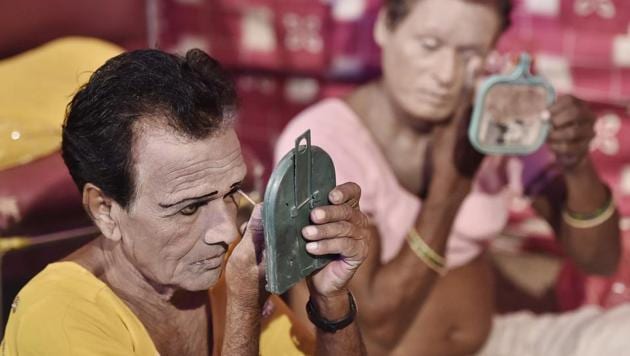
Little formal literature exists about naach which dates back hundreds of years and continues to thrive in eastern India –beginning around the Chhath Puja. For Ramachandra, a resident of western Bihar’s Chhapra, transforming into a woman on stage is routine – one he has perfected since he was 12. His clothes and make up in a rusty steel trunk, one that he shares with his friend and fellow launda of 50 years, Lakhichand Manjhi. (Sanjeev Verma / HT Photo)
3/9
 View Photos in a new improved layout
Updated on Nov 06, 2017 1:46 PM
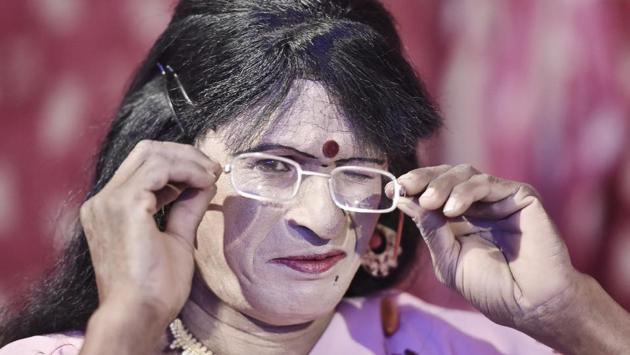
Lakhichand Manjhi (L) paints eyebrows with kohl ahead of a show. The troupe is performing a play by Bhikhari Thakur. Scholars say the naach on the national stage has been sanitised and tailored to suit mainstream sensibilities. ‘Launda is a dirty word… a ‘gaali’. It doesn’t suit upper caste sensibilities, you cannot say it in public…so when you go national, you change the form.’ says Jainendra Kumar Dost, a naach performer and researcher at JNU. (Sanjeev Verma / HT Photo)
4/9
 View Photos in a new improved layout
Updated on Nov 06, 2017 1:46 PM
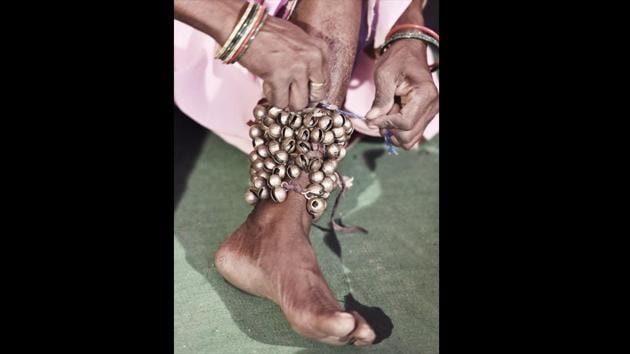
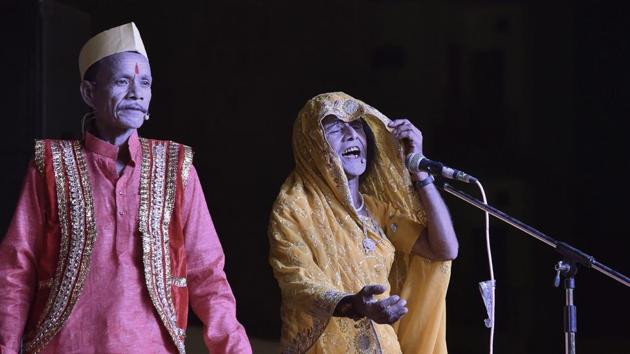
In contemporary Bihar, naach now competes with other forms of entertainment like movies, nautanki and orchestra. The absence of women has arguably hurt naach and forced the form, which needed years of rigorous training, to become more provocative. The vulgarity, for example, is often satire directed at society over the treatment of weaker castes and classes. (Sanjeev Verma / HT Photo)
5/9
 View Photos in a new improved layout
Updated on Nov 06, 2017 1:46 PM
In Bihar, this form gained currency in the 19th century when women were not allowed in public spaces. Men, mostly from weaker castes, took their place. The naach also emerged as a parallel grassroots response for the poor at a time when dominant landlords and royals were extending patronage to Baijis – roughly translated as courtesans – that was increasingly seen as the entertainment for the elite.
6/9
 View Photos in a new improved layout
Updated on Nov 06, 2017 1:46 PM
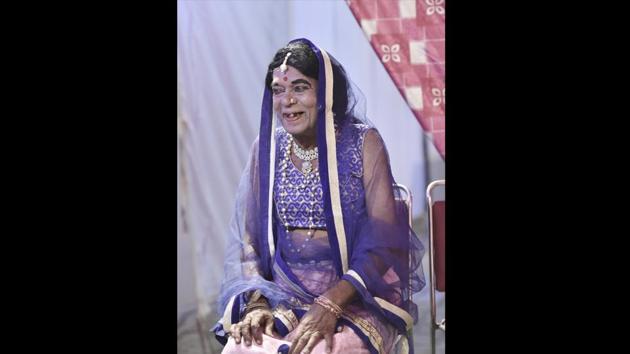
Ramachandra is quiet when asked if people tease him in his village for being a launda, but his troupe confirms that he has dealt with comments, catcalls and insults for almost a century. But in his voice, there is only gratitude. ‘My life is over and I have only known naach. I spent all my years doing naach. I salute it. I am grateful that I didn’t need to do anything else.’
7/9
 View Photos in a new improved layout
Updated on Nov 06, 2017 1:46 PM
Indian theatre has a long history of female impersonation by men – with mentions of the practice in Natya Shastra and Mahabhasya. Unlike some other forms, in launda naach, most performers lead ordinary lives as heterosexual men. (Sanjeev Verma / HT Photo)
8/9
 View Photos in a new improved layout
Updated on Nov 06, 2017 1:46 PM
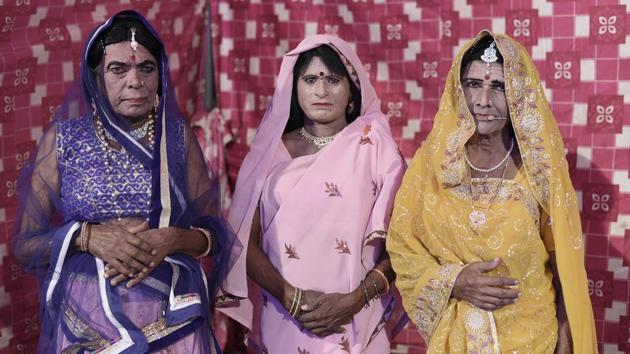
Ramachandra Manjhi (L), Shankar Manjhi (C) and Lakhichand Manjhi (R), in drag for a naach performance. Caste links in launda naach have also fostered political patronage, notably that of Lalu Prasad. During his student politics days, Prasad would use the naach stage to deliver speeches and backed the form when he came to power. (Sanjeev Verma / HT Photo)
9/9
 View Photos in a new improved layout
Updated on Nov 06, 2017 1:46 PM


