
 E-Paper



Photos: Across the capital, Gandhi’s imprints on Delhi
Mohandas Karamchand Gandhi’s extraordinary story refuses to be confined to a single city. Places as far apart as Kolkata and Cape Town are an integral part of his biography. Delhi occupies little space. The city, however, hosted his final 144 days, and has the unenviable privilege of being the site of his assassination. Mahatma Gandhi visited the city 80 times. But New Delhi, where he spent the last 144 days of his life and was cremated, continues to remember him in unexpected ways.
Updated on: Sep 26, 2019 4:48 PM IST

Share via


Copy link

1/7
 View Photos in a new improved layout
Updated on Sep 26, 2019 4:48 PM
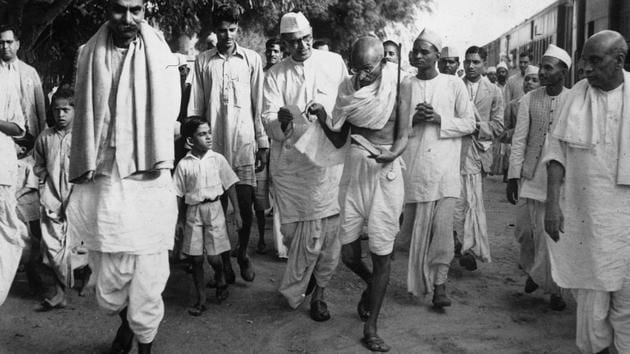
Mahatma Gandhi arrives in Delhi to confer with Viceroy Lord Linlithgow on the Second World War. To his left is Mahadev Desai and further left is Rajendra Prasad, October 1939. Gandhi’s first visit to Delhi was in 1915, aged 45 and recently returned from South Africa. He visited the Qutub Minar and the Red Fort. In all, Gandhi passed through the Capital 80 times, his various visits totalling around 700 days. (National Gandhi Museum)
2/7
 View Photos in a new improved layout
Updated on Sep 26, 2019 4:48 PM
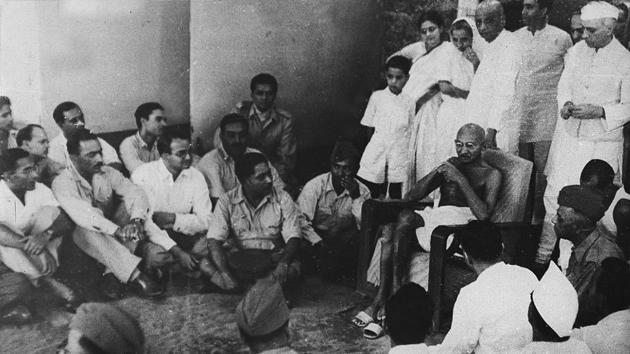
Gandhi flanked by Vallabhbhai Patel and Jawaharlal Nehru (standing behind him) with officers of the Indian National Army in Delhi, April 1946. Incidentally, the Second INA revived under Subhash Chandra Bose in 1943, consisted of the two battalion strong Gandhi Brigade also known as the 2nd Guerrilla Regiment. (HT Archive)
3/7
 View Photos in a new improved layout
Updated on Sep 26, 2019 4:48 PM
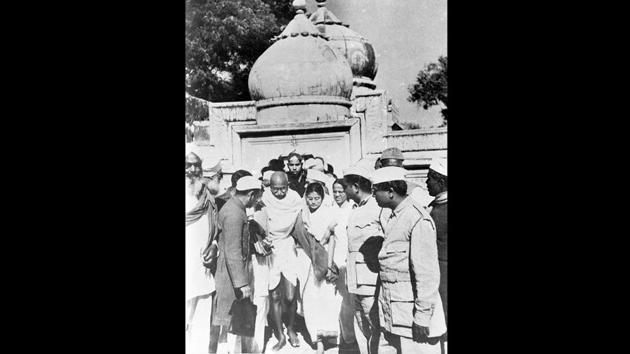
Gandhi outside the premises of Qutubuddin Bakhtiyar Kaki’s dargah, January 1948. That January, Gandhi sat on the last fast of his life in the wake of violence after partition. Maulana Abul Kalam Azad in ‘India wins Freedom’ notes that of the six conditions Gandhi put to end his fast, one was the contribution of Hindus and Sikhs in the repair of the Bakhtiyar Kaki shrine which had been damaged in communal riots. (National Gandhi Museum)
4/7
 View Photos in a new improved layout
Updated on Sep 26, 2019 4:48 PM
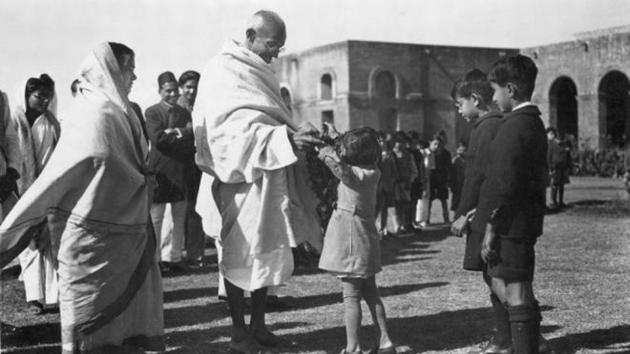
Gandhi at Modern School, Barakhamba Road, 1935. Gandhi writes at length on education, in formal and informal structures, and its role in the development of culture and harmony among people. He writes in his autobiography of the need for Hindi, Sanskrit, Persian, Arabic and English besides the vernacular in schools. A scientific knowledge of one language, he writes, makes knowledge of other languages comparatively easy. (National Gandhi Museum)
5/7
 View Photos in a new improved layout
Updated on Sep 26, 2019 4:48 PM
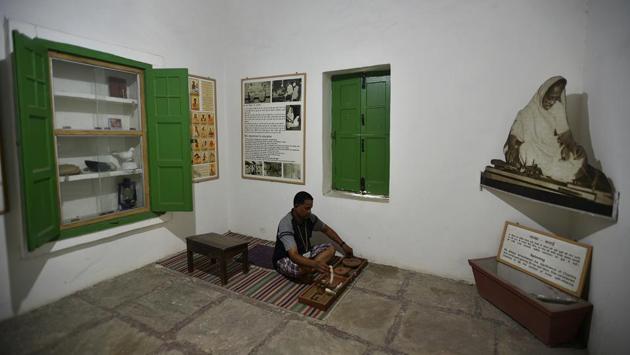
A view inside Kasturba Kutir, on the premises of the sprawling 20-acre Harijan Sevak Sangh, at Kingsway Camp in Delhi. Mahatma Gandhi and his family stayed in two storey property between 1932 and 1947 during most of his visits to Delhi. It is replete with personal effects used by Gandhi and his wife, and is now preserved as a memorial. (Biplov Bhuyan / HT Photo)
6/7
 View Photos in a new improved layout
Updated on Sep 26, 2019 4:48 PM
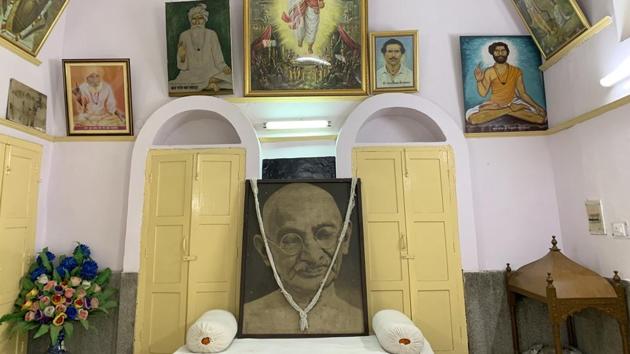
Artist Hena Chakraborty’s depiction of he Bapu themed 2019 calendar brought out by the Delhi government of Gandhi and Kasturba at the Harijan Sevak Sangh. Kasturba Kutir had for a number of years been made into a dorm known as ‘Gandhi Ashram Girls’ Hostel’ for Delhi University students before being reclaimed. (The Delhi Government)
7/7
 View Photos in a new improved layout
Updated on Sep 26, 2019 4:48 PM


