
 E-Paper



Photos: Chronicling Chanderi, beyond textiles and cinematic portrayals
The recently-released film Stree may have used Chanderi as a setting for its narrative, but the town, best known for its handloom weave, is rich in old stories – both legends and documented history. This Madhya Pradesh town has much more to boast of. An ASI account of the history of the town states Chanderi has archaeological remains of Jain and Hindu temples, palaces and architectural fragments dating back to 10-12th century AD. A look at what the town, considered a hidden gem on the MP tourism circuit, holds beyond its cinematic depiction.
Updated on: Oct 2, 2018 12:13 PM IST


Share via


Copy link

1/10
 View Photos in a new improved layout
Updated on Oct 2, 2018 12:13 PM
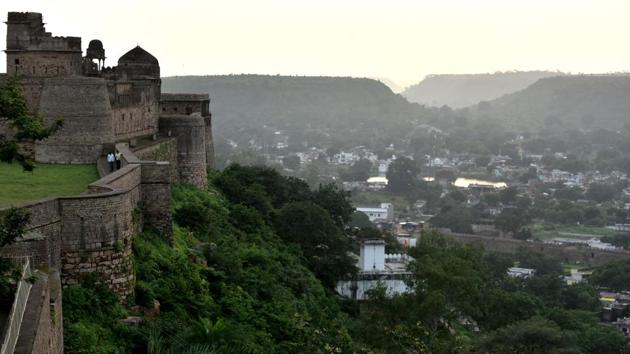
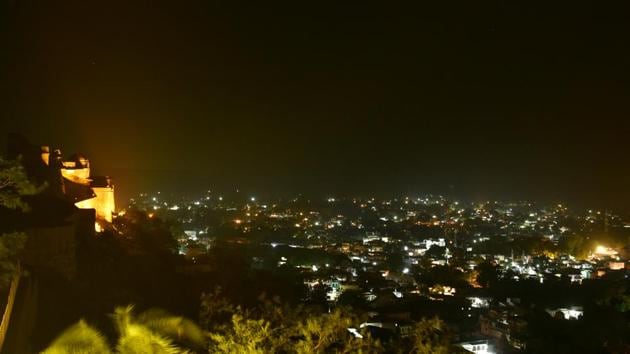
A view of the Chanderi town from the Navkhanda Mahal and fort complex in Chanderi, Madhya Pradesh. The recently-released film Stree may have used Chanderi as a setting for its narrative, but the town, best known for its handloom weave, is rich in old stories – both legends and documented history. (Mujeeb Faruqui / HT Photo)
2/10
 View Photos in a new improved layout
Updated on Oct 2, 2018 12:13 PM
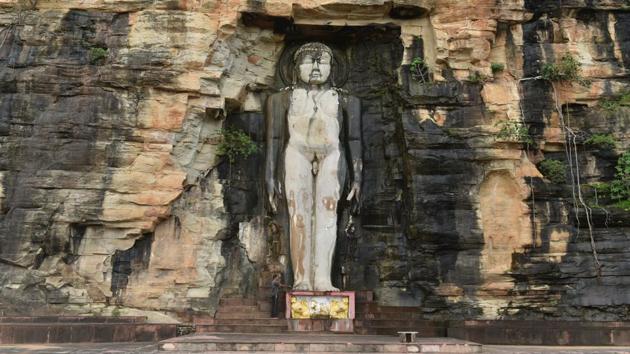
The antiquity of the town of Chanderi as told by experts is beyond doubt. Prehistoric era stone tools and cave paintings have been found in and around the town and officials of Archaeological Survey of India (ASI) suggest evidence of settlements from the Gupta era (4th - 6th century AD). Muzaffar Ansari, a guide said that historically, the importance of Chanderi was that it lay on the road from Delhi, connecting north and south India. (Mujeeb Faruqui / HT Photo)
3/10
 View Photos in a new improved layout
Updated on Oct 2, 2018 12:13 PM
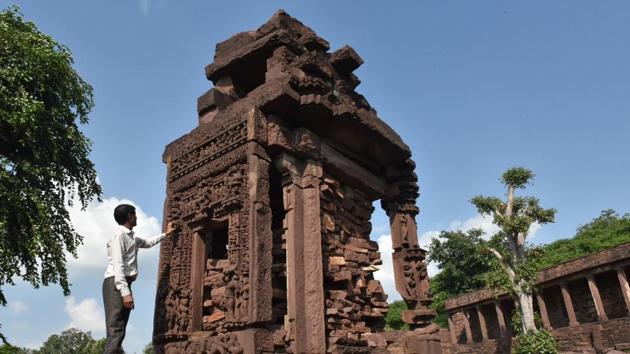
An ASI account of the history of the town states that at a distance of 20 km from the present town, Budhi (old) Chanderi still has archaeological remains of Jain and Hindu temples (pictured), palaces and architectural fragments dating back to 10-12th century AD. Budhi Chanderi became gradually deserted and the so-called modern Chanderi came into prominence about the middle of the 13th century AD. (Mujeeb Faruqui / HT Photo)
4/10
 View Photos in a new improved layout
Updated on Oct 2, 2018 12:13 PM
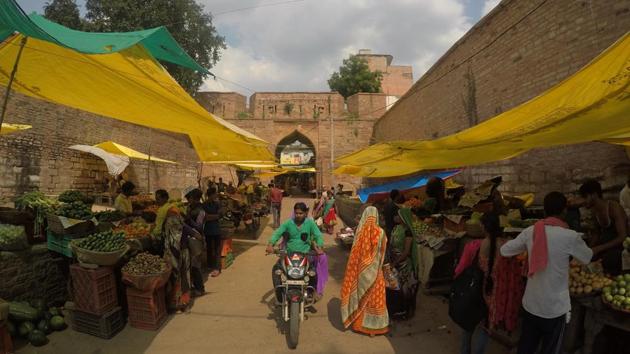
But even in the ‘new’ town, the past shares space with the present. Houses, shops and offices are interspersed with heritage monuments and old architectural remains --bawris or step wells, palaces, places of worship that are hundreds of years old but still in use. Busy bazaars operate around massive old gates that once served as entrances to the city – Dholiya Darwaza (pictured), Dilli Darwaza, Mughal Darwaza and others. (Mujeeb Faruqui / HT Photo)
5/10
 View Photos in a new improved layout
Updated on Oct 2, 2018 12:13 PM
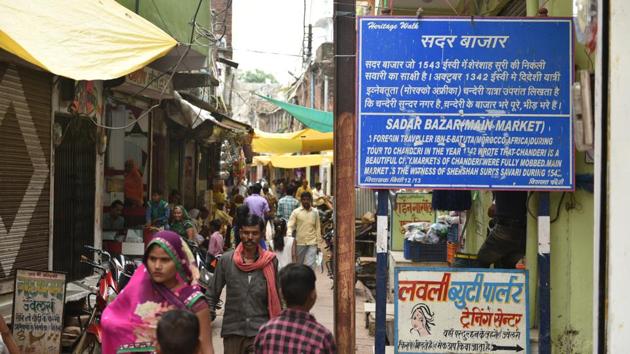
A board in the busy Sadar Bazar states that the great Moroccan traveller Ibn Battuta had in 1342 mentioned Chanderi as a beautiful town with busy markets that were always full of people. According to ASI, Chanderi was possibly one of the largest towns in Central India during the late 14th-15th century. Archaeologically, it is one of the richest sites of central India and has 11 protected sites. (Mujeeb Faruqui / HT Photo)
6/10
 View Photos in a new improved layout
Updated on Oct 2, 2018 12:13 PM
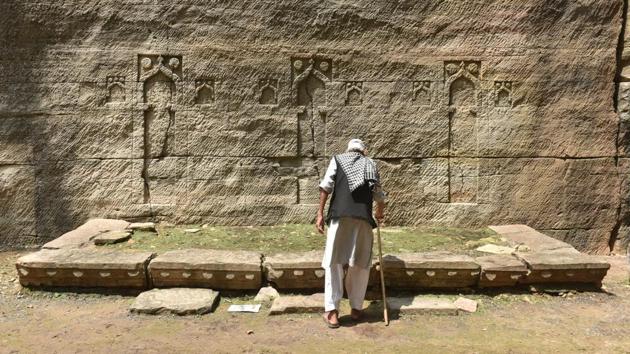
Even today the town is quaint, old wordly – there are only three-four functioning hotels and parts of these are still under construction or awaiting renovation. The few ATM machines are often without cash. But turn where you may, there is some picturesque old monument or a postcard-perfect glimpse of nature – hills, water, bodies and greenery– ahead. (Mujeeb Faruqui / HT Photo)
7/10
 View Photos in a new improved layout
Updated on Oct 2, 2018 12:13 PM
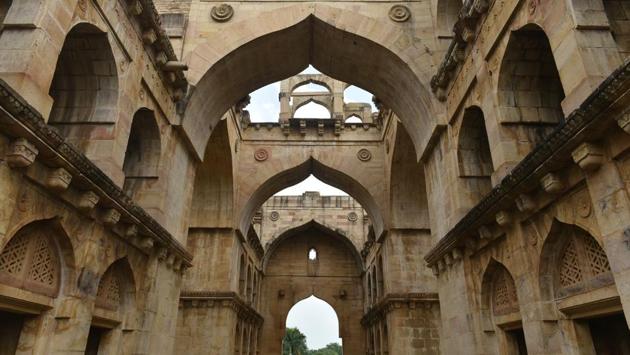
The Koshak Mahal in Chanderi. A town this old comes with its own paranormal stories. There are the thick clusters of trees, the deep and long shadows of which have been used to goosebump-inducing effect in Stree. “There are always stories. When we were doing the conservation of the Kirti Durg, people were talking about djinns and spirits,” said former regional director of the ASI, KK Muhammad. (Mujeeb Faruqui / HT Photo)
8/10
 View Photos in a new improved layout
Updated on Oct 2, 2018 12:13 PM
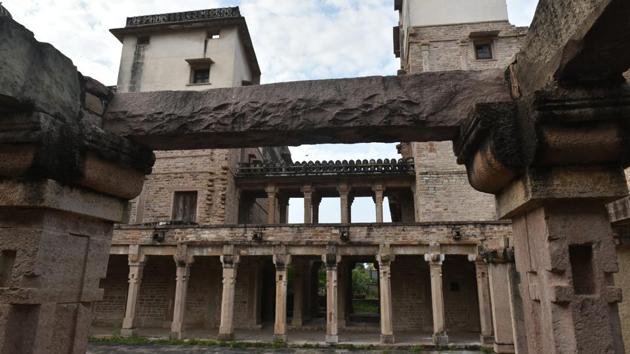
A short walk away from Sadar Bazaar, where a locked shop still bears the board of Modern Tailors – the name of Rajkumar Rao’s tailoring shop in the film– one comes to Rani Mahal and Hamamkhana and Raja Mahal and Bawri, popularly known as simply Raja-Rani Mahal, one of the locations where Stree was shot. This old palace also claims reports of more than just reel hauntings. (Mujeeb Faruqui / HT Photo)
9/10
 View Photos in a new improved layout
Updated on Oct 2, 2018 12:13 PM
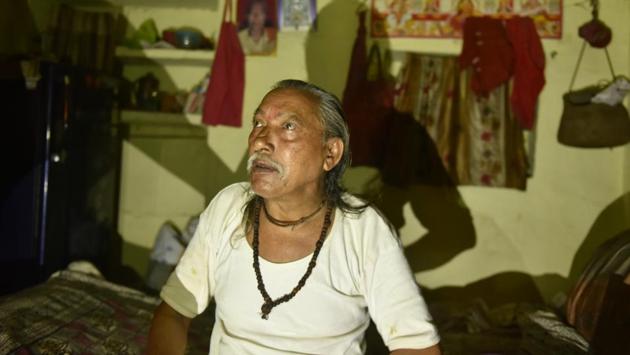
As in the physical space, so in the minds of the townsfolk, the screen between the past and the present is permeable. Even today, people here visit those who can control spirits. One such person is 70-year-old Kanchhedilal Bhagatji, who claims to use mantras to treat those who have been possessed. (Mujeeb Faruqui / HT Photo)
10/10
 View Photos in a new improved layout
Updated on Oct 2, 2018 12:13 PM


