
 E-Paper



Photos: Five-generations of eco-friendly Ganesha idols at this Maharashtra workshop
As September approaches, bringing with it Ganesh Chaturthi, one of Maharashtra’s biggest festivals, 85-year-old artist Pandurang Hazare and three successive generation of his family have been busy making the all-clay idols they’ve come to be known for at their workshop in Pen, Raigad district, Maharashtra. Unlike many pieces available in the market, the Hazare workshop has proudly maintained a tradition of not using any Plaster of Paris or toxic colours in its product ever since the business began with Hazare’s father over 70 years ago.
Updated on: Aug 20, 2018 4:09 PM IST

Share via


Copy link

1/9
 View Photos in a new improved layout
Updated on Aug 20, 2018 4:09 PM
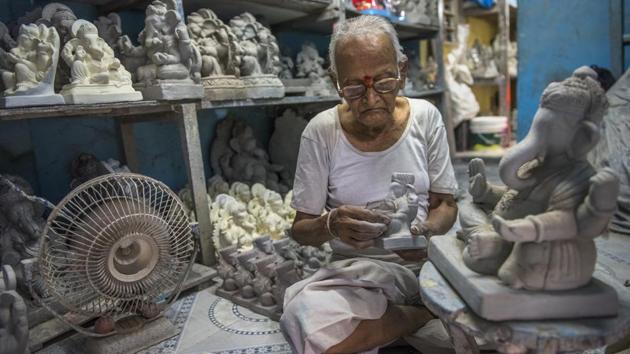
Eighty-five-year-old sculptor Pandurang Hazare has been making clay idols at his family workshop in the town of Pen, Raigad district, Maharashtra for the last 70 years. With less than a month to go for Ganesh Chaturthi, civic authorities are focusing on implementing a ban on plaster of Paris (PoP) idols. But for Hazare, idols that don’t pollute have been a priority from the get go. (Satish Bate / HT Photo)
2/9
 View Photos in a new improved layout
Updated on Aug 20, 2018 4:09 PM
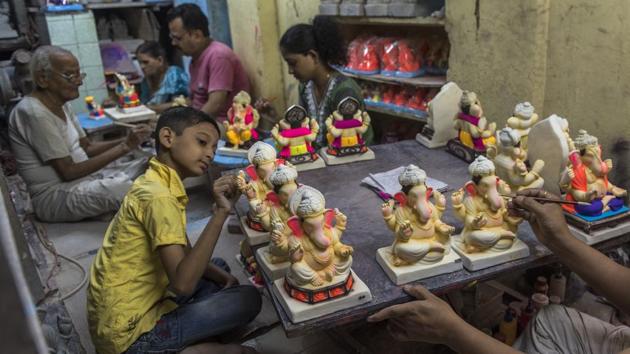
Hazare fell into this business following in the footsteps of his father. With the entry of the family’s youngest, a 10-year-old who’s now helping out, this eco-friendly idol making workshop has added to its generations strong legacy. (Satish Bate / HT Photo)
3/9
 View Photos in a new improved layout
Updated on Aug 20, 2018 4:09 PM
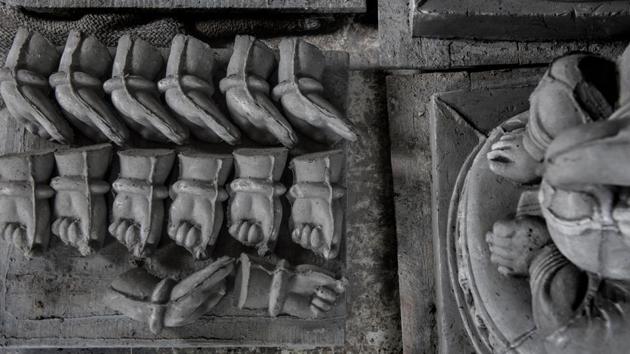
Individual clay pieces that will come together to make Ganesha sculptures sit to dry at the Hazare family workshop. During the ten-day Ganesh Chaturthi festival devotees will bring the elephant headed god home with festivities culminating with the immersion of idols, signifying his return to Mount Kailash to his parents Lord Shiva and Goddess Parvati. (Satish Bate / HT Photo)
4/9
 View Photos in a new improved layout
Updated on Aug 20, 2018 4:09 PM
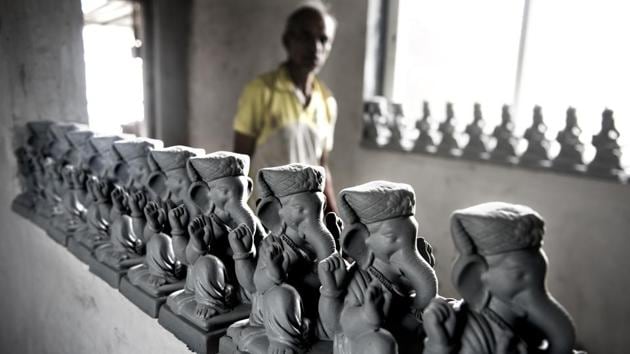
Assembled Ganesha idols sit out to dry. “When my father started making Ganpati idols, his idea was to make eco-friendly and harmless idols and those which may dissolve in water instantly. He never used toxic colours and Plaster or Paris in his idols,” Hazare said, recalling his father’s golden rules. (Satish Bate / HT Photo)
5/9
 View Photos in a new improved layout
Updated on Aug 20, 2018 4:09 PM
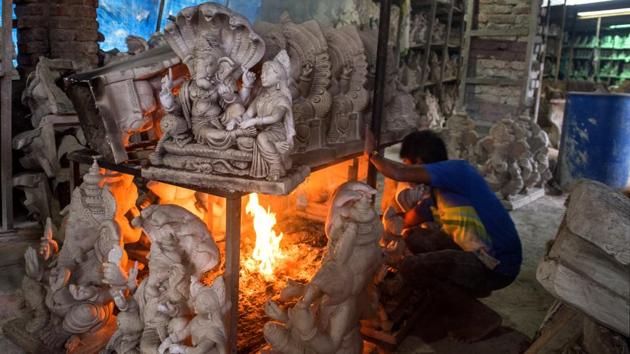
A worker lights up a fire around Ganesha idols to speed up the drying process during damp monsoon days. Hazare says that he’s been following the same natural crafting process and has passed down the knowledge over the years. With his great-grandson now helping out, he hopes the practice moves down another generation. (Satish Bate / HT Photo)
6/9
 View Photos in a new improved layout
Updated on Aug 20, 2018 4:09 PM
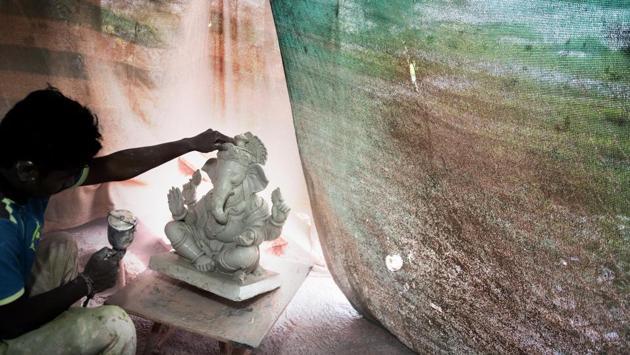
A worker begins spraying on the first coats of paint on to an idol. Apart from outside workers, this family run entity has Hazare helped by his wife, son and daughter, son-in-law, daughter-in-law and their respective children. (Satish Bate / HT Photo)
7/9
 View Photos in a new improved layout
Updated on Aug 20, 2018 4:09 PM
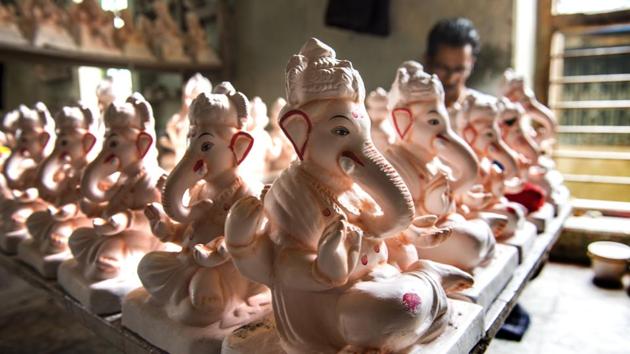
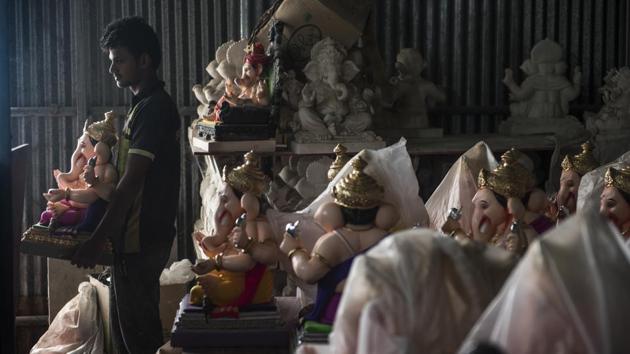
Ganesha statues mid-completion are seen at the Hazare family workshop. The family makes and sells about 1,000 clay idols of the god every year and has witnessed rising demand for the all-natural pieces over the years as awareness of the environmental costs of PoP based idols has risen among consumers. (Satish Bate / HT Photo)
8/9
 View Photos in a new improved layout
Updated on Aug 20, 2018 4:09 PM
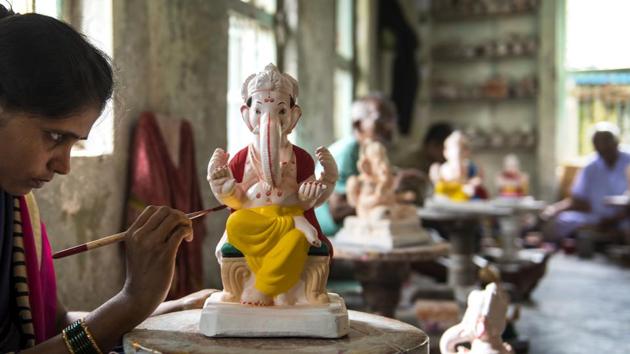
A worker at the workshop adds finishing touches to an idol. Pandurang Hazare admits that his workshop keeps receiving requests for idols made of PoP but has consistently refused to accept them all these years over deeply ingrained environmental concerns. (Satish Bate / HT Photo)
9/9
 View Photos in a new improved layout
Updated on Aug 20, 2018 4:09 PM


