
 E-Paper



Photos: History shares space with art at the Red Fort barracks
Last year, the ASI wrapped up a major clean-up drive of several of the remaining old structures in the Red Fort, retaining the ten barracks inside the complex, of which four have been finally converted into museums. Reminiscent of the Mutiny, the buildings have undergone a makeover. Visit Barrack No. 4 to see the works of India’s leading artists. The barrack opens officially to the public on February 5, and this is the first time that art on this scale has been made accessible to the public visiting the heritage site.
Updated on: Feb 04, 2019 10:49 AM IST

Share via


Copy link

1/9
 View Photos in a new improved layout
Updated on Feb 04, 2019 10:49 AM
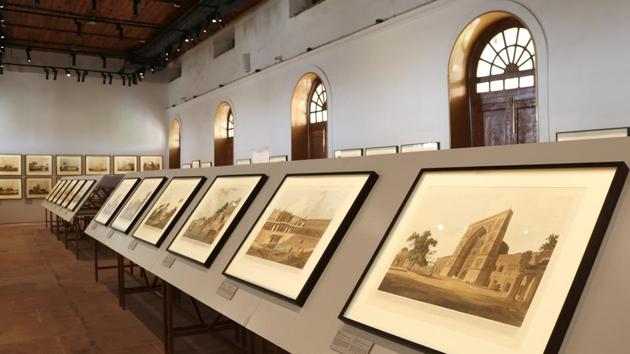
At Drishyakala, the room 'Oriental Scenery: Aquatints of India by Thomas Daniell and William Daniell,' curated by art historian Giles Tillotson, brings alive Indian architecture and landscape through their travels across India. The barracks in the Red Fort, built to house the British army after the 1857 uprising and the deposition of Bahadur Shah Zafar, have since been a grave reminder of the destruction unleashed on Delhi after the uprising. (Paroma Mukherjee / HT Photo)
2/9
 View Photos in a new improved layout
Updated on Feb 04, 2019 10:49 AM
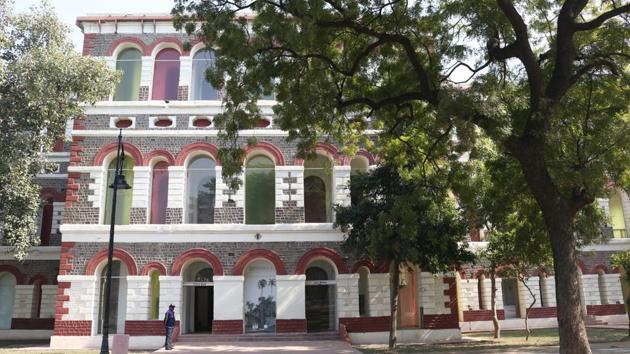
An exterior view of Barrack 4 at the Red Fort, where DAG has setup ‘Drishyakala’. The Indian Army took over the monument after independence and vacated it in 2003. When the Red Fort was declared a UNESCO World Heritage Site over a decade ago, the Archaelogical Survey of India (ASI) began the conservation of the crumbling three-storey barracks so that they could be used as museums of history. (Paroma Mukherjee / HT Photo)
3/9
 View Photos in a new improved layout
Updated on Feb 04, 2019 10:49 AM
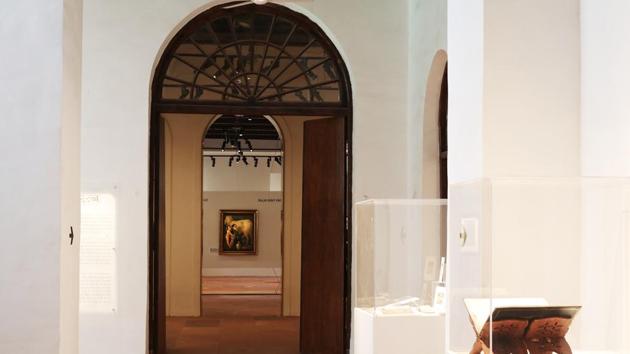
Last year, the ASI wrapped up a major clean-up drive of several of the remaining old structures, retaining the ten barracks inside the complex, of which four have been finally converted into museums. Barrack No. 4, a ten-minute walk from the main entrance, is now home to Drishyakala by DAG, a three-floor exhibition space that houses 450 artworks spread over 27,000 square feet. (Paroma Mukherjee / HT Photo)
4/9
 View Photos in a new improved layout
Updated on Feb 04, 2019 10:49 AM
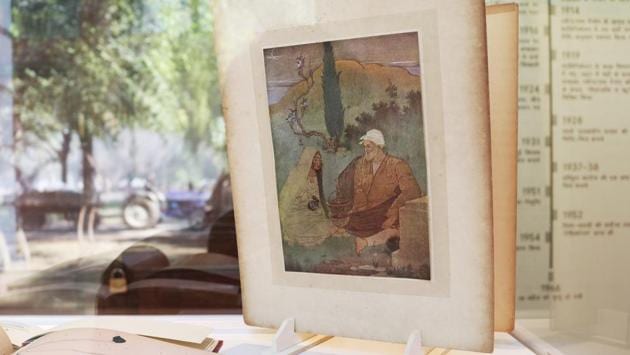
A folio shows Abanindranath Tagore’s illustration of ‘The Rubaiyat’ by Omar Khayyam, from a set that appeared in Edward Fitzgerald’s 1859 translation. Entering the first room on the ground floor, Navratna showcases nine of India’s leading artists, including the three Tagore brothers Rabindranath, Gaganendranath and Abanindranath. Old photographs, commemorative stamps and artistic objects line the hallway. (Paroma Mukherjee / HT Photo)
5/9
 View Photos in a new improved layout
Updated on Feb 04, 2019 10:49 AM
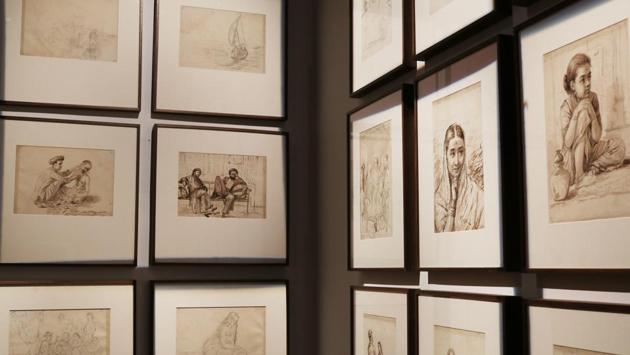
Raja Ravi Verma’s ‘Sketchbook’ at Drishyakala. In Varma’s Sketchbook lies a passage to the eventual making of his several paintings. Some of the rare drawings comprising barbers, street musicians, women and children adorn a wall that offers valuable insight into his detailed compositions. (Paroma Mukherjee / HT Photo)
6/9
 View Photos in a new improved layout
Updated on Feb 04, 2019 10:49 AM
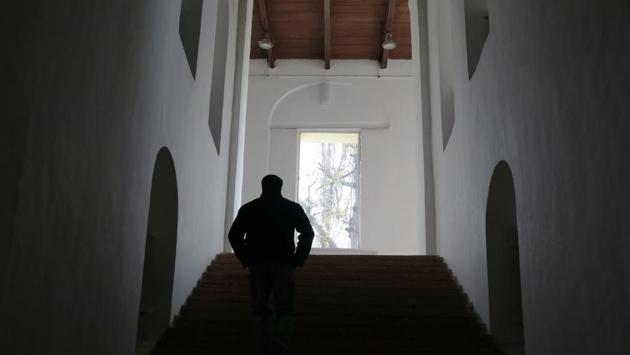
The stairway leading up to top floors of the ‘Drishyakala’ gallery by DAG. “The fact that we are conducting outreach activities—with children, college students, the visually impaired, among others—in this historic space will further expand the possibilities of making art accessible to a larger audience,” says Ashish Anand, MD and CEO, DAG. (Paroma Mukherjee / HT Photo)
7/9
 View Photos in a new improved layout
Updated on Feb 04, 2019 10:49 AM
Portraits of 24 Indian rulers, curated by Pramod Kumar KG. On the floor above is this room with remarkable photographic portraits of Indian rulers bringing to light the several possibilities of self-representation that photography brought with it as a medium, thereby finding much favour with India’s royal elite. (Paroma Mukherjee / HT Photo)
8/9
 View Photos in a new improved layout
Updated on Feb 04, 2019 10:49 AM
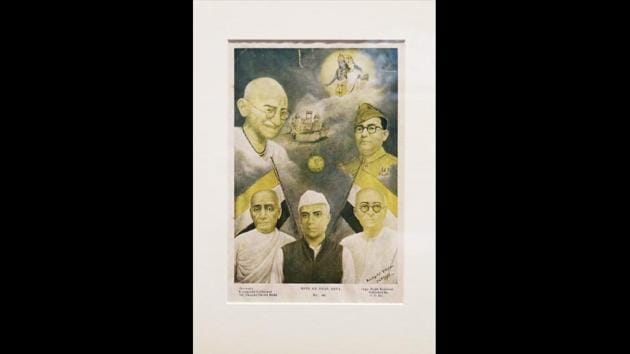
‘Hind ke Amar Neta (No 102),’ circa 1930s-40s. Popular Prints and the Freedom Struggle curated by Paula Sengupta showcases posters that became brands of kitsch and served as nationalist literature and propaganda for India’s freedom movement. In one such poster Hind ke Amar Neta, the Red Fort becomes the centre for power, surrounded by Bose, Nehru, Gandhi and Patel, but not without two Indian gods watching over them. (Paroma Mukherjee / HT Photo)
9/9
 View Photos in a new improved layout
Updated on Feb 04, 2019 10:49 AM


