
 E-Paper



Photos: Retracing Mahatma Gandhi’s footsteps in Dandi, Gujarat
October 2, 2019, marks the 150th birth anniversary of Mohandas Karamchand Gandhi, the father of the nation, the man who led India’s freedom movement, and the visionary who introduced the world to the power of truth as a force (satyagraha), non violence and civil disobedience. Starting today and culminating on October 2, every issue of Hindustan Times will feature a page (some days will have more) on MK Gandhi: 150 Years On. The special coverage begins with a ground report from Dandi, where, in 1930, he broke the British’s iniquitous salt law.
Updated on: Sep 16, 2019 4:25 PM IST

Share via


Copy link

1/7
 View Photos in a new improved layout
Updated on Sep 16, 2019 4:25 PM
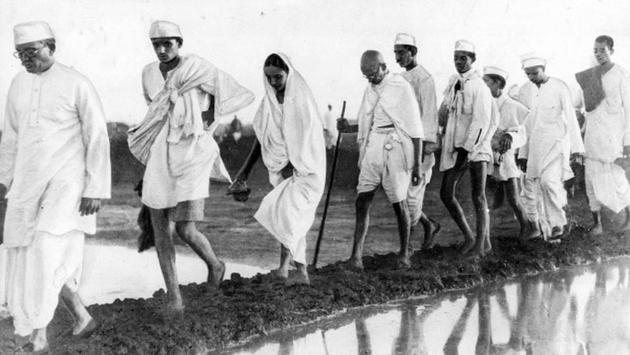
Mahatma Gandhi leading satyagrahis during the historic march to Dandi in March 1930. (National Gandhi Museum)
2/7
 View Photos in a new improved layout
Updated on Sep 16, 2019 4:25 PM
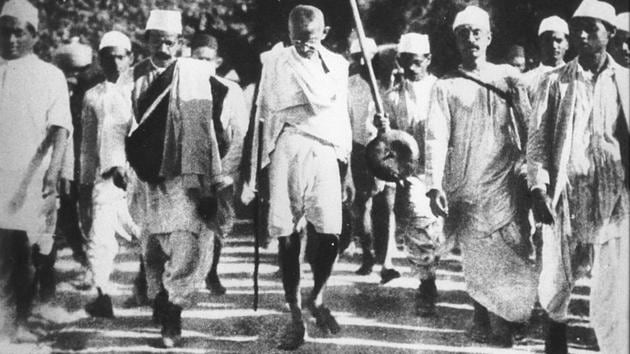
A 60-plus man, staff in hand, mounts a mass struggle on the shoulders of 80 unarmed men. He makes an arduous trek across unmapped roads to reach the sea and make salt to challenge an unfair law, all the while keeping a hostile administration in the loop about his plan of action. Mahatma Gandhi’s Dandi march has always been among the most significant protests in India’s freedom movement against the British. (National Gandhi Museum)
3/7
 View Photos in a new improved layout
Updated on Sep 16, 2019 4:25 PM
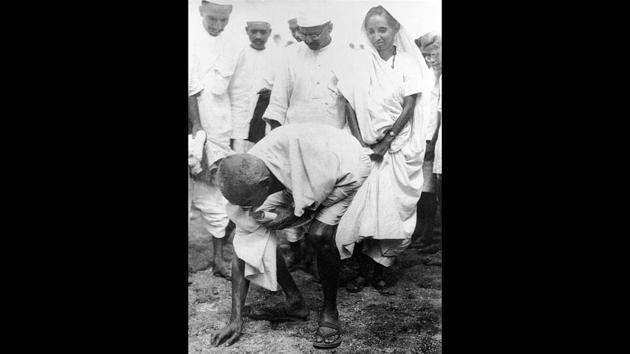
Hundreds joined the core group of followers as they made their way to the sea until on April 5 the entourage reached Dandi after a journey of some 240 miles (385 km). On the morning of April 6, 1930, Gandhi and his followers picked up handfuls of salt along the shore, thus technically “producing” salt and breaking the law. (National Gandhi Museum)
4/7
 View Photos in a new improved layout
Updated on Sep 16, 2019 4:25 PM
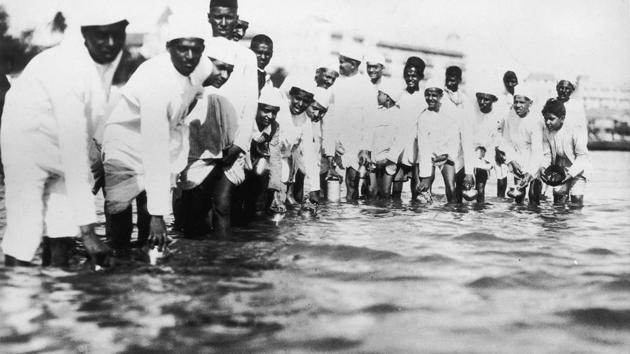
Supporters of Mahatma Gandhi break salt laws by filling containers with sea water in Bombay (now Mumbai), India in 1930. (National Gandhi Museum)
5/7
 View Photos in a new improved layout
Updated on Sep 16, 2019 4:25 PM
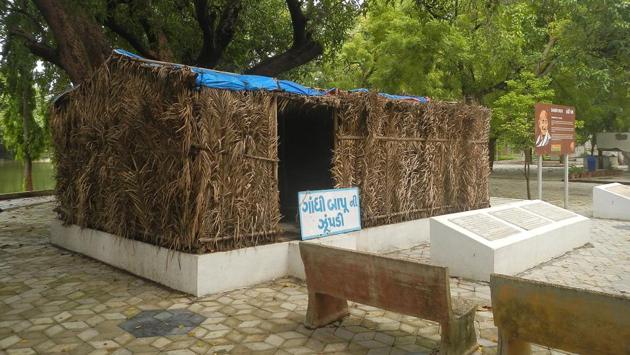
Following his stay in Dandi, Gandhi and his followers set up camp at Karadi (just north of Metwad) and continued to orchestrate the salt campaign. Seen here is a recreation of the hut where Gandhi stayed in Karadi. On the night of May 4, police entered the camp and at 12:45am arrested Gandhi. The train called Frontier Mail was halted at what is now the Gandhi Smriti train station south of Navsari and Gandhi was put on board for transport to Yeravda Prison in Poona. (Raj K Raj/ HT PHOTO)
6/7
 View Photos in a new improved layout
Updated on Sep 16, 2019 4:25 PM
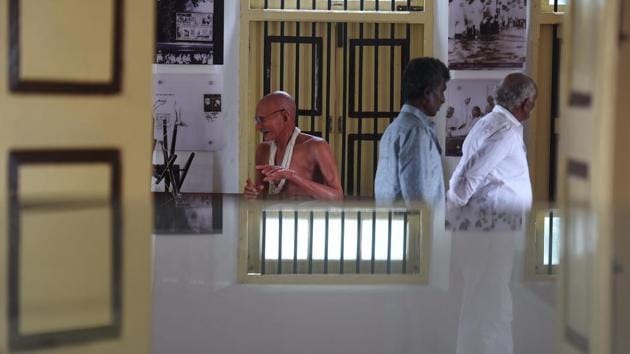
Most visitors, oddly, don’t stop by the Saifee Villa (just outside the new memorial), where Gandhi stayed the night before he walked up to the beach to flout the salt tax. The villa has been converted into a museum , and includes a smiling statue of Gandhi on the charkha. (Raj k Raj / HT Photo )
7/7
 View Photos in a new improved layout
Updated on Sep 16, 2019 4:25 PM


