
 E-Paper



See beyond the sex: Art exhibition in Paris on Kamasutra
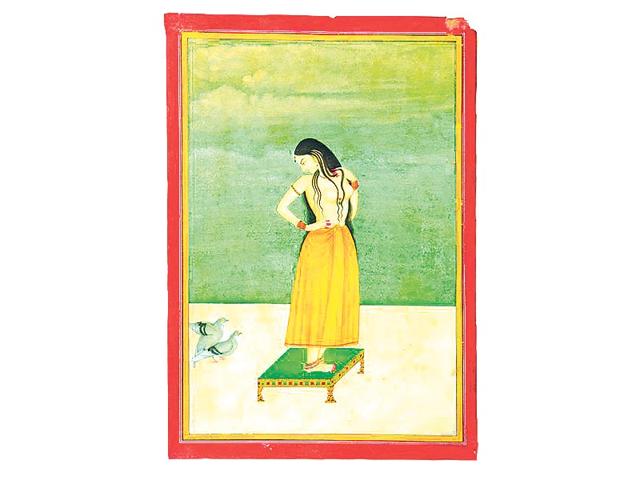
An exhibition underway in Paris seeks to bust the persistent myth that the ancient Indian text is a manual of sexual positions and nothing more. (All images courtesy Pinacothèque de Paris)Top: A 19th-century work showing a young woman after her bath, standing on a stool and looking at birds. Intimate scenes of feminine toilette inspired by ancient erotic texts were a recurring motif in Mughal miniatures.
Updated on: Oct 26, 2014 1:40 PM IST

Share via


Copy link

1/7
 View Photos in a new improved layout
Updated on Oct 26, 2014 1:40 PM
An exhibition underway in Paris seeks to bust the persistent myth that the ancient Indian text is a manual of sexual positions and nothing more. (All images courtesy Pinacothèque de Paris)Top: A 19th-century work showing a young woman after her bath, standing on a stool and looking at birds. Intimate scenes of feminine toilette inspired by ancient erotic texts were a recurring motif in Mughal miniatures.
2/7
 View Photos in a new improved layout
Updated on Oct 26, 2014 1:40 PM
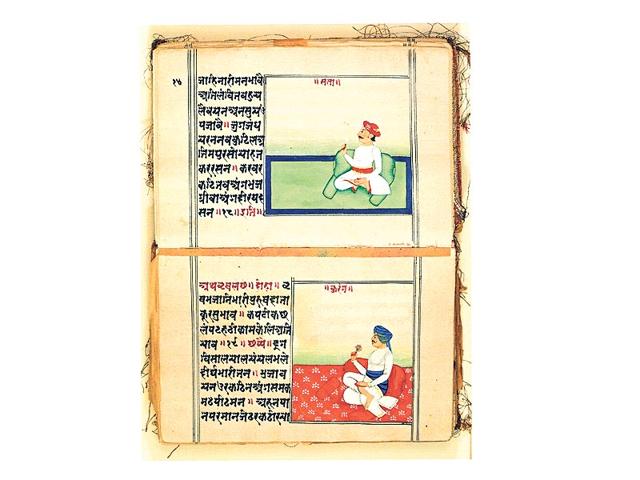
An illustrated page of the Koka-shastra, written in the 13th century, evokes the Kama Sutra with a nostalgic reverence for a period when women were not separated from men and adultery was accepted as another aspect of love.
3/7
 View Photos in a new improved layout
Updated on Oct 26, 2014 1:40 PM
A bust of a goddess in terracotta, from the 5th-century Gupta period. This is one of the most ancient pieces on display in Paris, and the one that dates closest to the period in which the Kama Sutra was written.
4/7
 View Photos in a new improved layout
Updated on Oct 26, 2014 1:40 PM
A bronze breastplate worn by Theyyam dancers in Kerala to take on the female form.
5/7
 View Photos in a new improved layout
Updated on Oct 26, 2014 1:40 PM
An 18th-century work titled ‘Standing couple’, design on perforated paper, from the Jaipur school, Rajasthan.
6/7
 View Photos in a new improved layout
Updated on Oct 26, 2014 1:40 PM
An 11th-century idol of Shiva and Parvati carved in stone. The Hindu dieties with consorts and the mythology features explicit stories. Gender boundaries are not rigid.
7/7
 View Photos in a new improved layout
Updated on Oct 26, 2014 1:40 PM


