
 E-Paper



The beauty and fragrance of Syria’s famous Damask roses
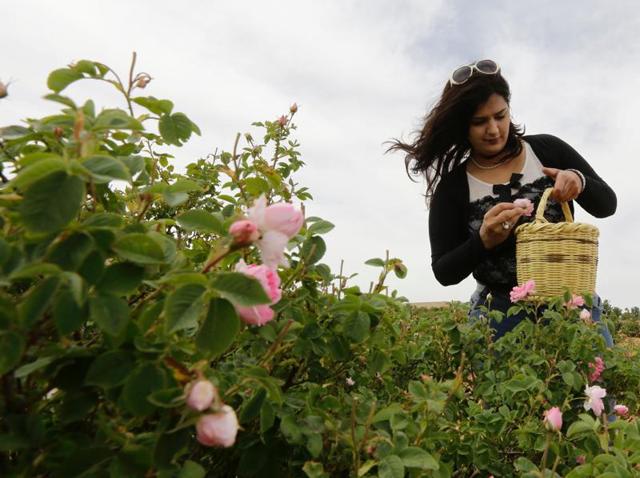
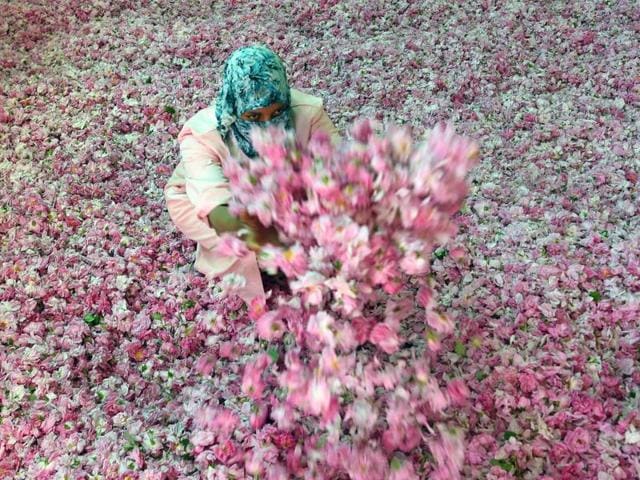
A Syrian woman picks Damask roses (Rosa Damascena), which are used to make rose water, in the village of Marah, north of Damascus, on May 11, 2016. (AFP)
Updated on: May 20, 2016 7:41 AM IST

Share via


Copy link

1/10
 View Photos in a new improved layout
Updated on May 20, 2016 7:41 AM
A Syrian woman picks Damask roses (Rosa Damascena), which are used to make rose water, in the village of Marah, north of Damascus, on May 11, 2016. (AFP)
2/10
 View Photos in a new improved layout
Updated on May 20, 2016 7:41 AM
With its odour both rich and suave, the Damask rose, grows naturally in May but can be grown throughout the year. It is used mostly for the production of essential oils and flower-scented cosmetic products. (AFP)
3/10
 View Photos in a new improved layout
Updated on May 20, 2016 7:41 AM
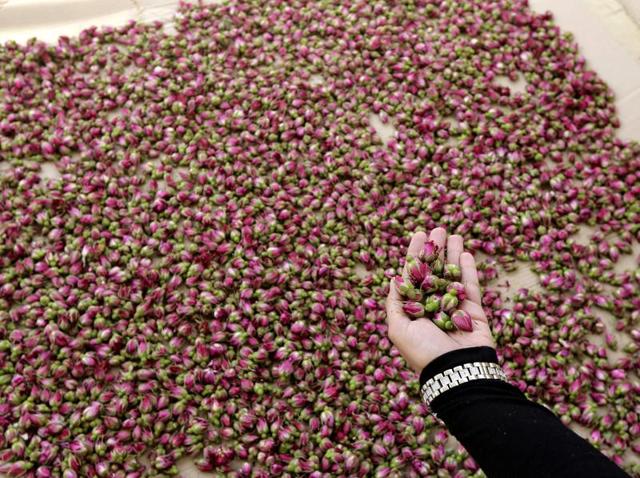
A Syrian woman shows picked rose buds. They are considered among the oldest flowers in history. (AFP)
4/10
 View Photos in a new improved layout
Updated on May 20, 2016 7:41 AM
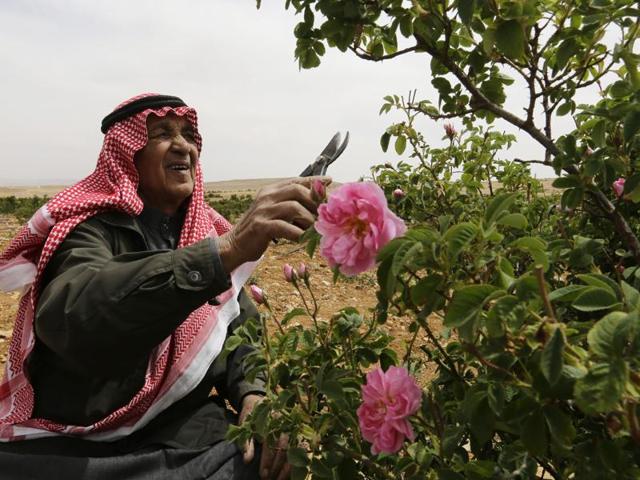
For centuries, Damask roses have been cultivated in Syria. (AFP)
5/10
 View Photos in a new improved layout
Updated on May 20, 2016 7:41 AM
It has also been considered a symbol of beauty and love. (AFP)
6/10
 View Photos in a new improved layout
Updated on May 20, 2016 7:41 AM
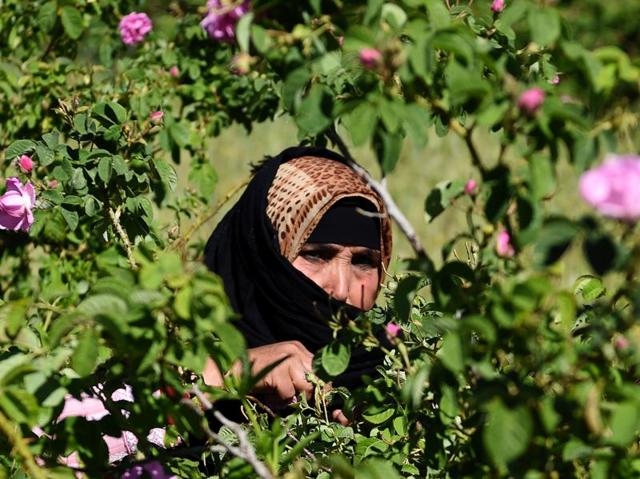
It features in the works of Shakespeare too. (AFP)
7/10
 View Photos in a new improved layout
Updated on May 20, 2016 7:41 AM
Syrians serve rose water made from Damask roses. The rose petals are edible and are used for garnishing, as herbal tea and also for making gulkand (sweet preserve of rose petals). (AFP)
8/10
 View Photos in a new improved layout
Updated on May 20, 2016 7:41 AM
The city of Damascus gets its name from the cultivation of the flower in the city and its surrounding areas. (AFP)
9/10
 View Photos in a new improved layout
Updated on May 20, 2016 7:41 AM
However, in recent times, the war has severely threatened the cultivation of the flower. (AFP)
10/10
 View Photos in a new improved layout
Updated on May 20, 2016 7:41 AM


