
 E-Paper



Photos: American living history museum rethinks past, inclusivity
With a small grant from the National Endowment for the Humanities, Old Sturbridge Village, a living history museum in Massacheusetts that depicts life in the early 19th century is looking to overhaul the way it presents the past in an effort to stay relevant to a 21st century audience. Through a multiyear study into key areas of life in the 1830s, the museum is taking a deep look at the way it presents the past to visitors, including the roles of minorities and women.
Updated on: Aug 30, 2018 9:10 AM IST

Share via


Copy link

1/9

 View Photos in a new improved layout
Updated on Aug 30, 2018 9:10 AM
Reenactor Claire Gregoire knits a mitten using hand-spun yarn at Old Sturbridge Village, in Sturbridge, Massachusetts. Old Sturbridge Village has received a $75,000 grant from the National Endowment for the Humanities it will use to partner with scholars and other consultants for a multiyear study into how it portrays four areas: agriculture and food, civics, industry and economy, and race and gender. (Steven Senne / AP)
2/9
 View Photos in a new improved layout
Updated on Aug 30, 2018 9:10 AM
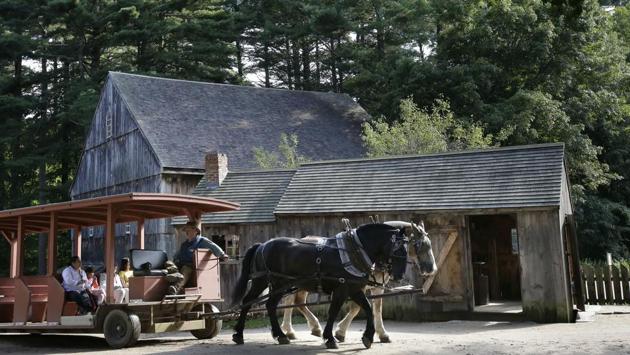
A horse-drawn wagon makes its way past a building at Old Sturbridge Village. “What this grant will allow us to do is look at the entire picture and really dive deep into making sure that it’s a cohesive, purposeful experience for the visitor as they progress through the museum,” said Rhys Simmons, Old Sturbridge Village’s director of interpretation. (Steven Senne / AP)
3/9
 View Photos in a new improved layout
Updated on Aug 30, 2018 9:10 AM
Hannah Ingersoll (L), and Loralei Arndt (2nd L), reenact 1830s farm workers as children look on in a cheese room. The reboot, the museum’s first in about 40 years, is sorely needed, Simmons said. Visitor experience surveys have found that people, while generally positive about their visit, feel something is missing. (Steven Senne / AP)
4/9
 View Photos in a new improved layout
Updated on Aug 30, 2018 9:10 AM
Many museums are dealing with similar issues, said Jeff Hardwick, deputy director of the National Endowment for the Humanities Division of Public Programs. Visits to historic sites have been on the decline since 1982. “Many historic site interpretations have lagged behind scholarship, so they have to become more relevant to a more diverse audience,” Hardwick said. (Steven Senne / AP)
5/9
 View Photos in a new improved layout
Updated on Aug 30, 2018 9:10 AM
Ellen Watterson reenacts an 1830s farm worker milking a cow named May in a barn. Old Sturbridge Village in central Massachusetts depicts life in a small New England town of the 1830s, with 40 to 50 employees dressed in period clothing going about daily routines in the home, workshops or farm and interacting with visitors. It gets about 250,000 visitors a year. (Steven Senne / AP)
6/9
 View Photos in a new improved layout
Updated on Aug 30, 2018 9:10 AM
Reenactors carry milk buckets and pitchers in a barn. The early 19th century was a time of social upheaval, and the role of minorities and women was changing. Slavery no longer existed in most of New England, and the abolitionist and temperance movements were in full swing. Yet the museum hasn’t done a good enough job of presenting those stories, Simmons said. (Steven Senne / AP)
7/9
 View Photos in a new improved layout
Updated on Aug 30, 2018 9:10 AM
Derek Heidemann reenacts an 1830s blacksmith at Old Sturbridge Village. “We underrepresent the African-American and the Native American story dramatically,” Simmons said. “You leave here with the sense that it was an almost exclusively white- and male-dominated picture of what life was like.” (Steven Senne / AP)
8/9
 View Photos in a new improved layout
Updated on Aug 30, 2018 9:10 AM
The role of women also needs to be re-examined, he said. While men held jobs in the fields, or in workshops, women held the household together. “The home was the foundation of every family so women played probably the most important role in rural New England life,” Simmons said. “Men couldn’t manage without women.” (Steven Senne / AP)
9/9
 View Photos in a new improved layout
Updated on Aug 30, 2018 9:10 AM


