
 E-Paper



Photos: Scientists step to save northern white rhino from extinction
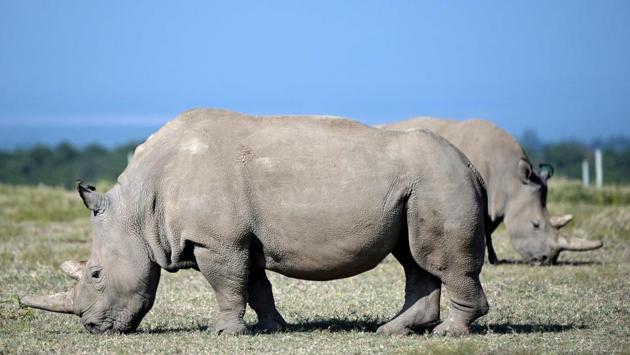
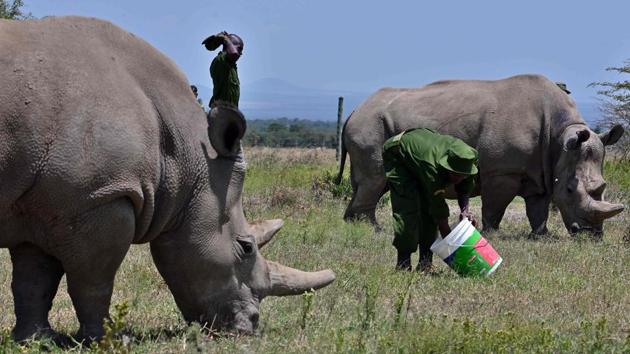
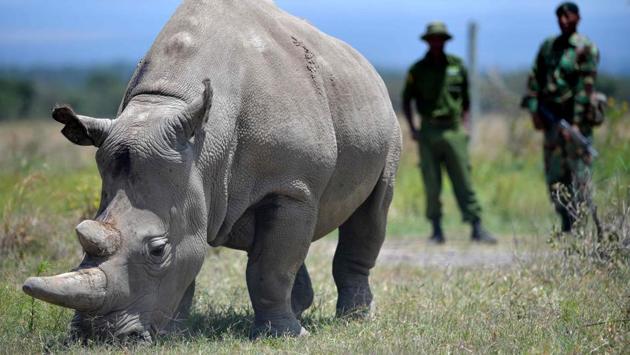
Najin, 30, and Fatu, 19, the last two northern white rhinos left on the planet, graze in their secured paddock at the Ol Pejeta Conservancy in Nanyuki. Veterinarians have successfully harvested eggs from the last two surviving northern white rhinos, taking them one step closer to bringing the species back from the brink of extinction. Science is the only hope for the northern white rhino after the death last year of the last male, named Sudan, at the Ol Pejeta Conservancy in Kenya.
Updated on: Aug 25, 2019 4:16 PM IST

Share via


Copy link

1/7
 View Photos in a new improved layout
Updated on Aug 25, 2019 4:16 PM
Najin (foreground), 30, and daughter Fatu, 19, the last two northern white rhinos left on the planet, graze in their secured paddock at the Ol Pejeta Conservancy in Nanyuki. Veterinarians have successfully harvested eggs from the last two surviving northern white rhinos, taking them one step closer to bringing the species back from the brink of extinction. (Tony Karumba / AFP)
2/7
 View Photos in a new improved layout
Updated on Aug 25, 2019 4:16 PM
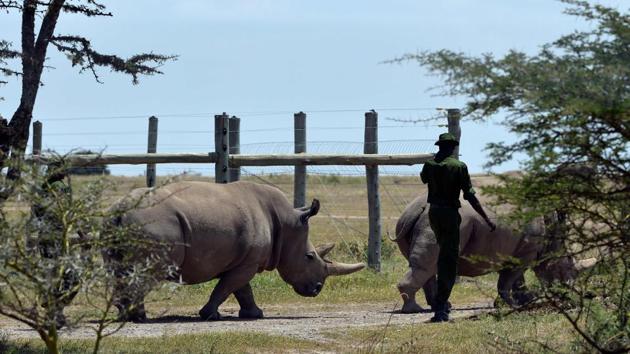
They are the only survivors of the subspecies of white rhino, and live under 24-hour armed guard at Ol Pejeta. However neither is able to carry a calf. Fatu has degenerative lesions in her uterus and Najin has weak hind legs which could cause complications if she fell pregnant. The rhinos underwent a highly risky procedure for extraction of their eggs and were carried out by a team of international vets, which saw them anaesthetised for almost two hours. (Tony Karumba / AFP)
3/7
 View Photos in a new improved layout
Updated on Aug 25, 2019 4:16 PM
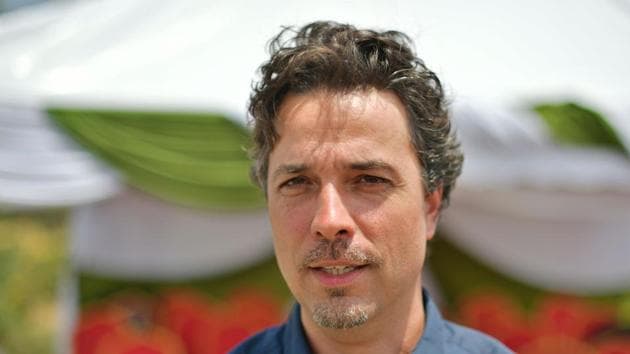
Director of the International Projects of the Dvur Kralove Zoo in Czech Republic, Jan Stejskal, poses following a press conference at the Ol-Pejeta conservancy. “It was a great success, yesterday ten oocytes were harvested which was about the number we hoped for.” Stejskal said (Tony Karumba / AFP)
4/7
 View Photos in a new improved layout
Updated on Aug 25, 2019 4:16 PM
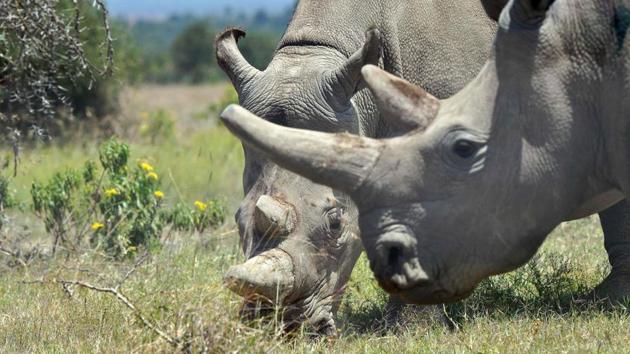
Stejskal explained that after the discovery that the two females were infertile in 2014; over 15 European zoos had given the green light for their southern white rhino females to undergo the newly-developed egg extraction technique. In July 2018 the first-ever rhino embryos were created, a hybrid of southern and northern white rhino. (Tony Karumba / AFP)
5/7
 View Photos in a new improved layout
Updated on Aug 25, 2019 4:16 PM
There are five rhino species remaining on earth, of which black and white rhinos are found in Africa. The northern white rhino is generally considered a subspecies of white rhino although some scientists believe it to be a sixth species. Rhinos have few predators in the wild due to their size but have been devastated by poaching for their horns -- used in traditional Chinese medicine. Modern rhinos have plodded the earth for 26 million years. (Tony Karumba / AFP)
6/7
 View Photos in a new improved layout
Updated on Aug 25, 2019 4:16 PM
The oocytes from Najin and Fatu were airlifted to a laboratory in Italy, where they will be fertilised with cryogenically frozen sperm -- of which there are samples from four deceased males -- likely by the end of the week. Now scientists have to develop a technique to transfer the embryos into a surrogate rhino. This has been attempted in southern white rhinos but has yet to be successful. (Tony Karumba / AFP)
7/7
 View Photos in a new improved layout
Updated on Aug 25, 2019 4:16 PM


